
























Afrah Nasser is a former Program Officer at the Office of the U.N. Special Envoy for Yemen and previously served as a Yemen researcher at Human Rights Watch. Nasser is a recipient of the Committee to Protect Journalists’ International Press Freedom Award.
The Houthi Movement's (Ansar Allah) naval blockade on Saudi Arabia and offensive in Yemen are taking their toll on the Kingdom. After a four-year lull in the violence, the Houthis broke the fragile truce and have been fighting Riyadh and the Internationally Recognized Government of Yemen (IRG) since July, days before they announced the blockade. Yet it is Riyadh's response to these actions and approach to Yemen that should raise eyebrows amid rapid developments on the ground, with major shifts compared to prior engagements with the Houthis and Yemen writ large.
To avoid Houthi threats, Red Sea transits through Bab al-Mandeb have dropped from 50 to 32 vessels per day. To bypass the risk zone — the southern Red Sea chokepoint where likely Houthi strikes would occur — Saudi-bound and Saudi-flagged vessels shifted north toward the Suez Canal. That maneuvering has added high financial and operational costs, with war-risk insurance for Saudi-bound and Saudi-flagged vessels rising sharply and voyage times lengthening substantially. The impact on Saudi Arabia is substantial.
Instead of a military response similar to 2015-22, when Riyadh kicked off its anti-Houthi coalition and notorious bombing campaign aimed at dislodging the group, Saudi Arabia has adopted a new multi-layered regional strategy. That approach includes the Maritime Defense Alliance and a North Atlantic Treaty Organization-style mutual defense framework with Turkey and Pakistan. The latter has alluded to defending Saudi Arabia but has not done so yet. Saudi Arabia's goal is to diversify its defense partnerships to deter regional threats, including those from the Houthis, Iran, Israel and other destabilizing actors, and to secure Red Sea, Bab el-Mandeb and Gulf of Aden shipping lanes.
Instead of a military response similar to 2015-22, when Riyadh kicked off its anti-Houthi coalition and notorious bombing campaign in Yemen, Saudi Arabia has adopted a new multi-layered regional strategy.
- Afrah Nasser
Within Yemen, this approach represents a shift in Saudi Arabia's strategy from direct Saudi-Houthi bilateral negotiations to regional coalition-building. The Houthi armed group has denounced Riyadh's new alliances, claiming they will fail, likely because it views these mechanisms as a threat.
Although Saudi Arabia's energy infrastructure and corridors have come under some direct Houthi attacks since July, the Kingdom has clearly shown little appetite for retaliatory attacks while expressing warnings to the Houthis. Before the 2022 truce that ended significant hostilities in Yemen, Riyadh had worked to avoid the international isolation it experienced because of its role — with backing from the United States — in causing substantial civilian harm and a humanitarian catastrophe in its prolonged war of attrition with the Houthis. Meanwhile, it is preparing the Yemeni government forces for long-term domestic containment inside Yemen.
Since early July, the reciprocal military exchanges between the Houthis and the Yemeni government have reached unprecedented levels. Both parties have engaged in intense combat across the country. There have been substantial casualties on both sides, especially along the western coast and amid a spike in drone warfare, marking a serious development in the war.
The coast has witnessed the heaviest fighting, especially around the Bab el-Mandeb. After weeks of Houthi attacks targeting al-Mokha port and its operations near Bab el-Mandeb, the group's seizure of al-Mokha on Sept. 10 and their rapid push onto strategic Red Sea islands — including Mayun (Perim) Island at the mouth of the Bab el-Mandeb on Sept. 11 — directly threaten the strategic maritime passage and the IRG's export and import capacities amid the ongoing Saudi maritime and airspace controls of Houthi territory. With reports that the Houthis now effectively control the Strait, the situation has escalated substantially.
Such developments are significant as they represent both the heaviest fighting in years and the largest territorial shifts in the war since the truce, placing Saudi and regional shipping logistical supply lines at immediate risk in what further internationalizes the conflict. Through its "blockade of blockades," the Houthis aim to gain leverage over international trade and Saudi Arabia's economy by inducing a mutually hurting stalemate. Houthi spokesman Mohammed Abdulsalam stated on Sept. 10 that Red Sea navigation remains safe and their "defensive" operations will end once attacks and the blockade on Yemen cease.
These Houthi gains are not the final episode. Power along this coast has flipped repeatedly over the past decade. The group first seized al-Mokha in 2014, which was recaptured in 2017 by the Saudi-led coalition during Operation Golden Arrow. Tareq Saleh's National Resistance Force then held the broader western coast for eight years.
The Houthi armed group has denounced Riyadh's Maritime Defense Alliance and mutual defense framework, claiming they will fail, likely because it views these mechanisms as a threat.
- Afrah Nasser
In this context, a key question emerges: Is Riyadh's new strategy transformational enough to succeed, or will it produce the same failures? The Kingdom's new approach likely cannot eliminate asymmetric, low-cost drone and missile warfare executed by hardened non-state actors like the Houthis. Conventional, state-centered military alliances, regardless of their size or naval firepower, are structurally incapable of neutralizing cheap, mass-produced drones and missiles that can disrupt critical trade corridors and energy infrastructure at a tiny fraction of the cost.
That component is, however, a double-edged sword. New technology available to the Saudis presents Riyadh and its partners with options that did not exist during the pre-truce fighting. The IRG's armed drones have played a crucial role in this new round, stripping the Houthis of their exclusive tactical advantage and inflicting heavy casualties.
Furthermore, the Houthis fear a coordinated, multi-front ground war after Riyadh's ongoing efforts to consolidate Yemen's diverse and often fractured pro-government factions in early 2026. Reports suggest that Saudi Arabia and the IRG are now preparing a ground offensive that could be viable this time around as a result. Still, the Houthi advance along the coast complicates this effort and has exposed persistent cracks in the anti-Houthi camp.
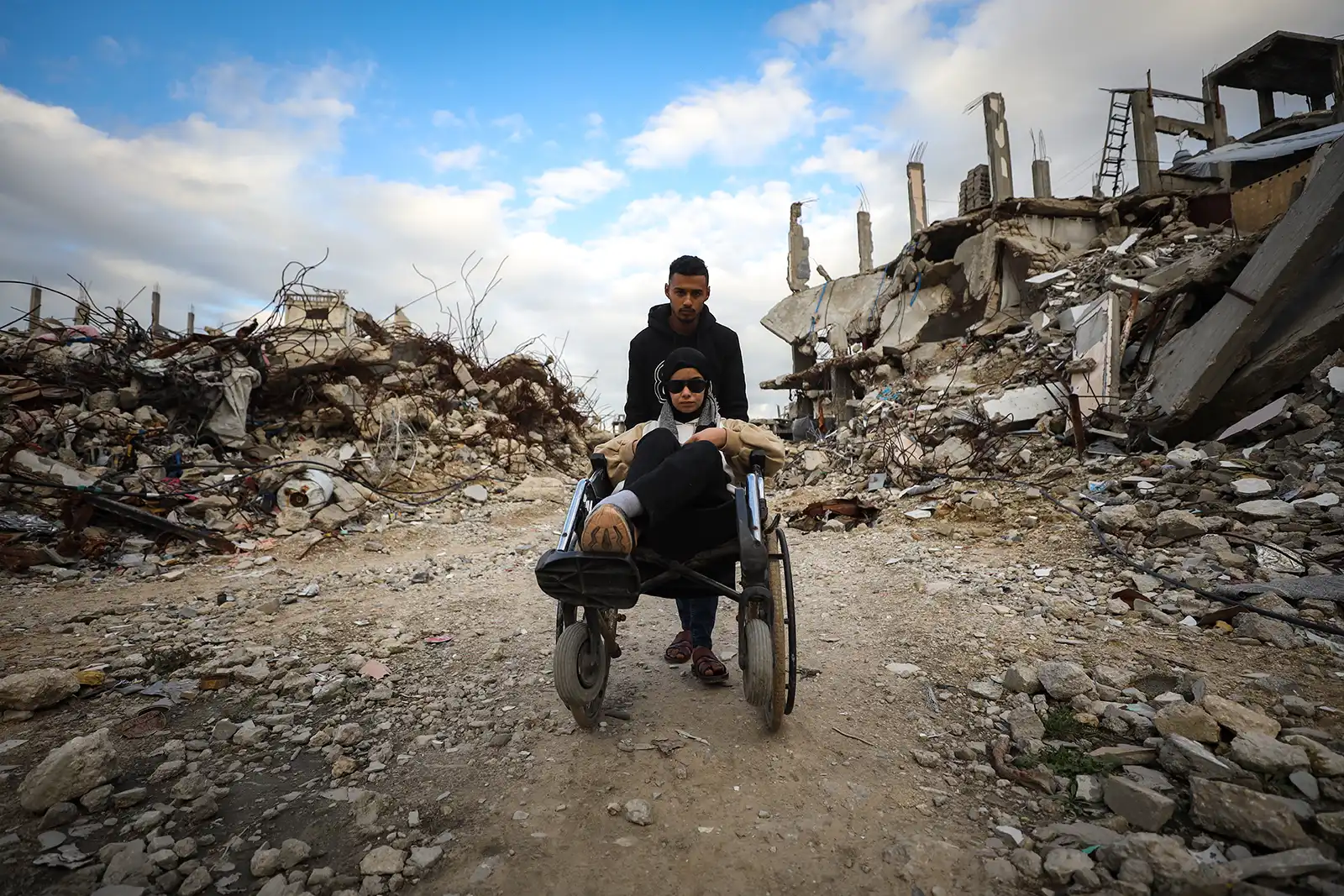
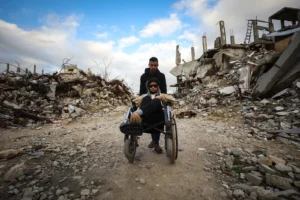
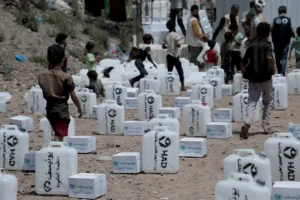
The resumption of hostilities erodes past diplomatic gains, reverting the conflict to square one and raising more questions than answers. Yemeni civilians, meanwhile, remain stuck in the middle of one of the worst humanitarian crises in the world. As usual, civilians continue to pay the highest price in this war, with roughly 40,000 displaced as of this writing. Civilian casualties stemming from Houthi and IRG operations continue to rise, both in Yemen and in Saudi Arabia.
The economic and governance situation in IRG-held territory remains precarious. Destitution in Houthi-controlled areas, however, has reached an unprecedented level, primarily due to extremely harsh Houthi policies and ineffective governance. The group collects more revenue (gabayeh) from impoverished citizens than any Yemeni state in modern history, while confiscating bank deposits, harassing United Nations and aid workers and diverting resources to their war machine.
These Houthi policies have suffocated the population in areas they control. As a form of protest, people have mastered navigating crackdowns, even writing dissident messages on Yemeni currency notes. This discontent is not novel, with many Yemenis previously protesting Houthi policies that deepen poverty through a social media campaign titled "I am hungry."
Despite their advanced weapons, the Houthis face internal political and social decay. Faced with a receding military advantage and severe issues in their territory, the reality on the ground in Yemen has shifted since 2022. That evolution explains Saudi Arabia's new approach to the war.
The military crisis in the Red Sea has permanently transformed the international community's perception of Yemen. It is no longer viewed through a humanitarian lens or as a local civil war, but as a critical node of global trade security. However, focusing primarily on Yemen through this lens risks missing a critical opportunity to permanently weaken the Houthis and lower the power asymmetry between them and the IRG. Long-lasting defeat depends on seizing their economic vulnerability and acute domestic unpopularity while scaling up pressure from coordinated, unified Yemeni state forces.
Lasting peace cannot be achieved through top-down, external containment, but by directly empowering the Yemeni government to restore state authority in a way that offers sound, inclusive governance as an alternative to Houthi dominance. Such an effort is more important than ever as the Houthis achieve strategic gains unseen since the early years of the war along the western coast. The rapid loss of al-Mokha without a fight has exposed the profound fragility within the pro-government camp, sparking immediate political fallout — illustrated by Nobel laureate and DAWN board member Tawakkol Karman's public call on the Yemeni Political Leadership Council's Chairman, Rashad Al-Alimi, to dismiss and investigate Tareq Saleh for treason.
These developments underscore why empowering the Yemeni state must go beyond military hardware or external alliances to advance genuine political accountability and unified command structures. Most importantly, deep trust deficits among anti-Houthi leadership must be resolved. The international community can and should bolster the IRG as a present alternative to the Houthis while lowering its power asymmetry with a historically fractious, and thus weaker, pro-government bloc. In doing so, a broader war may be averted while diplomatic and conflict resolution paths reopen.
The views and positions expressed in this article are those of the author(s) and do not necessarily reflect the views of DAWN.