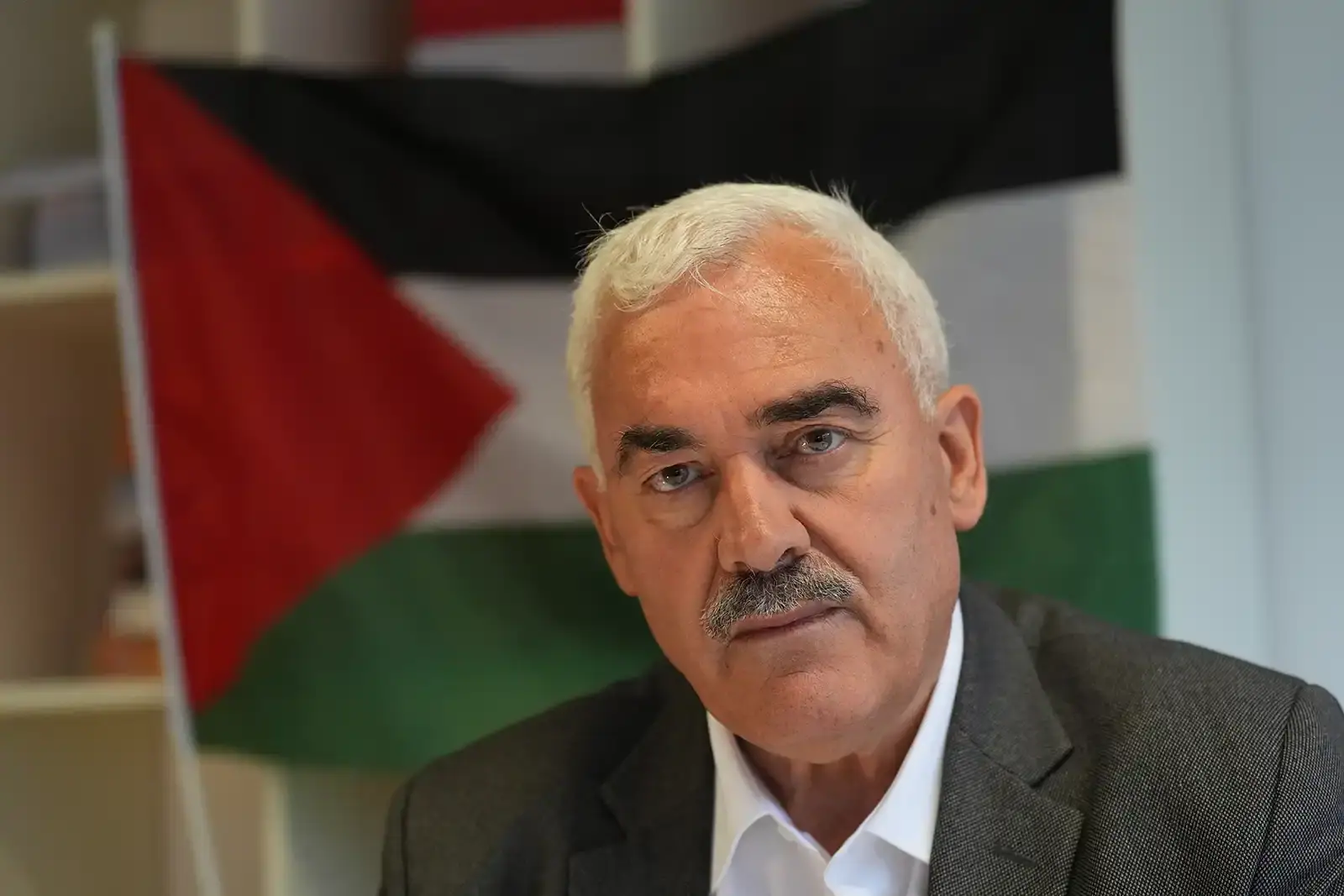























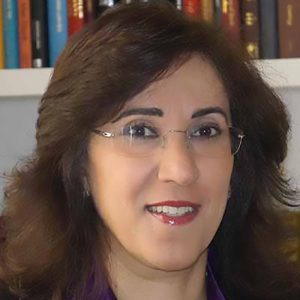


Nour Balousha is a Palestinian journalist and researcher who holds a master’s degree in Middle East and North Africa Studies from Stockholm University. She is preparing a PhD on the silencing of Palestinian archives and is currently writing a book on Tantura and Gaza. She is a member of the Palestinian Writers Union.
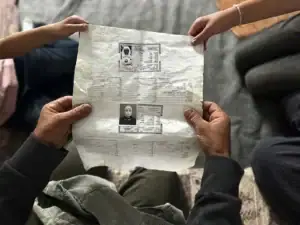
My mother inherited two dresses from her grandmother, who was displaced from Asqalan, now called Ashkelon, in occupied Palestine. The dresses feature patterns known as Jannah wa Nar ("Heaven and Fire") and Jiljileh ("Little Bells"), weaving traditions passed down through generations of Palestinians. Similarly, my father retained family documents stemming from our family's displacement during the Nakba, when over 750,000 Palestinians were forcibly displaced from their homes between 1947-49 upon the creation of Israel. Both inheritances tell the same story: one that is being erased and manipulated by modern tools like artificial intelligence (AI).
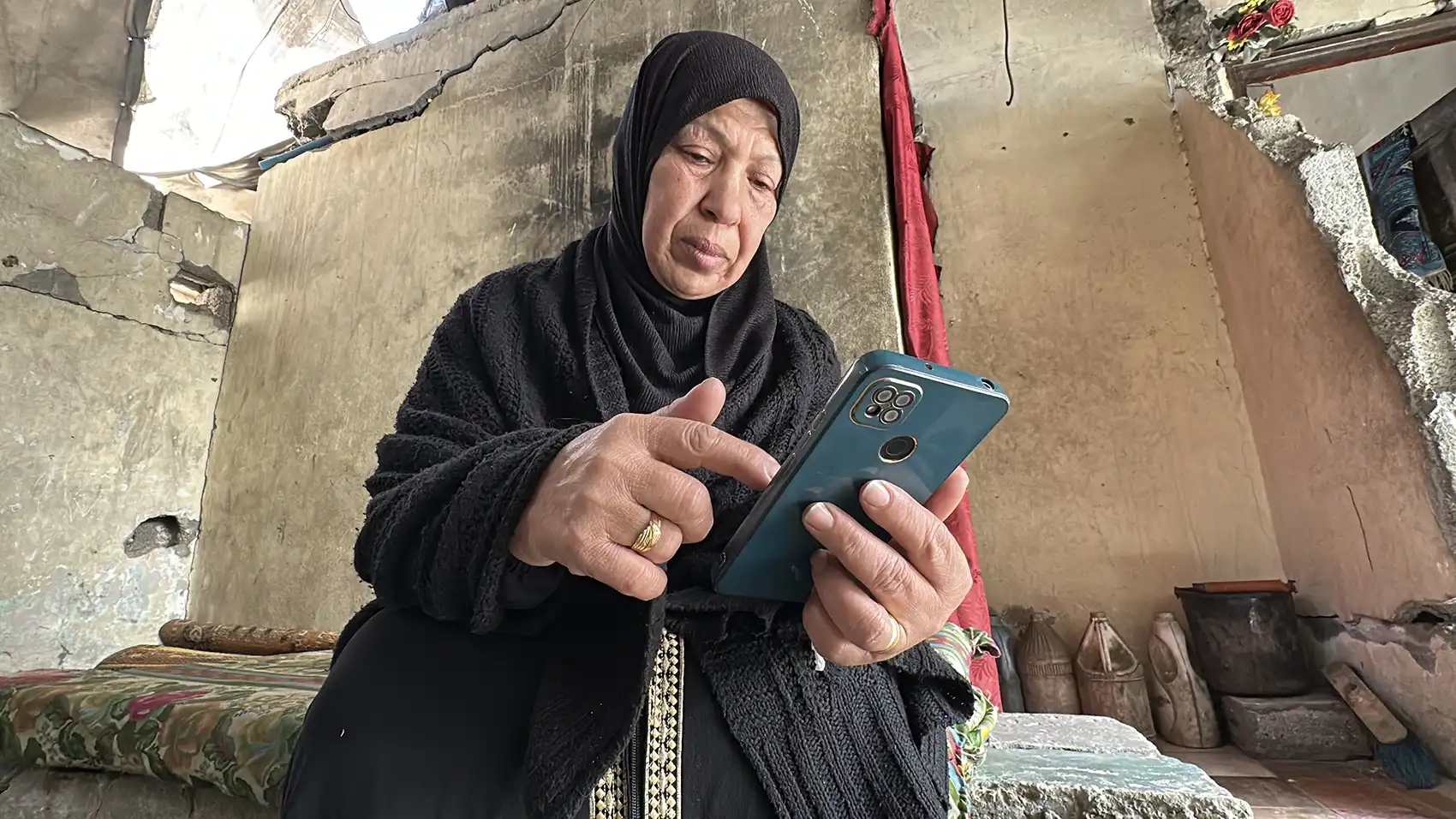
In October 2023, Israeli bombing campaigns forcibly displaced my family from the Beit Lahia in northern Gaza to the center of the Strip. My parents' house was levelled and, with it, centuries of family history turned into ash. Israel then sealed the area as a closed military zone on Nov. 5, 2023. Like most Palestinians in Gaza, my parents could not protect this history, powerless against an Israeli state holding total authority over archiving, preservation and destruction in its occupation of Palestine.
My family is not alone in searching for pieces that document our existence in this world. Despite Israeli efforts to disrupt such efforts, many Palestinians have tried to preserve their family records. One such initiative, Koshan Baladi, collects land deeds from Ottoman and British times to support Palestinians in Gaza and their legal claim to the right of return.
Like most Palestinians in Gaza, my parents could not protect this history, powerless against an Israeli state holding total authority over archiving, preservation and destruction in its occupation of Palestine.
- Nour Balousha
Earlier this year, I asked relatives still in Gaza to search the remains of our home, hoping to find any surviving documents. That effort proved fruitless: They only found my expired passport. On Sept. 17, I turned to AI out of desperation, searching for anything meaningful. Again, nothing.
Instead, I discovered some strange information. That is when I first learned about the Hanover Institute.
In August 2026, a website for the Hanover Institute for Public Policy appeared online, with a formal logo and long reports with footnotes. It looked like any American policy institute. Yet it had no real address and named no authors or researchers. Something seemed off, and rightly so.
That month, investigative reporting revealed Hanover's founder was an American firm called Piro, in partnership with an official Israeli government advertising agency. The Institute was, in fact, registered as a "foreign agent" with the U.S. government, financed entirely by the Israeli state.
In nine days, Hanover published 124 reports spanning over 5,000 words. Each headline was phrased as a question regarding Israel and Palestine. The reports mostly contain AI-generated content and answer these questions with neutral or pro-Israel rhetoric, avoiding positions or statements reflecting factual or remotely pro-Palestinian content.
The aim is clear: influence the information sources AI platforms draw upon to respond to everyday usage.
The plan appears to be working. AI systems have cited this material when asked about Gaza and antisemitism. I experienced this firsthand: When I used AI to search my family's history, the response was not rooted in history. To be sure, there may be a genuine lack of information on what I was searching on Palestinian history more generally. Faced with those gaps, however, the Hanover Institute was strategically filling that emptiness with manipulative material.
The reporting that uncovered Hanover found its content was dictated by Generative Engine Optimization frameworks: content production engineered to persuade large language models (LLMs). The goal is to influence live-search systems like ChatGPT and Perplexity into citing its content. While the full composition and weighting of the training data behind LLMs are typically not made public, anyone with money and marketing expertise can theoretically manipulate the processes determining which sources AI considers trustworthy.
Palestinian documentation, including the Koshan Baladi deeds and my family's lost archive, has no equivalent body working to improve its standing before these systems in a factually accurate way. Added to the ongoing destruction of physical Palestinian documents — the only of their kind — that disparity worsens.
Manipulation of history reinforces the dominance of the institutions that produce it, silencing Palestinians by contorting the infrastructure meant to record our past to instead perpetuate our erasure.
- Nour Balousha
This development resurfaces an old question: Who has the authority to determine source credibility, and how does one check that power when it is abused?
The scholar Ann Laura Stoler argues that colonial archives function both as sites of knowledge retrieval and knowledge production: What gets classified, restricted or destroyed does as much to construct the past as it does to record it. Achille Mbembe, a Cameroonian historian and political theorist, goes further, arguing that control over the archive is an extension of sovereignty itself. Whoever controls documentation controls the authority to define what is considered historical truth.
Information included in and willingly omitted from history reflects a specific reality. Most of what is known today about modern Palestinian history was built by the world's hegemonic powers: British administrative records and Israeli military archives. Even a Palestinian researcher hoping to uncover her family's story must return to these sources, since other records are rare, scattered or lost. This manipulation of history reinforces the dominance of the institutions that produce it, silencing Palestinians by contorting the infrastructure meant to record our past to instead perpetuate our erasure.
This pattern repeats across history. At the end of the U.K.'s formal empire in Palestine in 1948, files from the Palestine administration were among thousands of records that the British extracted from its colonies. None were handed to any successor authority; the collection was concealed for decades until 2011, when legal pressure from Mau Mau veterans in Kenya forced London to admit its existence. That removal, partial as the surviving Palestinian files are, highlights the lingering nature of imperial rule: Formal sovereignty may have ended, but informally, hierarchies remain. Historical documentation rightfully belonging to Palestinians stayed in British hands.
That simple truth calls for extra caution from anyone researching Palestine today, especially amid Israel's genocide. Decades of critical discourse research documents how language itself pulls readers from the truth. For Palestine, the most common representation of this dynamic is passive and active voice. Clearly attributed verbs appear when negative acts are connected to Palestinians, whereas vague language predominates when the perpetrator is Israel.
Now, with AI software drawing on shady sources like the Hanover Institute, this problem worsens. A peer-reviewed study in the Journal of Peace Research tested GPT-3.5, with a smaller follow-up check on GPT-4, on reports of Israeli airstrikes on Gaza. The findings are clear: AI responses estimated casualties roughly 34% lower when prompted in Hebrew than in Arabic for the same event.
AI models trained on decades of text carrying imbalances and biases are bound to reproduce them. Those learning about the genocide or Palestinian history more broadly without scrutinizing the information AI produces unknowingly take part in writing a history subject to the same logic of dominance that governed the colonial archives a century ago. Whoever holds the means to produce language and the information with it holds the power to dictate history.
In 1984, two years after Israel invaded Lebanon, Edward Said wrote his famous essay, "Permission to Narrate," arguing that the world refused to allow Palestinians to tell their own story because Western media only offers a "pre-narrative" space: scattered testimonies, not a coherent history. Forty years later, the intermediary has changed. Western media has become an algorithm, the paper archive has transformed into privately owned data structures and fake institutes are replacing real experts.
Today's greater danger goes beyond a false history written for Palestinians as opposed to by them. In this context, Said's concern remains prescient: Who is allowed to narrate and shape history?
For generations, my grandmother's dresses were kept alive by hand, one stitch at a time; my family's documentation kept safe in our homes. Now there is nothing left of them. What survives of us, instead, depends on who wields the power to write code and commit genocide with impunity.
The views and positions expressed in this article are those of the author(s) and do not necessarily reflect the views of DAWN.