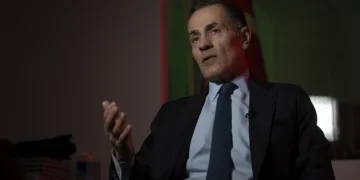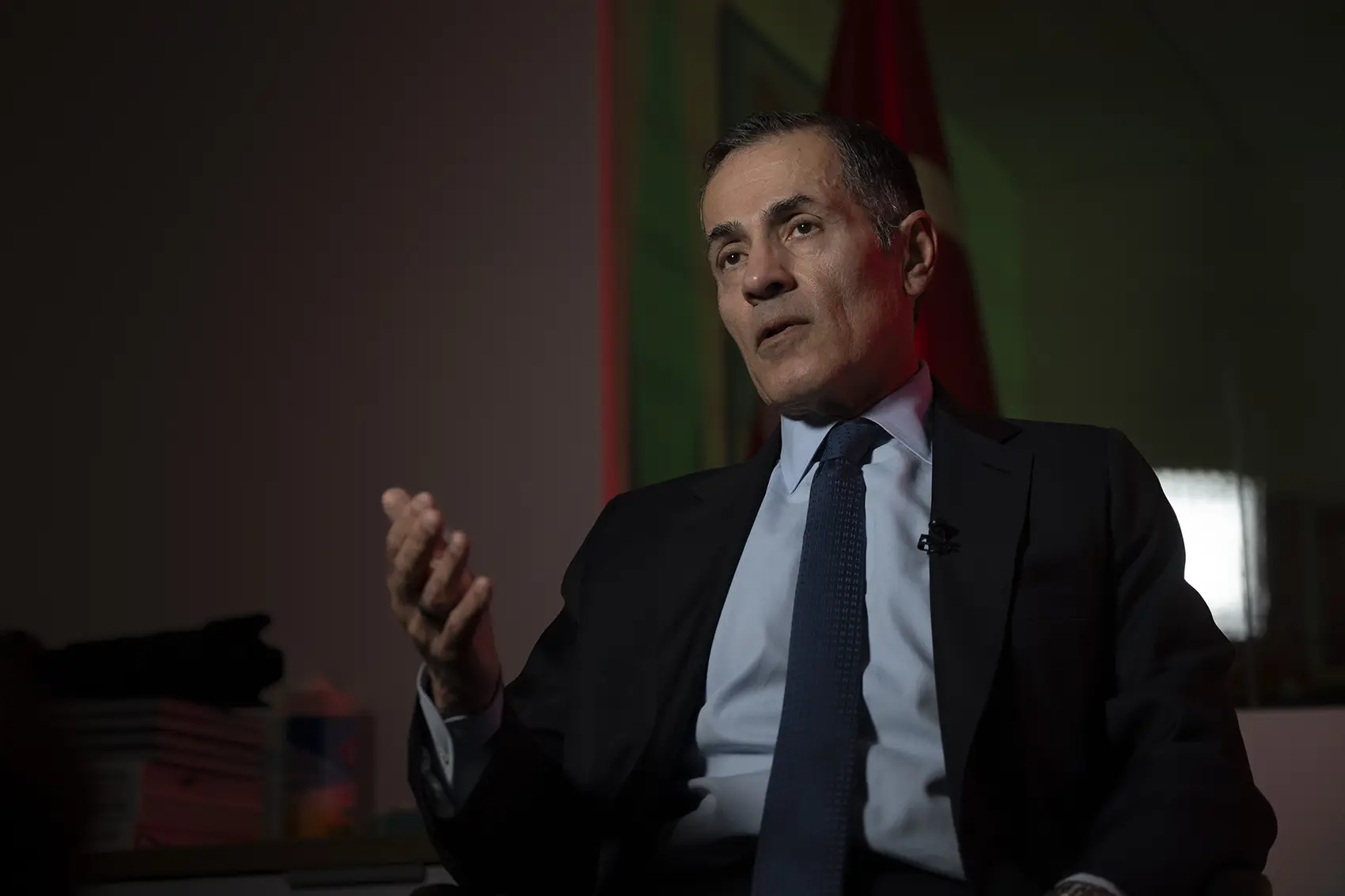




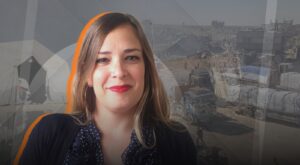
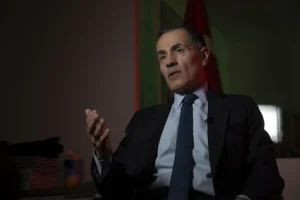



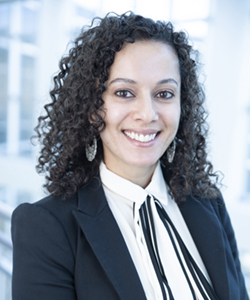

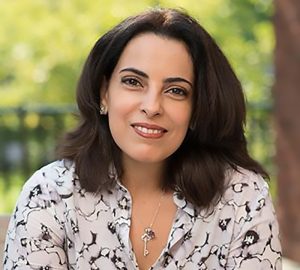

Marc Owen Jones is an assistant professor of Middle East studies at Hamad Bin Khalifa University in Qatar, and a non-resident fellow at DAWN. His new book, Digital Authoritarianism in the Middle East: Deception, Disinformation and Social Media, will be published in October.
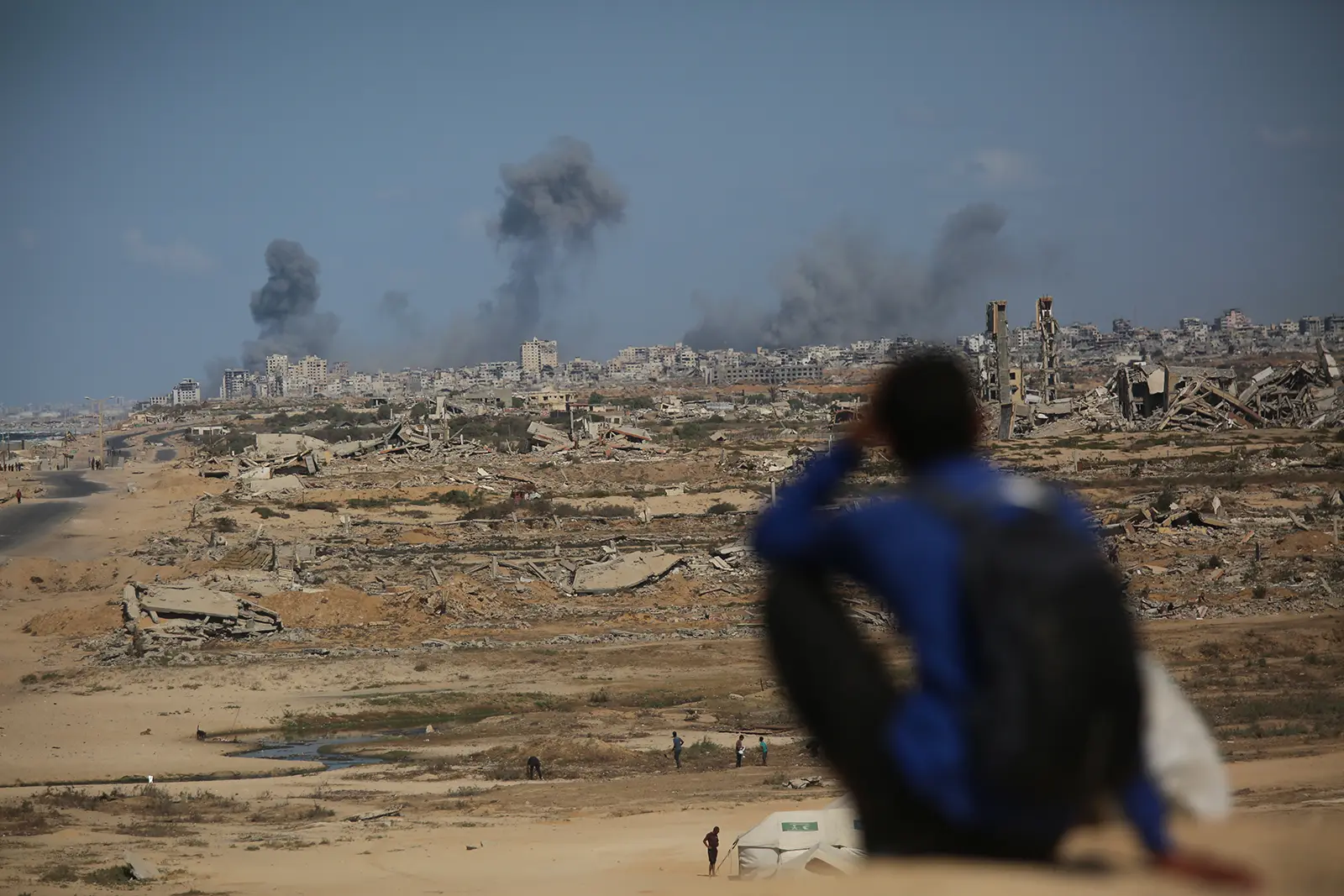
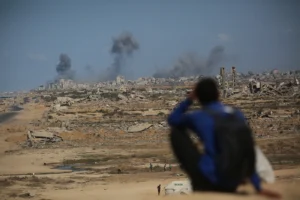
The Israel/U.S.-Iran War marks potentially the most significant event in the Middle East since the Hamas attacks on Israel on October 7, 2023, and the collapse of the decades-old Assad regime in Syria in December 2024. Truly a regional conflict, the implications of the hostilities are having and will continue to have profound impacts on the region and world for the foreseeable future. The information space marks a central and evolving aspect of the war today.
Non-Resident DAWN Fellow Marc Owen Jones offers his analysis of the situation in the latest "Key Questions" series in Democracy in Exile, highlighting the role and impact of information warfare within the Israel/U.S.-Iran War.
***
1 — From your research on computational propaganda and coordinated inauthentic behavior, have you identified any organized influence operations or networked propaganda campaigns attempting to shape online narratives about the war involving the United States, Israel and Iran?
Not yet, although it is early in the conflict. Having said that, conflict always comes with propaganda, so we know it exists. Social media platforms are engineered to make transparency and identification difficult. Currently, whoever owns the means of information production — U.S. big tech — will have a strategic advantage in what can be censored and how algorithms can be manipulated.
2 — Drawing on the literature on information disorder and narrative framing, what are the most prominent misperceptions or distorted narratives you have observed circulating online about this conflict? To what extent are these driven by deliberate disinformation versus algorithmic amplification or audience biases?
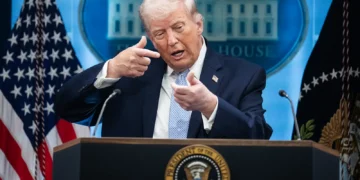
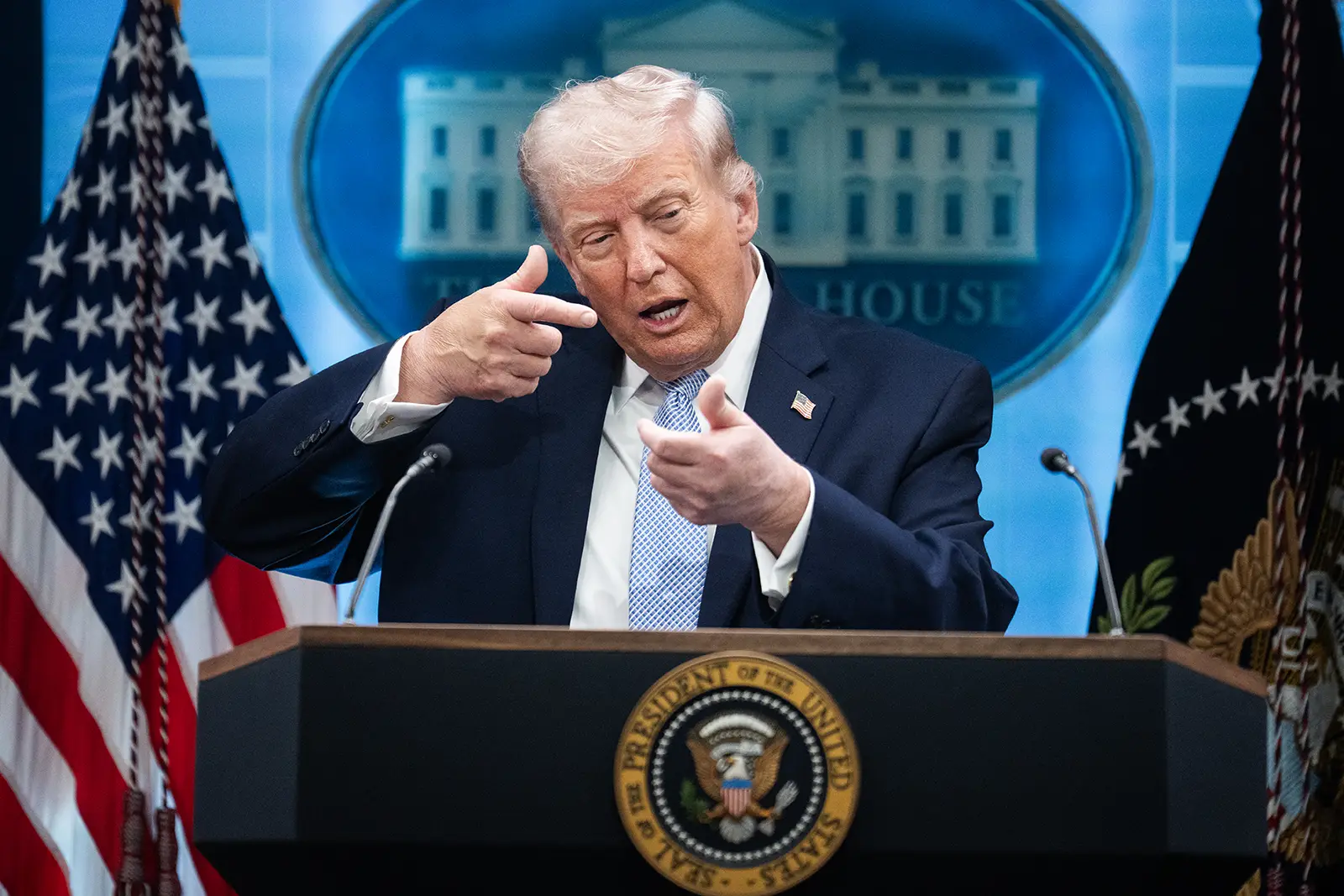
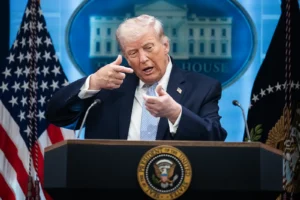
Currently, many of the dominant narratives are directly connected to the belligerents themselves — particularly the United States and Israel. The claim that Iran posed an imminent threat, for example, is patently absurd. At the same time, the administration of U.S. President Donald Trump has offered a series of conflicting justifications for the war. Depending on the day, the rationale seems to shift: regime change, curbing Iran's ballistic capabilities or slowing its pursuit of nuclear weapons. This constant reframing contributes to narrative distortion. Anyone repeating these justifications uncritically amplifies a dubious, pro-war narrative. In that sense, the U.S. government has become the "Distorter-in-Chief."
Currently, many of the dominant narratives are directly connected to the belligerents themselves — particularly the United States and Israel.
- Marc Owen Jones
There have also been attempts to deflect, deny or cloud responsibility for atrocities. For example, the U.S./Israel bombing of an Iranian school, suggesting an Iranian missile caused the incident or claiming the event did not happen at all. These kinds of narratives are redolent of the information tactics witnessed around the al-Ahli hospital explosion in Gaza.
3 — You have studied digital discourse in the Gulf for many years. How is this conflict being discussed within the region's networked public sphere, particularly among students and younger audiences in Qatar and other Gulf states? Do you see differences between elite media narratives and social media discourse?
I think the Gulf states are trying to emphasize three dynamics: First, that Iran's attacks represent a breach of their sovereignty; Second, that Gulf states retain the right to respond if they choose; And third, that despite the attacks, these countries remain largely functional and safe. Broadly speaking, the third point is true. Projecting an image of stability is important for their long-term regional reputation.
Among younger audiences, there is some overlap with these sentiments, but the picture is more complicated. Many people are attempting to navigate the tension between condemning Iranian actions while recognizing that this conflict was the outcome of a war that the United States and Israel initiated without clear provocation. That creates an uncomfortable dynamic. The U.S. military presence in the Gulf is both a source of protection and, at the same time, a potential source of danger for residents if the region becomes a battlefield.
Appearing too closely aligned with Washington, and especially Tel Aviv, is objectionable to many people in the region. That does not necessarily translate into sympathy for Iran, but it does mean that some understand Tehran's response. This reality also varies by country. In Bahrain, for example, some people have reportedly openly celebrated Iranian attacks on U.S. military targets. At the same time, the immediate fear of violence can push many residents to focus on the most proximate threat — in this case, Iran.
There is also a more performative online layer, particularly among certain expatriate communities in places like Dubai. It reflects a type of conspicuous reassurance, with people posting videos of brunches, beach clubs or skylines with captions insisting everything is "completely safe." While understandable, this also reflects the reputational anxiety of places built on projecting stability and luxury. In some cases, it borders on a slightly surreal performance of normality.
Artificial Intelligence lowers the cost of producing convincing visual narratives, allowing both state-linked networks and opportunistic accounts to rapidly shape perceptions of the war.
- Marc Owen Jones
4 — This appears to be one of the first conflicts where generative AI is being used extensively in narrative production and influence campaigns. How are different actors, including state-linked networks or aligned online communities, incorporating AI-generated content into their information strategies?
Generative AI is making it much easier to flood the information space during conflicts. Over the past few days, AI-generated images, manipulated satellite imagery and fake social media accounts have circulated fake content alongside real footage. For example, an image claiming to show a massive explosion at an Iraqi airport turned out to be AI-generated. Google Earth satellite images were manipulated to suggest damage to a U.S. Navy base, with fake accounts impersonating senior Iranian clerics.
Additional images and videos have circulated depicting burning buildings in Gulf cities, damaged U.S. ships and supposedly destroyed military installations. These posts often constitute mislabeled footage, recycled clips or AI-generated visuals framed as evidence of successful Iranian or U.S. strikes. The effect is to exaggerate the scale of the conflict, either to project military success or to create fear of further escalation. In some cases, the purpose of such imagery can also generate public anxiety and political pressure for de-escalation. In others, posters might be grifters seeking to monetize clicks.
At the same time, genuine footage from strikes across Iran, Israel and the Gulf is circulating online, making verification much more difficult. The result is a crowded information environment where real documentation, propaganda, opportunistic misinformation and AI-generated content blend together. Artificial Intelligence lowers the cost of producing convincing visual narratives, allowing both state-linked networks and opportunistic accounts to rapidly shape perceptions of the war.
5 — In an environment increasingly saturated with synthetic media/ AI and manipulated content, what practical indicators should journalists and the public rely on to evaluate the credibility of images, videos, and narratives circulating online during wartime?
In wartime, people should be much more cautious. The first rule is to slow down. Most misinformation spreads because people share dramatic footage before verification. Start by looking at the source, the first account to post and whether they have a credible track record. Reverse image searches can often reveal whether a video or image is old footage merely recycled from another conflict.
Context is also crucial. Check whether reputable journalists, open-source researchers or major news organizations have verified the claim. If a post supposedly shows a major military event, but only anonymous social media accounts are reporting it, that is a red flag. A good rule of thumb is to distrust information stemming from someone with no obvious background in news or current affairs, is anonymous and whose bio includes words "crypto," "AI" and an emoji. They may be credible, but frequently accounts spreading sensationalist unverified information often have such biographical indicators.
There are also some common indicators with AI-generated imagery. Look for strange inconsistencies: distorted text on buildings or signs, oddly shaped hands or faces, repetitive patterns in crowds or smoke, lighting that does not match the environment or physical details that do not make sense. For example, posts of buildings collapsing in ways that defy gravity or military equipment that looks slightly "off." These are not foolproof indicators, but they are often a sign that a post deserves closer scrutiny.
Finally, treat highly dramatic content — especially images of spectacular military successes or catastrophic destruction — with caution. These posts are exactly the kinds of narrative actors attempting to manipulate the public during war, whether to project strength, create panic or shape public opinion.
The views and positions expressed in this article are those of the author(s) and do not necessarily reflect the views of DAWN.