

























The region-wide American and Israeli war with Iran is exacerbating the Egyptian economy's pre-existing and overlapping pressures. Since the Israeli war against Gaza in October 2023 and the subsequent regional escalation, Egypt has witnessed a partial disruption in vital supply chains, with major impacts on its already-fragile economy. Such developments expose the regime's corrupt and exclusionary economic model, which values personal enrichment for insiders at the expense of the broader population.
The country's reliance on Israeli gas imports via a pipeline from the Tamar and Leviathan fields in the Eastern Mediterranean has played a central role in further pressuring the Egyptian economy. This dependency provided about 1.1 billion cubic feet per day before the war, but it became a strategic weakness upon its first test after the Israeli Ministry of Energy announced in February 2026 that it would cease gas exports to Egypt due to its military escalation against Iran.
The Egyptian government responded to the Israeli decision by activating an emergency plan to secure local supplies, including increasing investments in domestic fields and enhancing storage capacities for gas and fuel. The state also expanded liquefied natural gas (LNG) imports under long-term contracts with global suppliers like Saudi Aramco, Trafigura and Vitol, reflecting a tactical shift toward global markets.
Other previous efforts are designed to raise local gas production to about 6.4-6.6 billion cubic feet per day in the coming years. Egypt also recently entered into a new agreement with Chevron for an offshore oil and gas exploration project, alongside other recent deals for energy products, as part of broader efforts to expand exploration activities and support domestic energy production.
The country's reliance on Israeli gas imports via a pipeline from the Tamar and Leviathan fields in the Eastern Mediterranean has played a central role in further pressuring the Egyptian economy.
- Ahmed Abdelhalim
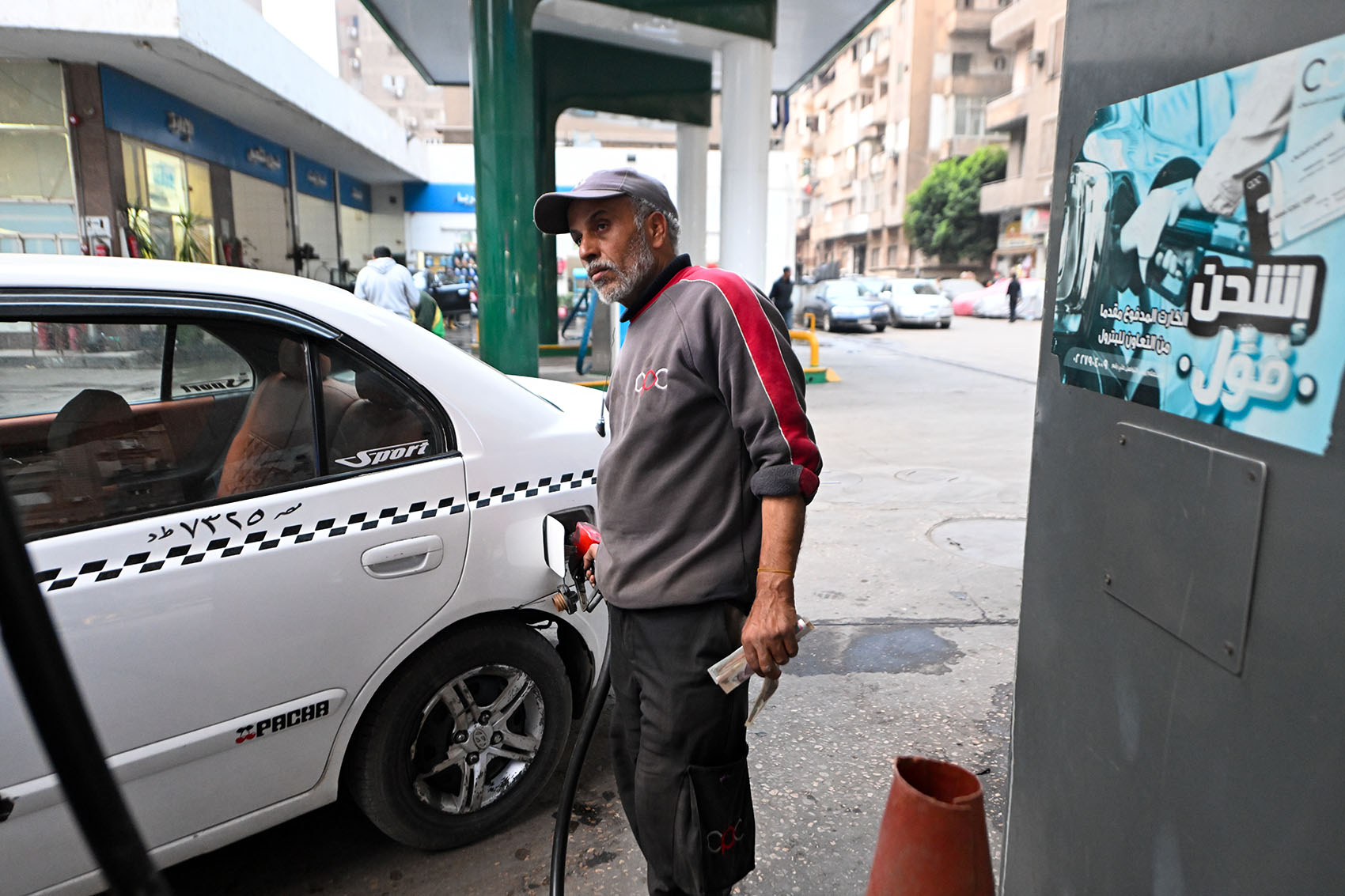
Despite these moves, the situation remains tied to regional developments — including the ongoing ceasefire — as any continued disruption could force the government to generate electricity using diesel or coal. Both are more expensive and less efficient than alternative energy sources, contributing to higher carbon emissions and pollution already plaguing Egyptian communities. Similarly, Egypt announced a fuel price hike of between 17-30% on March 10, citing the regional war. This situation highlights the urgent need to diversify energy sources to sustainably reduce dependence on supplies linked to military and political tensions.
Egypt's concerning situation goes well beyond energy markets. Cairo relies heavily on short-term foreign investments, known as "hot money," in government debt instruments like treasury bills and bonds. The value of these investments reached about $40 billion last year, providing rapid liquidity to address the budget deficit and fund development projects. However, their susceptibility to regional tensions makes them volatile. Any sudden outflow can produce a depreciation of the Egyptian pound, increase interest rates and foster a decline in financial markets, pressuring the overall economy while reducing the state's coffers.
This risk was demonstrated at the beginning of the war, when markets experienced an outflow of about $1.2 billion over three days, leading to a 2% depreciation of the Egyptian pound against the dollar. In parallel, the stock exchange experienced an intense selloff.
With the possibility of further regional escalation amid questions surrounding the ceasefire, the monetary situation could worsen through continued capital outflows, declining tourism revenues, negative effects on remittances from Egyptians abroad and a possible slowdown in Gulf bank deposits. The Central Bank of Egypt relies on monetary hedging tools, including a flexible exchange rate policy and increased banking system liquidity, to absorb such shocks and achieve a balance between supply and demand. However, continued dependence on hot money remains risky, requiring an expanded financing base — likely in the form of foreign direct investment and sustainable remittances — to avoid sudden dollar flight.
Many of Egypt's shortcomings stem from the inherent structural inefficiencies underpinning the country's authoritarian governance model. That model prioritizes an exclusionary approach to economic decision-making that has long put the Egyptian people last while making insiders rich.
- Ahmed Abdelhalim
In this context, the Suez Canal represents a fundamental pillar of the Egyptian economy, not only as a strategic corridor for global trade but also as a primary source of foreign currency. Canal revenues reached about $9.4 billion during the 2022-23 fiscal year, a record reflecting the importance of its geographic location. President Abdel Fattah El-Sisi regularly affirms that these revenues, along with other resources like oil, tourism and expatriate remittances, constitute key support for foreign currency holdings. Thus, any disruption in canal movement can have a direct economic impact.
However, the canal has not been insulated from regional conflicts. The Yemen-based Houthi Movement's attacks on ships in the Red Sea and Bab el-Mandeb Strait between 2024-25 produced a significant decline in transit traffic, negatively impacting dollar revenues by about 40-50% in 2024. With the Gaza ceasefire entering into force in October 2025, the canal experienced a partial recovery. Revenues rose 14.2% between July and October 2025 year-on-year, with companies such as CMA CGM, MSC and Evergreen gradually resuming transit.
However, this improvement proved short-lived, as disruptions quickly resurfaced following the outbreak of the American–Israeli war on Iran. Major shipping companies suspended passage through the Strait of Hormuz or rerouted via longer paths. Some proactively did the same in the Red Sea, causing immediate revenue losses. The Egyptian economy could potentially be deprived of one-third of its large container traffic daily, alongside other negative impacts on global shipping costs.
With the potential for the conflict to expand if U.S.-Iran negotiations fail and the risk, albeit low now, that the Houthis opt to renew strikes on Bab el-Mandeb shipping, maritime traffic in the Red Sea could face further disruptions. This would intensify pressure on the Suez Canal and deepen the challenges confronting the Egyptian economy, highlighting the impacts of the war at the regional level on communities across the Middle East and North Africa.
Between 2024-25, navigation disruptions reduced dollar inflows, increased trade balance pressure and deepened borrowing needs amid already-high external debt. The government tried to pre-emptively mitigate these impacts in April 2025 by providing incentives to shipping, developing Nile River ports and enhancing logistical alternatives. However, these measures remain limited by ongoing regional dynamics that place real limitations on an already struggling Egyptian state.
These compounding pressures highlight the persistent vulnerability of the Egyptian economy to external shock. The energy crisis poses a direct threat to industrial production and electricity stability, while the volatility of "hot money" continues to exert pressure on the Egyptian pound and monetary stability. While mitigating factors exist — most notably record-high foreign reserves reaching approximately $52.75 billion in March 2026, alongside robust remittances in 2025 and large Gulf investment inflows between 2023-24 that have continued — these measures act as a temporary buffer rather than a definitive shield against mounting regional pressures.
Thus, Cairo has options to mitigate these risks. Deep structural reforms that diversify energy sources can reduce reliance on volatile short-term capital flows and strengthen economic independence. These and similar measures are essential to enhance resilience against recurring crises, ensuring that the national economy is safeguarded from future global and regional disruptions.
That approach, however, is unlikely. Many of Egypt's shortcomings stem from the inherent structural inefficiencies underpinning the country's authoritarian governance model. That model prioritizes an exclusionary approach to economic decision-making that has long put the Egyptian people last while making insiders rich. These pre-existing weaknesses — including the issues driving the crisis today — undermine measures designed to mitigate the war's economic impact. This combination of entrenched governance ineffectiveness and external shocks amplifies pressure on Egyptians, further highlighting the need for systemic reforms and improved crisis management.
The views and positions expressed in this article are those of the author(s) and do not necessarily reflect the views of DAWN.