























Karim al-Yemani is the pseudonym for a researcher and reporter from Yemen, whose real name is not being used given the security situation in Yemen.
Saudi Arabia's long war in Yemen has entered a new and uncertain phase. After years of tolerating southern separatist consolidation under Emirati patronage, Riyadh has moved decisively to reassert control over the south. In doing so, the Kingdom now faces a dilemma of its own making: It has weakened separatist power militarily while fueling resentment politically.
Earlier this year, southern Yemen witnessed rapid political and military shifts. Saudi-backed forces rolled back the secessionist Southern Transitional Council (STC), while tensions between Riyadh and Abu Dhabi over Yemen's future surfaced more openly, reshaping the balance of power in the south.
Today, Saudi Arabia dominates much of the political and military landscape in southern Yemen. While it used force to curb separatist gains, it has since shown unusual flexibility toward demands for an independent southern state, offering a range of incentives aimed at placating separatist factions. Those efforts, however, have failed to ease anti-Saudi sentiment among many hardline secessionists, presenting Riyadh with a new challenge.
Riyadh may manage fragmentation in Yemen, but it will continue to insist on shaping its terms with national unification as a stated objective.
- Karim Al-Yemani
Last month, the Kingdom invited dozens of southern figures for a broad meeting to discuss the future of the south. On Jan. 18, the gathering opened with the flag of the former southern state — the People's Democratic Republic of Yemen (PDRY) — flying alongside the Saudi flag. That move sent shockwaves across Yemen.
Yemeni political observers believe the gesture suggested the Kingdom may not categorically oppose Yemen's division outright. Fahd Sultan, a Yemeni political commentator, said Saudi Arabia does not appear concerned with preserving Yemen's unity: "It is only concerned with managing Yemen's disintegration in its own way." Indeed, the Saudis likely object to being sidelined, particularly in provinces bordering their country.
In that view, Riyadh may tolerate competing factions and territorial fragmentation in Yemen, so long as any emerging authorities operate within boundaries it sets and do not threaten Saudi influence or security interests. In this context, the UAE crossed a Saudi red line. Throughout the war, the United Arab Emirates provided substantial financial and military backing to the STC with the Saudi leadership's knowledge. For years, Riyadh appeared willing to tolerate the group's expanding authority across much of the south.
That tolerance ended when separatist influence began extending more assertively into Hadramout and al-Mahrah, provinces bordering Saudi Arabia. Thus, Riyadh intervened through allied Yemeni forces to recalibrate the local balance of power. In doing so, it signaled that while it may accommodate some southern aspirations rhetorically, it will not permit political or military arrangements that threaten its border security or interests in areas it deems as constituting its strategic depth.
In this regard, Saudi Arabia views these provinces as vital buffers for its southern frontier and adjacent maritime corridors. "The south became a liability for Saudi Arabia — not because Riyadh opposed southern aspirations, but because it could not control the vehicle carrying them," argued Fatima Abo Alasrar, senior analyst at the Washington Center for Yemeni Studies, in her recent analysis of the situation.
Indeed, the episode underscores the likely true red line: Riyadh may manage fragmentation in Yemen, but it will continue to insist on shaping its terms with national unification as a stated objective. While reasonable, that effort presents real challenges for the Kingdom.
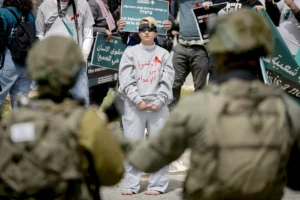
Since January, thousands of people have gathered intermittently in some southern cities in support of the STC, including Aden, Seyoun and Ataq, protesting the Saudi-backed Yemeni government and demanding southern independence. Those demonstrations have become increasingly violent, with protesters accusing the government of repressive actions and the government accusing protesters of assaulting them.
In response, Riyadh has shifted to a softer strategy focused on service delivery and economic stabilization, including actions like covering the salaries of public employees and soldiers. It has also announced dozens of development projects in southern provinces, slated for implementation in the coming months. Services have improved in Aden, Prime Minister Shaya Al-Zindani said, citing reforms and Saudi assistance.
Yet service provision has not translated into political legitimacy.
Saudi Arabia now faces a defining test in southern Yemen: It has reasserted control but has not secured consent.
- Karim Al-Yemani
On Feb. 2, thousands marched in Seyoun, Hadramout province, chanting for independence. Protesters climbed buildings, lowered Yemen's national flag and raised the former southern flag. They also tore down a large portrait of Saudi King Salman and Crown Prince Mohammed bin Salman displayed on a main street — a stark indication that anger toward Riyadh persists. In a similar incident on Feb. 20, a pro-STC crowd reportedly attempted to storm the al-Maashiq Presidential Palace in Aden, with at least one killed by security forces and 11 more injured.
Abdulrahman Mohammed, a Seyoun resident, said in an interview that many hardline separatists remain unmoved by improved services or salary payments. It remains uncertain whether such incentives can eventually persuade them to abandon their pursuit of an independent state. "I saw how angry the protesters were in Seyoun. It was clear that they would not accept any Saudi offer," Mohammed said. "Such an attitude risks prolonging instability in the south."
He added: "This is a difficult period for the south and a new challenge for the Saudi leadership. Riyadh faces two choices: Either use force to suppress separatists or withdraw from the south, and both options carry significant risks."
For nearly a decade, the southern separatists exercised considerable authority in many provinces. Yet within a week, that influence evaporated. Now, what lies ahead for Saudi Arabia's new role in the south remains uncertain.
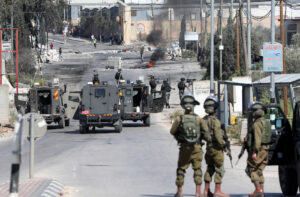
If separatists continue escalating their actions, confrontation with Saudi-backed government forces is inevitable. Events in Shabwah on Feb. 11 illustrate this risk: An anti-Saudi protest in Ataq escalated after some protesters, reportedly armed, attempted to storm the local administrative building. An armed clash ensued, resulting in deaths and injuries among both soldiers and demonstrators.
Still, many southerners view direct confrontation with Saudi Arabia as risky and counterproductive.
Salah Alsaqladi, a southern political commentator, argues that the south today sits at a critical juncture, facing an exceptionally dangerous situation. "This necessitates the application of reason and the guidance of wisdom, rather than resorting to methods of revenge, resentment and stubbornness."
He added: "We are facing an Arab alliance led by the largest regional economic power and a significant religious symbol, the Kingdom of Saudi Arabia. We must deal with it with unequivocal pragmatism, whether we like it or not, to achieve victory for our cause and rectify our relationship with it."
Saleh Obaidi, a southern media activist, similarly said that it is not wise to reject cooperating with Saudi Arabia, arguing that the Kingdom can be given a chance to prove how it can help the south. "The Kingdom has paid the salaries of public employees and soldiers in the south. This is done to establish stability," he explained. "Let us try Riyadh for six months and see what will happen."
Saudi Arabia now faces a defining test in southern Yemen: It has reasserted control but has not secured consent. Military leverage and economic incentives may contain unrest for now, but they cannot be a substitute for political legitimacy or resolve the question of the south's future. If Riyadh governs primarily through security arrangements, it risks becoming indefinitely entangled in managing fragmentation. If it escalates or withdraws, it risks renewed instability.
Whether the Kingdom can translate dominance into durable authority — rather than another cycle of unrest — will shape both southern Yemen's trajectory and Saudi Arabia's regional standing.
The views and positions expressed in this article are those of the author(s) and do not necessarily reflect the views of DAWN.