






Athar Ihab Abu Samra is a Palestinian writer and translator from Gaza. Her work focuses on displacement, war and the everyday realities of Palestinian life.
At sunset in the Gaza Strip's Deir al-Balah, a thin wire runs from a battered solar panel into a cluster of phones sprawling across a plastic table. Around it, a small crowd waits. Some sit on overturned buckets as others stand silently, watching the slow progress of the charging symbols on their phones.
"I charge one phone for five shekels," says Mahmoud al-Najjar, 32, adjusting the panel's angle toward the fading light. "If there's no sun, there's no work. Simple as that."
Before the war, Mahmoud worked in construction. Today, he depends on a partially broken solar panel that he salvaged from a destroyed building. With it, he has built a fragile source of income: one that fluctuates with the weather, fuel shortages and the constant uncertainty of life in Gaza.
"It's not a business," he says. "It's survival. Some days I make enough to buy bread. Some days, I don't make anything at all."
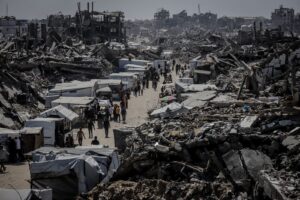
Since October 2023, Gaza's formal economy has effectively collapsed. According to U.N. Trade and Development (UNCTAD), Gaza's economy contracted 83% in 2024, pushing nearly the entire population into poverty. Another September 2024 World Bank report described the Palestinian economy as nearing "freefall." A year and a half later, banks operate sporadically, salaries have disappeared and access to basic services is inconsistent at best. In their place, a patchwork of informal, improvised practices has emerged — what residents increasingly describe as a "survival economy."
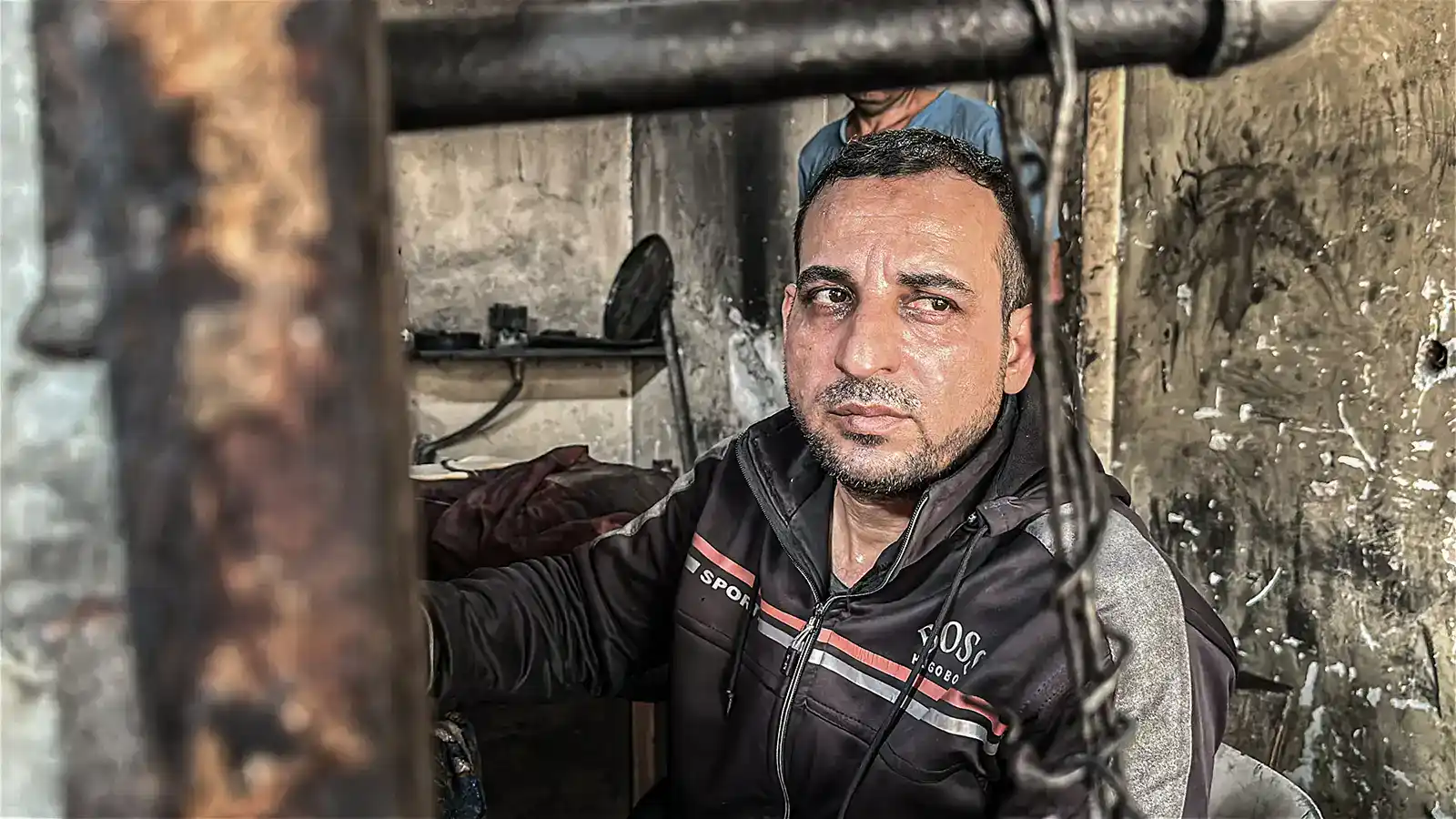
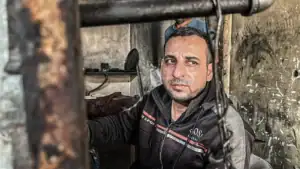
Across Gaza, individuals are turning whatever resources they have into income. In Khan Younis, Abu Fadi, a former mechanic, now repairs small generators from the remains of his workshop. "People bring me parts from everywhere. Nothing matches," he says. "I try to fix something from nothing. Sometimes it works, sometimes it doesn't. But people are desperate."
"Even one hour of electricity matters," he adds.
Across Gaza, individuals are turning whatever resources they have into income.
- Athar Ihab Abu Samra
The demand for such services has grown as infrastructure has deteriorated across Gaza, particularly electricity and other public service systems, according to World Bank assessments. Those with technical skills — electricians, mechanics, even bakers — have found ways to adapt, though never with stability.
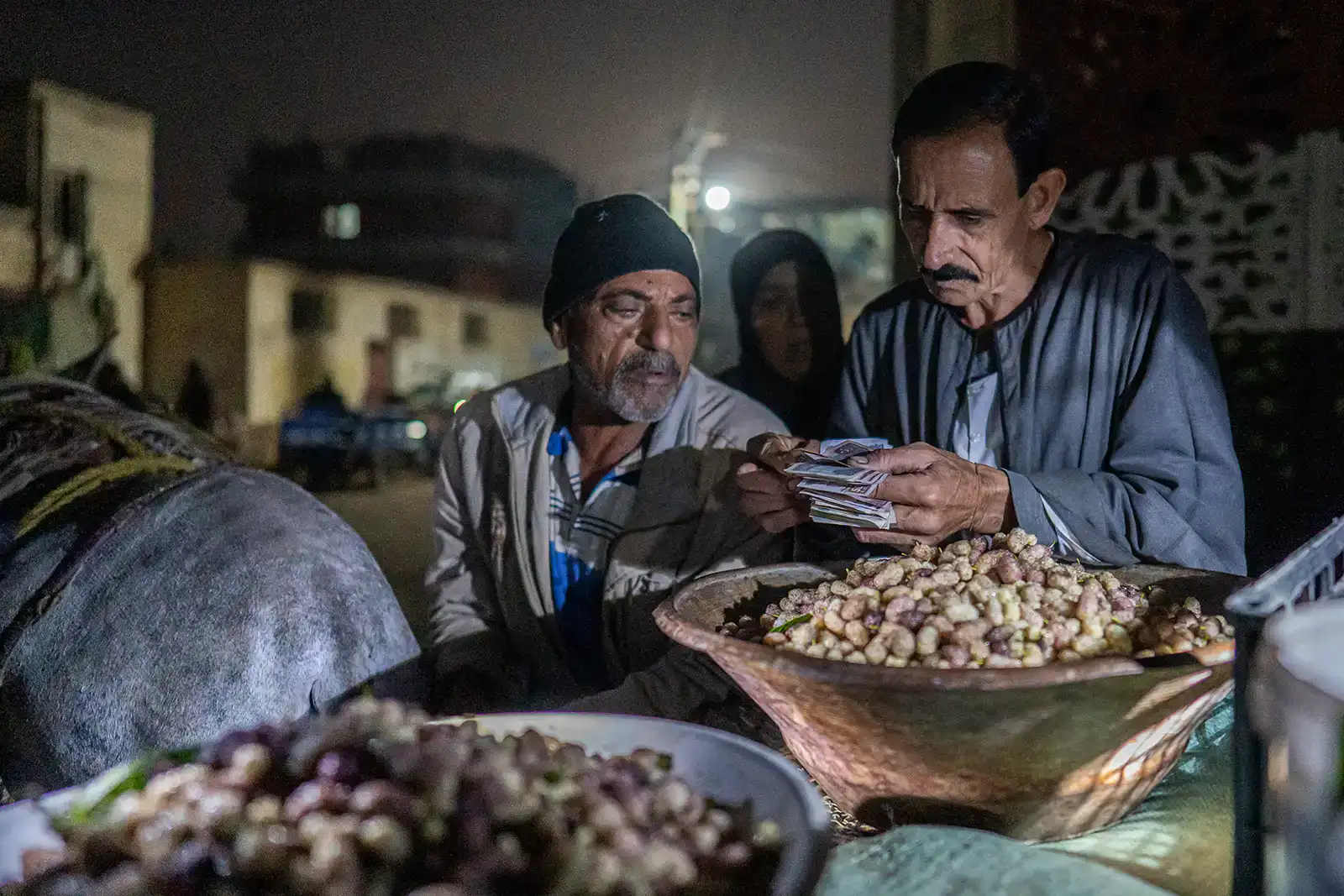
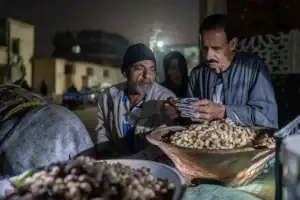
Others rely on trade. In a makeshift street stall in Rafah, Um Khaled, 55, sells small bags of flour and sugar, repackaged from larger aid distributions. "I don't have a salary, and my sons can't find work," she explains. "When we receive aid, I divide it. We keep some, and I sell the rest. It's the only way to get cash."
Yet such strategies reveal deep inequalities. Access to resources, whether solar panels, tools or aid, determines who can participate in this emerging economy and who cannot. "If you don't have anything to start with, you're stuck," Mahmoud, who runs the phone charging station, says. "You wait for aid, or for someone to help you."
"There's no other option," he concludes.
Even aid itself has become entangled in market dynamics. "Many people sell part of the aid they receive to buy other necessities," Abu Fadi says. "Sometimes you need medicine or cash more than flour or canned food." Items meant for free distribution often reappear in informal markets, sold at fluctuating prices. For many, survival depends not only on need, but on access, timing and connections.
While Gaza's survival economy has emerged from the collapse of infrastructure, a parallel system is taking shape among displaced Palestinians in Egypt. It is driven by exclusion rather than destruction.
In Cairo, where tens of thousands of Palestinians have sought refuge since the war began, legal and economic barriers make formal employment difficult, if not impossible. Without stable residency or work permits, as Egypt does not grant formal refugee or permanent residency status to displaced Palestinians, many are pushed into informal, often invisible forms of labor. Shelter and services are similarly difficult to garner.
Inside a modest apartment in the Faisal neighborhood of Giza, the smell of roasted chicken and sumac fills the air as the ancient pyramids dot the surrounding landscape. In the kitchen, Reem Abu Odeh, 41, carefully flips a tray of musakhan, preparing orders that began arriving early that morning.
"At first, I was just cooking for my neighbors," she says. "Then someone asked if I could make extra for them. Then more people started asking. That's how it began."
While Gaza's survival economy has emerged from the collapse of infrastructure, a parallel system is taking shape among displaced Palestinians in Egypt. It is driven by exclusion rather than destruction.
- Athar Ihab Abu Samra
Today, Reem runs a small, home-based food business, relying almost entirely on WhatsApp to connect with customers. Most are other Palestinians with families longing for familiar meals in an unfamiliar place.
"This food reminds them of home," she says quietly. "And for me, it's a way to survive here."
Like many women, Reem has turned her domestic space into a site of income generation. But her work exists in a legal gray area. There are no permits, no protections and no guarantees. "I can't expand," she explains. "I can't open a shop. Everything I do is limited to this space, and even this could stop at any moment."
For Nour al-Haddad, 27, displacement meant abandoning her career as a teacher in Gaza. In Egypt, she now offers private tutoring sessions to Palestinian children, meeting them in homes or connecting online when possible. "I had a profession," she says. "Here, I'm starting from zero. I take whatever I can find."
Despite the differences between Gaza and Egypt, the underlying pattern is strikingly similar. In both contexts, Palestinians are constructing alternative economic ecosystems in the absence of existing, stable economic systems. These ecosystems do not foster economic growth or long-term security, instead existing as adaptations shaped by constraint, uncertainty and necessity. They rely on personal networks rather than institutions, and on improvisation rather than regulation. While these efforts reflect resilience, they also expose the structural conditions that make such resilience simultaneously necessary and difficult to sustain.
In Gaza, Israel's destruction of infrastructure and its ongoing restrictions on humanitarian aid and economic activity have made normal economic life nearly impossible. In Egypt, legal precarity and limited access to rights have pushed displaced populations into informal, often precarious work.
"Everything here feels temporary," Reem says. "You can't plan. You can only think about today."
This raises urgent questions about the long-term consequences of these survival economies. What happens when informality becomes the norm? Who is excluded when access depends on resources or connections? How sustainable are these systems under prolonged crisis?
For now, these economies persist because there is no alternative. These systems are fragile by nature, dependent on unstable resources, personal networks and constant improvisation. They provide temporary relief but little long-term security or protection for those relying on them.
As the crisis continues, many Palestinians remain trapped in cycles of uncertainty, unable to build stable lives either inside or outside Gaza. Yet Israel's ongoing genocide in Gaza also persists, with its repercussions impacting Palestinian families beyond the Strip. Herein lies the precarity of the moment: Palestinians face limbo, stuck between what is still an active war and restrictions on basic life beyond the fighting. For many, the only choice is forward.
As the sun disappears over Deir al-Balah, Mahmoud begins to pack up his solar panel, glancing at the darkening sky. "Tomorrow depends on the sun," he says. "And on luck."
In Cairo, Reem finishes her last order of the day, already thinking about tomorrow.
Between them lies a shared reality: In the absence of systems, survival becomes an individual burden. In that space, people build what they can; not to move forward but simply to remain.
The views and positions expressed in this article are those of the author(s) and do not necessarily reflect the views of DAWN.