



























Michael Omer-Man is the Director of Research for Israel-Palestine at DAWN.
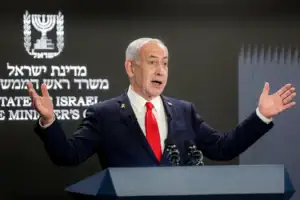
The Israeli right's response to sanctions and other measures taken against violent settlers in recent years has been a master class in feigned incredulity. In November 2025, Israeli Prime Minister Benjamin Netanyahu, parroting countless talking heads in Israel and abroad, described settler violence as the work of "a handful of extremists [trying] to take the law into their own hands." While of course obscuring the true scale and harms of settler attacks on Palestinians, Netanyahu and his ilk are not wrong to be puzzled by the fixation of Israel's allies in the West with settlers after new EU sanctions on some members of the settler movement in early May.
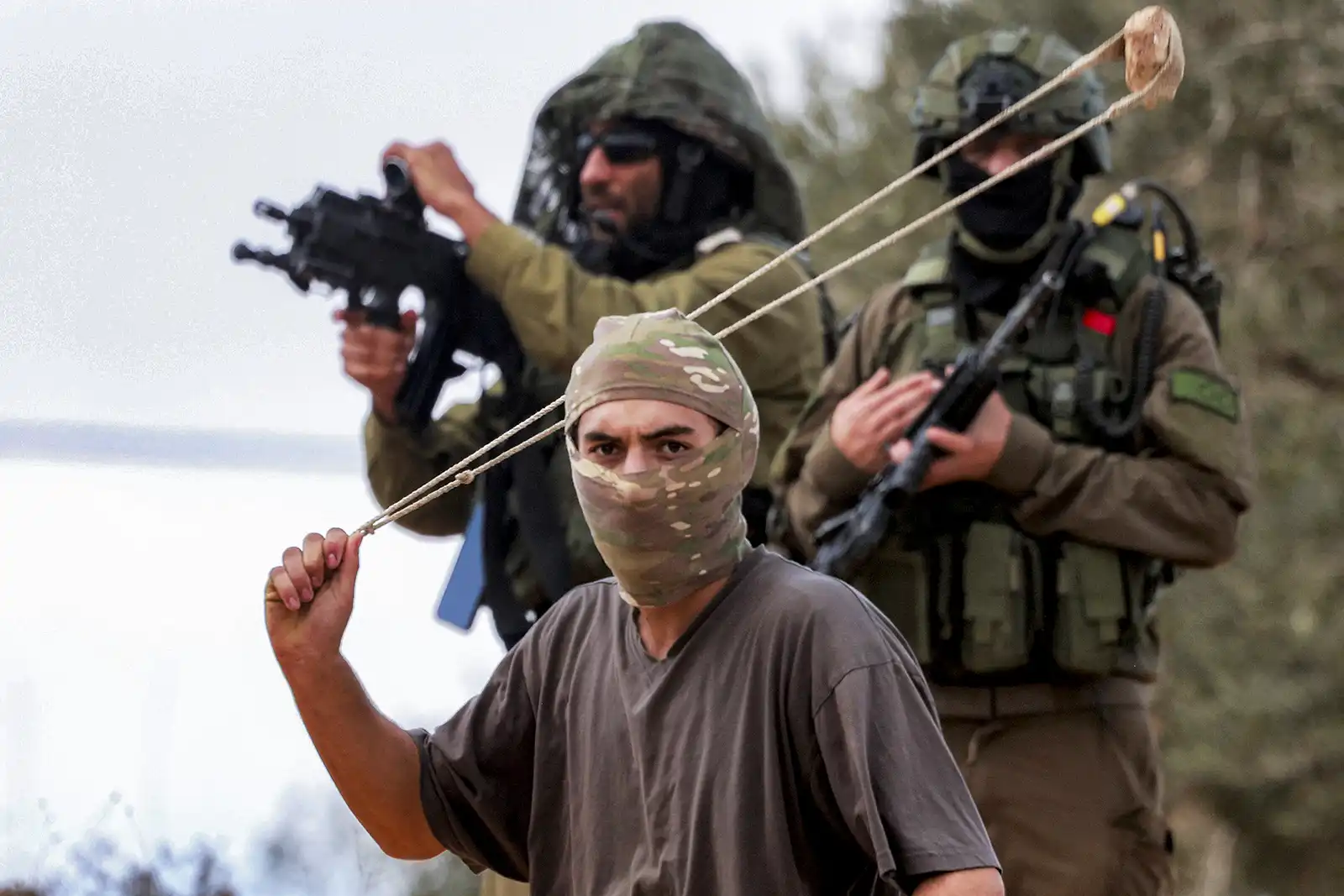
Settler violence is indeed a menace. Since the start of 2023, Israeli settler attacks have forcibly displaced over 5,800 Palestinians in the West Bank, including 45 entire communities. The violence is directly correlated to a massive campaign to take over Palestinian land and expand and establish new settlements. Since October 2023, Israelis have created over 150 new settlements. Most are so-called "farming outposts," from which many settler attacks emanate. 2025 saw the highest number of settler attacks since the United Nations started tracking them in 2006, and 2026 is not looking much better, with the international body now reporting an average of six attacks per day.
In that context, the latest tranche of European Union sanctions on Israeli settlers and organizations — joining those already imposed by the United Kingdom, Canada, Australia and the United States in recent years — are a shot across the bow. Indeed, these measures have successfully captured the attention of Israeli leaders.
The latest tranche of European Union sanctions on Israeli settlers and organizations — joining those already imposed by the United Kingdom, Canada, Australia and the United States in recent years — are a shot across the bow.
- Michael Schaeffer Omer-Man
Even the biggest and most powerful backers of Israel's settlement project have been forced to admit that there is a problem. In an op-ed published in Israeli newspaper Makor Rishon several weeks before the EU's most recent sanctions, hard-right Israeli Finance Minister Bezalel Smotrich condemned the phenomenon while attributing it to a violent handful of lawbreakers. Even the Israeli security establishment, which has given settlers near-total impunity, enabling and oftentimes even participating in their violence over the years, understands things are slipping out of their control.
As a result, the Israeli establishment has even started to take small steps to rein in settlers. Senior military officials have begun referring to settler violence as "Jewish terrorism." Since the start of 2026, Israeli police have reportedly arrested 79 settlers for attacks on Palestinians, indicting 35 of them.
For Smotrich and most of the Israeli establishment, however, the problem is less about the violence, which they insist is merely a nuisance, and its devastating impact on Palestinians, which they mostly view as a feature, not a bug. They are preoccupied with the sensitivity that the world — and even significant parts of Israeli society — has towards settler violence. The potential backlash, Smotrich writes, "endangers the enormous strategic achievements that have been built … with great effort and consistent policies over the past 50 years of settlement, and even more so in the past three years."
The success of Israel's settlement enterprise that Smotrich touts, alongside the brutal oppression of Palestinians it entails, is not the work of a handful of extremists. The 150 new farming outposts, for example, were established "in coordination with the [Israeli] army and state institutions," Maj. Gen. Avi Bluth, the commander of the Israel Defense Forces (IDF) in the occupied West Bank, recently boasted. The farming outposts, Smotrich has further explained, are designed "to strengthen [Israel's] grip on the land" and realize his vision of full Israeli annexation of the West Bank, including East Jerusalem, which necessitates pushing as many Palestinians out as possible.
That state-backed effort has been wildly successful. Farming outposts, once described by the Israeli establishment, including Netanyahu, as unauthorized, wildcat settlements, now control over 1 million dunams of land. That total constitutes roughly 18% of the entire West Bank.
While settler violence has reached unprecedented levels, it is significantly dwarfed by the policies and actions of Israel and its military.
- Michael Schaeffer Omer-Man
In addition to simply seizing territory, Israel has also taken significant steps to bring settler violence itself under the aegis of the state in ways that would have been unthinkable in years past. Following the Hamas attacks of Oct. 7, 2023, Israel deputized thousands of settlers, equipping them with military rifles and uniforms. They quickly turned this newfound authority on Palestinians. Overnight, settlers often became indistinguishable from soldiers, further blurring an already effectively invisible line between settler violence and state violence.
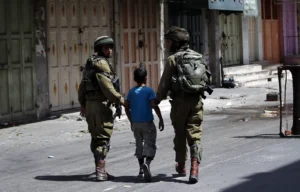
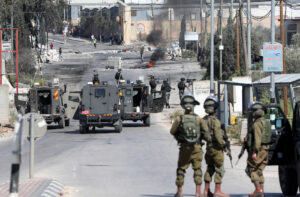
Crucially, while settler violence has reached unprecedented levels, it is significantly dwarfed by the policies and actions of Israel and its military. Since Oct. 7, 2023, Israeli settlers have killed somewhere between 31 and 51 Palestinian civilians and wounded over 1,700 in the West Bank, according to U.N. data. In comparison, the Israeli military killed over 1,000 Palestinians in the West Bank during this period, at least 619 of whom the United Nations has determined to be civilians, and wounded over 10,000.
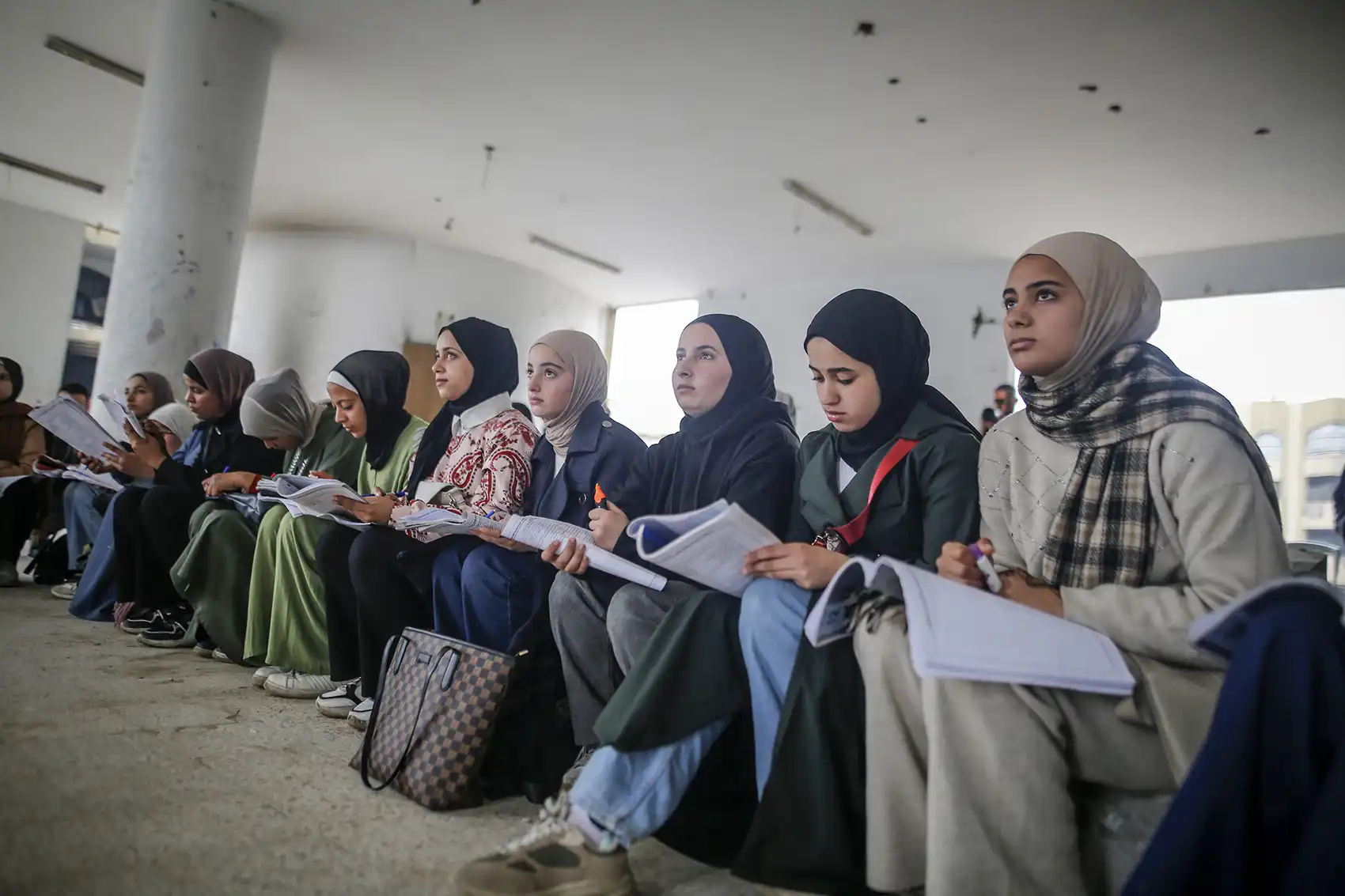
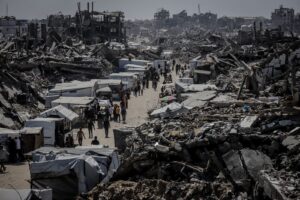
When it comes to forcible displacement, the data is even more striking. In early 2025, the Israeli military forcibly displaced about 32,000 Palestinians from just three refugee camps in the northern West Bank. In comparison, since October 2023, Israeli settlers have forcibly displaced an estimated 5,700 Palestinians. Israeli forces, of course, have also killed tens of thousands of Palestinians in the Gaza Strip and forcibly displaced virtually its entire population of over 2 million in that same period.
In announcing the EU decision to impose sanctions on three Israeli settlers and four settler organizations last month, French Foreign Minister Jean-Noël Barrot wrote on X: "The European Union is sanctioning today the main Israeli organizations guilty of supporting the extremist and violent colonization of the West Bank, as well as their leaders. These most serious and intolerable acts must cease without delay."
Alas, despite Europe's newfound enthusiasm and willingness to act, the EU sanctions did not in fact target the institutions and leaders guilty of facilitating the extremist and violent colonization of the West Bank. If, as Barrot wrote, the violent colonization of the West Bank is intolerable, then the EU, its member states and others must look at its most significant perpetrators and begin taking concrete steps against the State of Israel and its leaders — not just individual settlers and settler organizations.
Sanctioning violent settlers and settler organizations is meaningful. If nothing else, it chips away at the impunity Israel has enjoyed for far too long and serves as a potential roadmap for more impactful measures. Israeli leaders like Smotrich understand that threat, not just to individual settlers but to the entire settler project and its larger goals of a Greater Israel. Yet as long as it treats Israeli violence and forcible displacement as the work of rogue actors and not a state project, the international community is denying itself the diplomatic and policy tools that could actually form an effective response to Israel's strategic efforts — actively carried out by settlers, soldiers and government ministers alike — to erase Palestine and Palestinians.