
















(Washington, D.C., May 2, 2026) — In response to Kuwait revoking citizenship from thousands of individuals, including journalist Ahmed Shihab-Eldin, over his social media posts and his two sisters, and Bahrain revoking citizenship of dozens, including family members, over alleged expressions of sympathy during the war, DAWN issued the following statement:
"Bahrain and Kuwait are using the war as cover to crush what remains of civic space in their countries," said Omar Shakir, Executive Director at DAWN. "Stripping people of citizenship, detaining journalists, and criminalizing online speech are not measures of stability; they are signs of governments terrified of their own publics."
"Revoking citizenship for online speech is not a sovereign prerogative. It is a violation of international human rights law, including the Universal Declaration of Human Rights, and the Arab Charter of Human Rights," said Raed Jarrar, Advocacy Director at DAWN. "Every person has the right to nationality, and that right cannot be revoked to punish speech."
"Revoking citizenship over speech is one of the most extreme forms of political punishment a state can impose," said Omid Memarian, Communications Director at DAWN. "Kuwait and Bahrain are weaponizing nationality to silence dissent and deepen fear."
Background:
On April 27, 2026, Bahrain's Interior Ministry revoked the citizenship of 69 individuals it accused of "glorifying" Iranian attacks or "colluding with foreign entities," sweeping in dependent family members and threatening entire households with statelessness. The Bahrain Institute for Rights and Democracy (BIRD) called this move the first "mass revocation" of nationality since 2019. Over the last decade, Bahraini authorities have stripped hundreds of dissidents, clerics, journalists, and opposition figures of their nationality by royal decree or court order, including mass trials in 2019 and 2018 that collectively revoked the citizenship of 253 people. Bahraini authorities have also reportedly detained more than 200 people since the war began for war-related speech.
In Kuwait, authorities have reportedly revoked the citizenship of more than 71,000 people since October 2024, nearly 5% of its population, in what rights groups describe as the largest denationalization wave in recent Middle Eastern history. Legislation passed in December 2024 expanded the grounds for revocation to include "moral turpitude," criticism of the emir, and vaguely defined threats to state security. Kuwaiti authorities have also since March stripped of their nationality nationals who shared images, footage, or opinions about the strikes of the war.
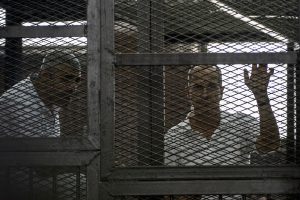
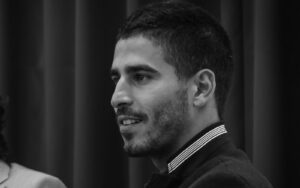
Kuwaiti authorities unlawfully detained US-Kuwaiti journalist Ahmed Shihab-Eldin on March 3, 2026, after he posted publicly available, CNN-verified footage of a US fighter jet crashing near a military base in Kuwait. They held him incommunicado across two interrogation facilities and Kuwait Central Prison for 52 days, on charges of spreading false information, harming national security, and misusing his mobile phone. A judge acquitted him of the first charge on April 23, 2026, and imposed a six-month good-conduct pledge on the others. Prosecutors are now appealing this ruling. On April 29, 2026, Kuwait's Supreme Committee for Nationality Affairs stripped Shihab-Eldin and his two sisters, Lana and Luma, of their citizenship.
The Universal Declaration of Human Rights sets out that everyone has the right to nationality and that no one shall be deprived of their nationality arbitrarily. The Arab Charter on Human Rights guarantees every person the right to a nationality and forbids governments from stripping it away without a legally valid reason.