

















States Arming the UAE Risk Complicity in Its Grave Abuses in Sudan
(Washington, D.C., July 15, 2026) – The UN General Assembly and individual member states should impose an immediate arms embargo on the United Arab Emirates (UAE) because of its central role in supporting genocide in Sudan and grave human rights violations across the region, said DAWN today.
Documented supply lines, training camps, re-exported foreign weapons, and business ties underline extensive UAE support for the Rapid Support Forces (RSF), the Sudanese paramilitary group found by the Independent International Fact-Finding Mission for the Sudan to have perpetrated acts of genocide against non-Arab communities in Sudan's Darfur region. States like the U.S., France, U.K., China and Italy that continue to provide arms or other military support to the( UAE amid the Sudan genocide risk complicity in its grave abuses in Sudan and across the region.
"From documented re-exports of Chinese howitzers to Darfur to Colombian mercenaries and Dubai-based financial networks fueling the RSF, the evidence of UAE's support for abusive actors in Sudan is overwhelming," said Omar Shakir, DAWN's Executive Director. "The UAE is the principal external sponsor of a force that a UN fact-finding mission has found committed acts of genocide. No legal framework, international or domestic, can justify continued arms transfers to the UAE."
DAWN has written to five governments best placed to choke off the flow, calling on them to impose an arms embargo: the United States, which supplies 54 percent of the UAE's arms; France, its second-largest supplier at 13 percent; the United Kingdom and China, whose components and re-exported munitions have reportedly turned up in RSF hands in Sudan. All four are permanent members of the UN Security Council, and each has both the legal duty and the leverage to halt transfers now. DAWN also wrote to Italy, which in 2021 revoked missile and bomb licenses to the UAE under its own arms export law — the one supplier that has already acted — urging Rome to reinstate and extend those measures.
The UAE has armed and financed the RSF since April 2023. The UAE government denies arming the RSF, but the UN Panel of Experts on Sudan identified UAE-linked supply lines transporting weapons, vehicles, and fuel through Chad and Libya into Sudan. Amnesty International's analysis of shipment-level trade data, images and videos from social media, and interviews document foreign weapons in RSF hands, including UAE-made armored personnel carriers (APCs) with French and British-manufactured components, a variety of small arms produced in Türkiye, Russia, and Serbia, and UAE re-exports of Chinese Norinco bombs and howitzers to the RSF. The only country in the world that imports the AH-4 howitzer from China is the UAE, according to SIPRI arms transfer data cited by Amnesty International. U.S. Senator Chris Van Hollen and U.S. Representative Sara Jacobs confirmed in January 2025 that the UAE kept arming the RSF, in direct contradiction to assurances it apparently gave Washington.
Between 2021-2025, the UAE ranked as the 11th largest arms importer globally, according to the Stockholm International Peace Research Institute (SIPRI). SIPRI's data shows that, over the past decade, more than half (54%) of the UAE's imported arms have come from the U.S., with the remainder coming from France (13%), South Africa (4.9%), Türkiye (4.9%), South Korea (4.7%), Sweden (2.4%), the Netherlands (2.2%), Russia (2.2%), Canada (2.1%), Israel (2%), China (1.4%), Germany (1.1%), Singapore (0.9%), Australia (0.9%), the United Kingdom (0.8%), Spain (0.7%), Italy (0.6%), Finland (0.2%), Serbia (0.1%), and Brazil (one transfer during this period). Some of these weapons have allegedly been used in Sudan.
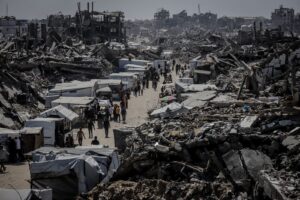
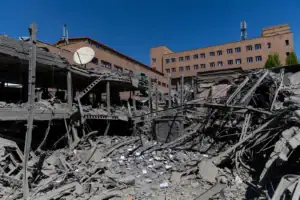
Sudan's civil war began on April 15, 2023, when fighting broke out between the commanders who jointly launched the 2021 coup and their forces: RSF commanded by Mohamed Hamdan Dagalo ("Hemedti") and the Sudanese Armed Forces (SAF) under army chief Abdel Fattah al-Burhan. The conflict has killed at least 59,000 people and displaced around 14 million people. Famine grips multiple regions. Following an 18-month siege, on October 26, 2025, the RSF seized El Fasher, the capital of Sudan's North Darfur state. The UN Office of the High Commissioner for Human Rights documented over 6,000 killings in the first 72 hours of the RSF offensive, finding that the RSF and allied Arab militia perpetrated mass killings and summary executions, sexual violence, disappearances, torture, and pillaging. On February 19, 2026, the UN Independent International Fact-Finding Mission for the Sudan concluded that RSF forces committed three underlying acts of genocide against the Zaghawa and Fur non-Arab communities. Mission Chair Mohamed Chande Othman stated that "the scale, coordination, and public endorsement of the operation by senior RSF leadership" demonstrate intent. On July 8, 2026, the Mission reiterated its earlier findings.
Amnesty International found in a more than 200-page July 2026 report that RSF committed a range of crimes against humanity, including murder, extermination, forcible transfer, imprisonment, torture, rape, sexual slavery, other forms of sexual violence, enslavement and persecution. The International Criminal Court has investigated crimes in Darfur since the UN Security Council referred the situation in 2005. In a July 2026 interview with the BBC, ICC Deputy Prosecutor Nazhat Shameem Khan said her office holds firm, concrete evidence that RSF forces committed war crimes and crimes against humanity in Darfur, and that it has linked specific RSF leaders to atrocities against civilians during the fall of El Fasher — describing the investigation's progress as "significant."
The danger is spreading beyond Darfur. In mid-2026, the RSF massed forces around El Obeid, one of Sudan's largest cities, in a siege that observers warned echoed the assault on El Fasher. On July 6, 2026, the UN Human Rights Council, in a motion brought by the United Kingdom and 14 other states, condemned the RSF's escalating violence and ordered an urgent inquiry into abuses there, after the UN human rights chief warned of an unfolding "catastrophe," including summary executions, abductions, torture, and sexual violence.
Yet the resolution stopped short of naming the states fueling the conflict. On July 8, 2026, the UN Fact-Finding Mission for Sudan warned that El Obeid "must not become the next crime scene," documenting the same encirclement and attacks on civilian infrastructure that preceded the fall of El Fasher.
By supplying the RSF with weapons, money, and fighters, the UAE bears state responsibility for the campaign the UN has found includes acts of genocide. Under Article 16 of the International Law Commission's Articles on State Responsibility, a state that aids or assists another in an internationally wrongful act, with knowledge of the circumstances, shares responsibility for it — the standard the International Court of Justice applied to complicity in genocide in Bosnia v. Serbia (2007), and which Article III(e) of the Genocide Convention makes a punishable act. The UAE's conduct meets that threshold. But the chain does not end in Abu Dhabi: states that keep arming the UAE, knowing its weapons may be diverted to the RSF, risk incurring the same complicity.
"This is not a one-off failure of due diligence. It is a deliberate, sustained, and well-documented policy by the UAE to arm a force credibly accused of genocide," said Isabelle Hayslip, Advocacy Associate at DAWN. "Every continuing arms transfer to the UAE risks complicity in atrocity crimes. The international community has the evidence. What is missing is the will to act."
The UAE's record of fueling abuse extends beyond Sudan. In Yemen, UAE-backed forces have run secret prisons and tortured detainees for the past decade. In Libya, the UAE has violated the UN arms embargo by arming the Libyan National Army (LNA) militia leader Khalifa Haftar, whose forces have committed war crimes during Libya's civil war.
The UAE is one of the largest U.S. trading partner in the Middle East. On July 10, 2026, the U.S. Department of Commerce announced elevated UAE's status under the Export Administration Regulations (EAR), loosening export controls on military items, commercial satellites, spacecraft to the UAE "in light of the ongoing U.S.-UAE military partnership and the UAE's commitment to preventing the diversion and misuse of sensitive U.S. technology." The U.S. also approved license-free UAE access to advanced computing items, including AI chips and servers.
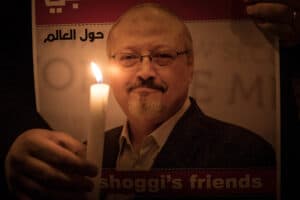
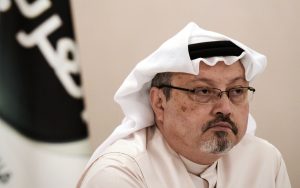
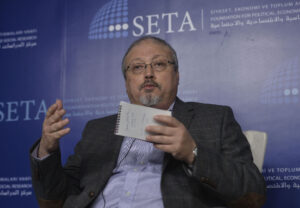
The UAE has also deepened defense and diplomatic integration with Israel, as Israel carries out a genocide in Gaza and escalates its crimes against humanity and ethnic cleansing in the occupied West Bank. In November 2025, Elbit Systems disclosed a $2.3 billion contract with the UAE, the largest in the company's history, which Israeli media reported threw Israel's arms industry a lifeline as European governments suspended weapons purchases over the Gaza genocide. UAE intelligence agencies have deployed Israeli-made Pegasus and Predator spyware against journalists, dissidents, and the family of murdered DAWN founder Jamal Khashoggi.
"Far from promoting regional peace, the UAE and Israel are fomenting war crimes, crimes against humanity and genocide across the region and are relying on a steady flow of Western weapons to do it," said Raed Jarrar, DAWN's Advocacy Director. "States that continue to arm either government are choosing complicity. They should cut ties immediately."
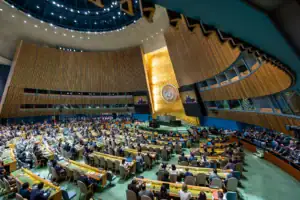
DAWN calls on the General Assembly to convene an emergency special session under the Uniting for Peace procedure and pass a resolution declaring UAE conduct a violation of the UN Charter, the Arms Trade Treaty, and the Darfur arms embargo. All states, including the United States, France, the United Kingdom, China, and Italy, should halt arms transfers, re-export authorizations, and security cooperation with the UAE so long as it continues to carry out or aid and abet grave abuses. The U.S. Congress should pass S.J.Res. 51, 52, and 54 (joint resolutions of disapproval that would block pending U.S. arms sales to the UAE) and the Stand Up for Sudan Act, which would bar U.S. arms sales to the UAE until it ends its support for the RSF, and close the Arms Export Control Act emergency-waiver loophole. The UN Security Council should refer the situation in Sudan to the International Criminal Court and expand the Darfur arms embargo to all of Sudan, with explicit reference to external state enablers.
Please see below for further information.
————
UAE Fueling Abuses in Sudan
The UAE has armed and financed the RSF since the start of the war in April 2023. It often has done so through supply routes through Chad and Libya, according to the 2024 report by the U.N. Panel of Experts. Reuters reported on at least 86 UAE-origin cargo flights to the Am Djarass airstrip in Chad between April 2023 and December 2024, and 105 cargo landings at the Kufra airport in eastern Libya between April and November 2025. Leaked UN reports and human rights reports have documented the provision of military support, including APCs and re-exports of Chinese Norinco bombs and howitzers, from the UAE to the RSF.
In addition, the UAE has facilitated bringing in mercenaries from Colombia to fight in Sudan. Using mobile device-tracking data from 2025 and other commercially available information, the Conflict Insights Group followed Colombian mercenaries through UAE-supported staging points in the region to El Fasher and RSF drone hubs in South Darfur. CIG director Justin Lynch told the BBC the research proves UAE involvement "with certainty." Human Rights Watch also documented in May 2026 Colombian private military contractors trained at UAE military bases and deployed to Sudan on the payroll of Global Security Services Group (GSSG), a UAE-based security company whose clients likely include members of the Emirati ruling family. According to HRW, foreign fighters were present when the RSF committed mass killing and rape during the fall of El Fasher in October 2025. The report also documented Colombian contractors training RSF recruits, which included many children.
Beyond arms and mercenaries, UAE-based companies and financial networks have also helped the RSF launder money and evade sanctions, as the Sudan Transparency and Policy Tracker has documented. Furthermore, the UAE has reportedly enabled the illicit transfer of gold from Sudan, thereby enriching the RSF.
The UAE has positioned assets in different parts of Africa to maintain its supply lines to the RSF. Reuters reported in April 2026 on a new Chinese Feilong-1 and several Turkish Bayraktar TB2 combat drones at the Al Khadim airbase in Libya, under the control of Khalifa Haftar's Libyan National Army (LNA). Analysts noted that Haftar's forces lack the expertise to operate such drones and that the systems could be used to defend supply lines running to the RSF. In addition, satellite imagery confirms that the UAE manages an Israeli-made ELM-2084 radar at the Bosaso base in Somalia's self-governing region of Puntland, deployed under a secret arrangement with local authorities, which protects an airfield that flight data shows the UAE increasingly uses to fly supplies to the RSF.
The U.S. Treasury has also sanctioned seven UAE-based companies in January 2025 under Executive Order 14098 for financing the RSF.
UAE Aiding & Abetting Violations Across the Region
The UAE's pattern of arming and enabling abuses extends beyond Sudan.
In Yemen, the UAE-backed Southern Transitional Council (STC), which the UAE has funded, trained, and armed, and Security Belt forces continue to operate secret detention facilities even after the December 30, 2025 UAE withdrawal announcement. Human rights groups and journalists have amassed testimonies of arbitrary detention, enforced disappearance, torture, sexual abuse, inhumane conditions, and deprivation of food, water, and medical care have been documented for the past decade. On January 27, 2026, STC forces detained members of Yemen's National Commission for the Investigation of Alleged Violations of Human Rights at an unofficial detention center in Socotra. UAE-backed forces arbitrarily detained human rights lawyer Sami Yassin Ka'id Marsh in November 2023, holding him incomunicado and torturing him for four months at al-Nasr military camp before moving him to Bir Ahmad prison, another UAE-linked facility where the Associated Press documented systematic sexual violence in 2018. A 2019 CNN investigation established that the UAE transferred U.S.-made Mine-Resistant Ambush Protected (MRAP) vehicles and small arms to al-Qaeda-linked militias in Yemen, in violation of end-use agreements under the Arms Export Control Act.
In Libya, the UAE has backed Khalifa Haftar's Libyan National Army (LNA) with arms for over a decade, despite its commission of grave abuses and in violation of the arms embargo established by UN Security Council Resolution 1970. A March 28, 2022 report of the UN Independent Fact-Finding Mission on Libya found the LNA implicated in numerous violations and abuses of international human rights and humanitarian law since 2016, including attacks on civilians, extrajudicial killings, enforced disappearances, torture, and sexual violence.
Legal Obligations
International law and treaty obligations prohibit continued arms transfers to the UAE. The Genocide Convention, adopted by the UN General Assembly in 1948, obligates all States Parties under Article I to prevent genocide and prohibits in Article III(e) complicity in genocide. The Arms Trade Treaty binds its signatories not to defeat the treaty's purpose. The treaty requires states in Article VI to maintain a national arms control system, prohibits in Article 6 any transfer that would be used to commit genocide, crimes against humanity, war crimes, or that would violate a UN Security Council embargo, requires in Article 7 an assessment of the risk that arms will be used to commit serious violations before any export, and requires in Article 11 concrete measures to prevent diversion. The UAE's conduct breaches all four. The ATT has been signed by the UAE and ratified by most states exporting arms to the UAE, including France, China, Italy, and the UK. Arms transfers to the UAE also violate the UN Security Council arms embargo on Sudan's Darfur region, established by Resolution 1556 (2004), expanded by Resolution 1591 (2005), and renewed through Resolution 2791 (2025), which binds all UN member states under Article 25 of the UN Charter.
While the International Court of Justice dismissed Sudan's genocide case against the UAE, it did so purely on jurisdictional grounds, since the UAE attached a reservation to Article IX of the Genocide Convention when it joined in 1990, shielding itself from the Court's jurisdiction. The Court never examined the evidence, nor made any evidentiary ruling.
U.S. law also prohibits these transfers. The U.S. Arms Export Control Act requires recipients to agree not to retransfer U.S. weapons without prior consent, and Section 502B of the Foreign Assistance Act prohibits security assistance to any country that engages in a consistent pattern of gross violations of human rights. The Leahy Law (22 U.S.C. § 2378d) prohibits assistance to any unit of foreign security forces credibly implicated in such violations.
Nearly every state whose weapons reach the RSF through the UAE has its own laws against unauthorized re-export, and the UAE may be violating each one. The UK's Export Control Act 2002 bars exports that carry a clear risk of diversion to an undesirable end-user. France requires a certificat de non-réexportation that blocks any onward transfer without approval from Paris. Italy's Law 185/1990 prohibits arms exports to states at war or violating human rights, and Rome used it in 2021 to revoke missile and bomb licenses to the UAE itself. Germany's War Weapons Control Act ties every export to a binding end-use guarantee. China's Export Control Law restricts re-export and requires end-user certificates, which means the UAE's transfer of Chinese bombs and howitzers to the RSF breaks Chinese law too. Each supplier has the power, and the legal duty, to enforce its own rules and stop the flow of arms.
The General Assembly has the authority and the precedent to take meaningful action amid these ongoing abuses. Under the Uniting for Peace procedure (Resolution 377A(V), 1950), the Assembly may meet in an emergency special session when a permanent member's veto prevents the Security Council from acting. The Assembly has convened eleven such sessions, including on the Suez Crisis in 1956, the Middle East in 1967, Namibia in 1981, the Occupied Arab Territories in 1982, and the situation in the Occupied Palestinian Territory, which remains open since 1997. It convened its most recent emergency special session on Ukraine in 2022. Member states should request an emergency special session now to declare UAE conduct a violation of the UN Charter and to call on all states to halt arms transfers.
An emergency special session would not, by itself, impose a binding embargo. Only the Security Council can do that under Chapter VII of the Charter, and the U.S., as a permanent member, regularly shields Israel from such measures. A General Assembly resolution carries different weight. It can establish the facts on the record, name those responsible, and lay the foundation for measures by individual states and future accountability efforts.
State responsibility does not depend on UN action. Under customary law codified in the International Law Commission's Articles on State Responsibility and confirmed in the International Court of Justice's 2007 Bosnia v. Serbia case, all states have an independent legal obligation to halt arms transfers that risk facilitating genocide, regardless of whether the General Assembly acts.