




















Dario Sabaghi is a freelance journalist whose work has appeared in The Independent, Middle East Eye, Deutsche Welle and other outlets.
Lebanese citizens face a disastrous scenario in their search for justice after the June 26 signing of a new trilateral framework between the United States, Lebanon and Israel. With thousands of Lebanese killed and millions displaced, the agreement explicitly forces Beirut to cease its efforts to seek out accountability measures for Israel's crimes on its territory. That outcome cannot stand. Lebanese citizens deserve justice.
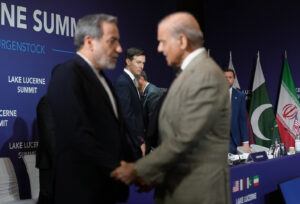
The agreement drew mixed reactions in Lebanon. While only four political parties welcomed it, more than a dozen parties, including Hezbollah and its ally the Amal Movement, criticized it. Hezbollah Secretary-General Naim Qassem described the framework as "null and void." He also demanded that the government implement the Iran-U.S. memorandum of understanding, signed on June 17, as a 60-day ceasefire. That framework includes Lebanon and aims to end the regional war between the United States and Israel, on the one side, and Iran and its allies, on the other.
While Lebanon hopes the trilateral framework can establish a ceasefire, end the war and Israel's occupation and lay the groundwork for peaceful relations between both states, it is widely viewed as tilted toward Israeli interests. The agreement does not bind Israel to a fixed withdrawal timetable, instead establishing a phased plan in which the Lebanese army restores authority over all Lebanese territory by exchanging so-called "pilot zones" with Israel. That process starts in two zones, north and south of the Litani River, and only alongside efforts to disarm Lebanese Hezbollah.
While Lebanon hopes the trilateral framework can establish a ceasefire, end the war and Israel's occupation and lay the groundwork for peaceful relations between both states, it is widely viewed as tilted toward Israeli interests.
- Dario Sabaghi
Progress is tied to verifiable security benchmarks under a U.S.-backed coordination mechanism linking reconstruction and civilian return to security certification, effectively tying core issues like reconstruction and the return of displaced Lebanese to Israeli and American approval. This process risks becoming indefinite, given Israel's disinterest in withdrawing from Lebanese territory. Washington's refusal to truly rein in its junior partner further weakened Lebanese sovereignty that its negotiating party sought to restore.
The agreement's most dangerous provision, however, is Article 13, which prevents Lebanon from pursuing legal action internationally over Israeli crimes, further emboldening Israel's breaches of international law while deepening the existing climate of impunity and lack of accountability in Lebanon.
"The agreement is problematic because it is not balanced at all," said Nizar Saghieh, a Lebanese lawyer and the executive director of the nonprofit research and advocacy organization Legal Agenda. "It deeply affects Lebanese sovereignty, as if Lebanon is no longer fully sovereign but under the scrutiny of Israel, which would decide whether we have complied with its conditions."
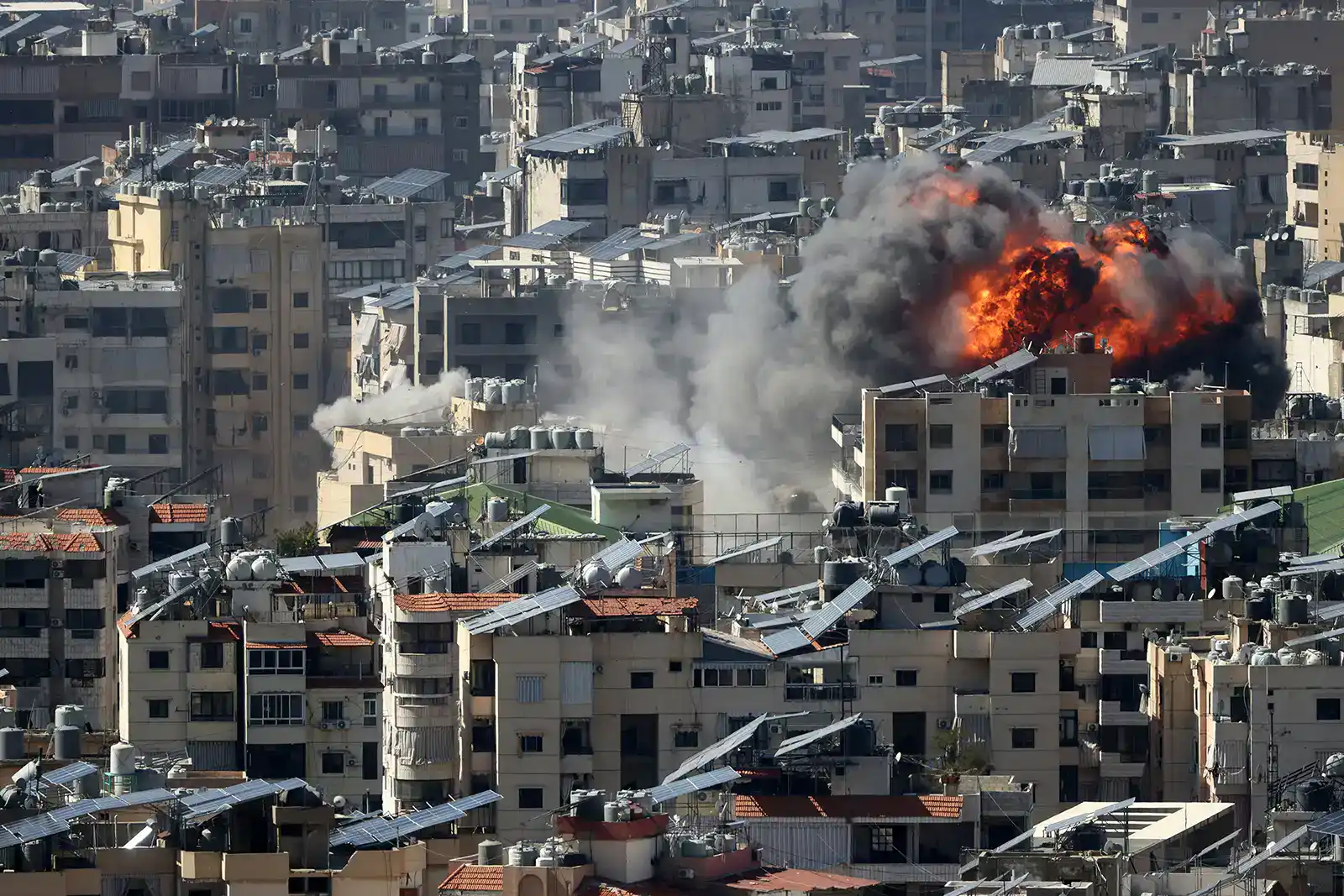
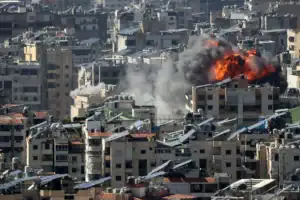
Since March, Israel and Lebanon have reached six ceasefire understandings, none of which have held as Israeli strikes continued. Lebanon's Ministry of Health recorded at least 4,297 people killed and 12,196 injured since the war reignited in 2026. In the first phase of the conflict, between October 2023 and November 2024, Israel killed over 4,000 people. Today's fighting is effectively an extension of that war, intensifying since Hezbollah chose on March 2 to retaliate for Israel's killing of Iranian Supreme Leader Ali Khamenei.
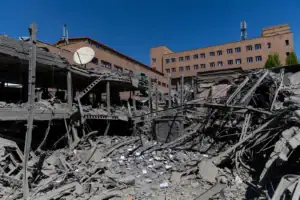
Since 2023, human rights organizations have documented countless Israeli violations of international humanitarian law, including attacks on civilians, health workers, journalists and peacekeepers. Other violations include the unlawful use of white phosphorus in populated areas, the deliberate destruction of tens of thousands of homes and other civilian infrastructure, numerous unlawful mass evacuation orders, double-tap strikes on rescuers, strikes on ambulances and hospitals, intentional efforts to cut off aid routes and environmental damage after spraying herbicide and burning farmland. Of a population of 5.9 million people nationally, Israel has displaced over 1 million people from southern Lebanon.
Washington's refusal to truly rein in its junior partner further weakened Lebanese sovereignty that its negotiating party sought to restore.
- Dario Sabaghi
"What we've seen since 2023 is a pattern of repeated unlawful attacks that, in a context of impunity, has emboldened [Israeli] officials to openly declare violations already committed and their intention to commit more," said Ramzi Kaiss, a Human Rights Watch researcher investigating human rights abuses in Lebanon.
The scale of the damage caused by Israel in Lebanon makes the framework politically difficult for Lebanon's leadership to present as a victory, not only to Hezbollah but also to the many victims of the war. Yet Beirut is moving forward.
David Wood, senior analyst for Lebanon at the International Crisis Group, noted that "while some people from areas that Israel has attacked may well prefer a path toward a final and conclusive agreement over the cycles of warfare they've endured, even if that meant some kind of new security arrangement with Israel, Lebanon purporting to renounce its right to take legal action against Israel for its brutal military operations in Lebanon over the past two and a half years is very difficult for many Lebanese affected by the war to accept."
Whether the framework requires cabinet approval is disputed. Prime Minister Nawaf Salam, a former chief judge at the International Court of Justice (ICJ), recently said in an interview that the framework is not a treaty requiring ratification. Lebanon's pause in legal action against Israel is limited to negotiations, he continued, arguing that Beirut preserves all legal rights, including war crimes claims and documentation of violations.
However, Wood argued that Article 13 creates two major problems. By accepting its language, Lebanon's leaders lose a nonviolent legal option to hold Israel accountable for wartime violations by removing an alternative to armed resistance and by making Israel's withdrawal conditional on Hezbollah's disarmament. Key to his point is the reality that neither the Israeli nor the Lebanese governments can realistically enforce that disarmament process.
"Lebanon risks renewed large-scale conflict if Israel uses the government's inability to disarm Hezbollah and claims of Hezbollah regrouping as a pretext to attack … [It also risks] a loss of political credibility for signing commitments it cannot implement," Wood added.
Lebanon has filed multiple U.N. complaints against Israel, including 66 between October 2023 and November 2024. It filed another in January 2026, citing 2,036 violations of its sovereignty and existing ceasefire agreements.
However, complaints alone are not an effective path to accountability, Kaiss argues, urging Lebanon to make greater use of International Criminal Court (ICC) mechanisms despite its non-membership in the Rome Statute, the court's founding document that establishes jurisdiction for state signatories. Similarly, Lebanon would benefit from new domestic laws criminalizing war crimes and other international offenses, establishing another basis for formal investigations into Israeli violations.
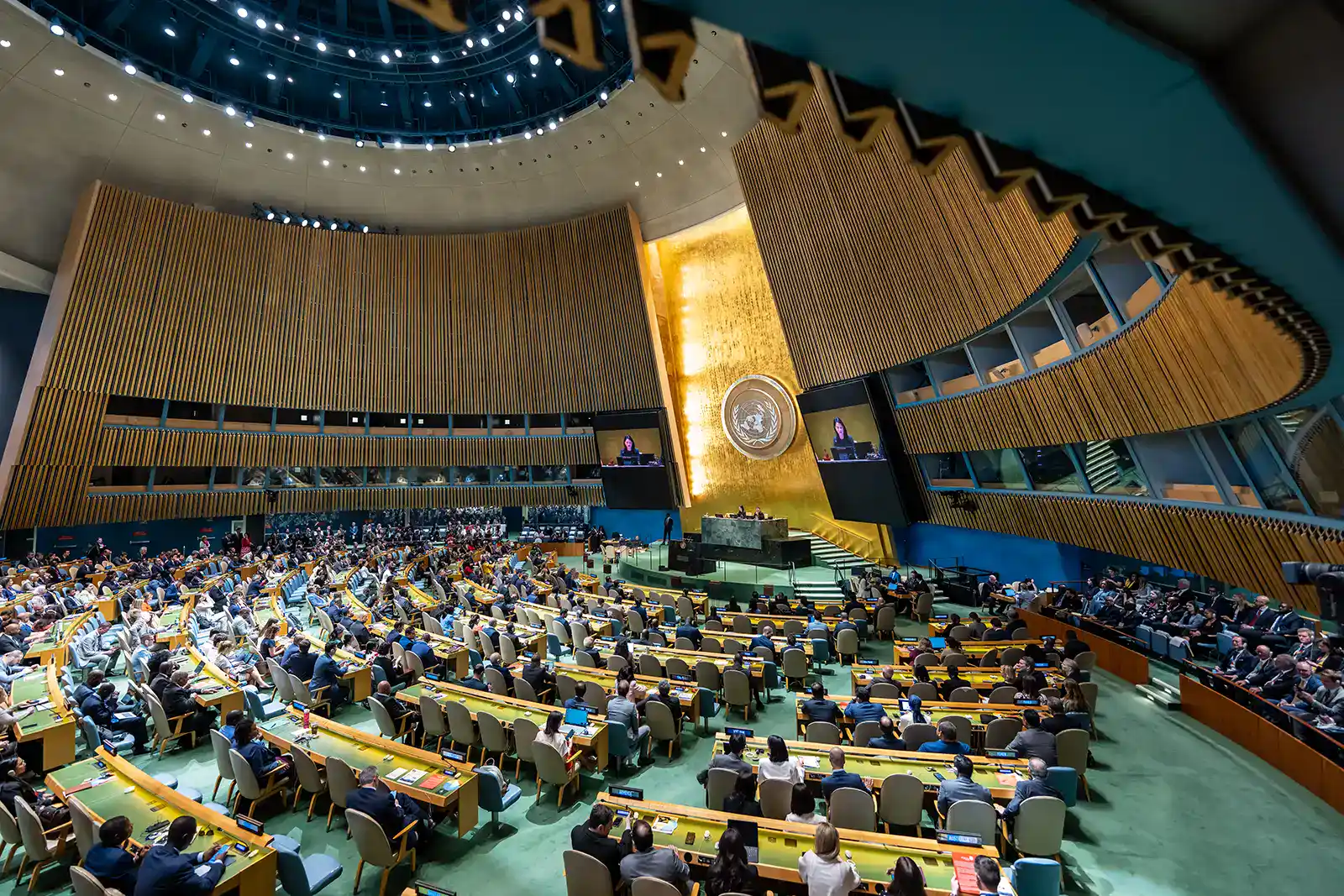
Since October 2023, international legal action against Israel has intensified. The ICC issued warrants in 2024 for Israeli Prime Minister Benjamin Netanyahu and former Defense Minister Yoav Gallant over Gaza allegations. The ICJ is hearing South Africa's genocide case and ordered provisional measures in January 2024 that require it to refrain from, prevent and punish those committing acts under the genocide convention. The U.N. General Assembly and U.N. Human Rights Council have urged ceasefires.
Saghieh argued that the framework will not affect Lebanese individuals' right to bring cases before any jurisdiction. "I think, what they really want," he said, "is to secure a commitment from Lebanon not to join the ICC." He views that path as the most effective for stopping Israeli operations, a dynamic Israel understands well.
That process, however, is still slow, leaving Article 13 of the trilateral framework as a gain for Israel. For now, it is likely to evade new legal action against it in international fora, appearing to have utilized U.S. power and the weakness of Lebanon's reform government to its advantage. Whether Lebanese citizens, facing the horrors of Israel's military campaign against them and their homes, can receive some form of justice in the future remains to be seen.
The views and positions expressed in this article are those of the author(s) and do not necessarily reflect the views of DAWN.