

























Kourosh Ziabari is a journalist and media studies researcher based in New York. A contributor to New Lines Magazine, he is an alumnus of the East-West Center’s Senior Journalists Seminar Fellowship and a 2022 World Press Institute fellow with the University of St. Thomas, Minnesota. Ziabari has covered the United Nations on a Dag Hammarskjold Fund for Journalists fellowship. His writings have appeared in Foreign Policy, Politico, The American Conservative, openDemocracy and Truthout, among others. He has earned a master’s in political journalism from Columbia Journalism School. Follow him on X (Twitter).
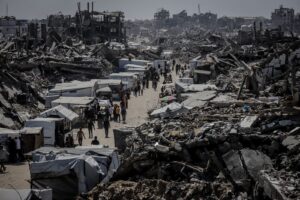
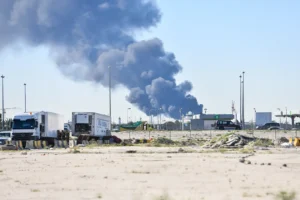
Hostilities in the U.S.-Israel war on Iran are currently paused, but the civilian damage caused by the conflict may not be remedied in the foreseeable future. One of the many ways the unprovoked campaign has harmed Iranians is the destruction of the country's cultural heritage sites during airstrikes that have reportedly cost U.S. taxpayers $25 billion.
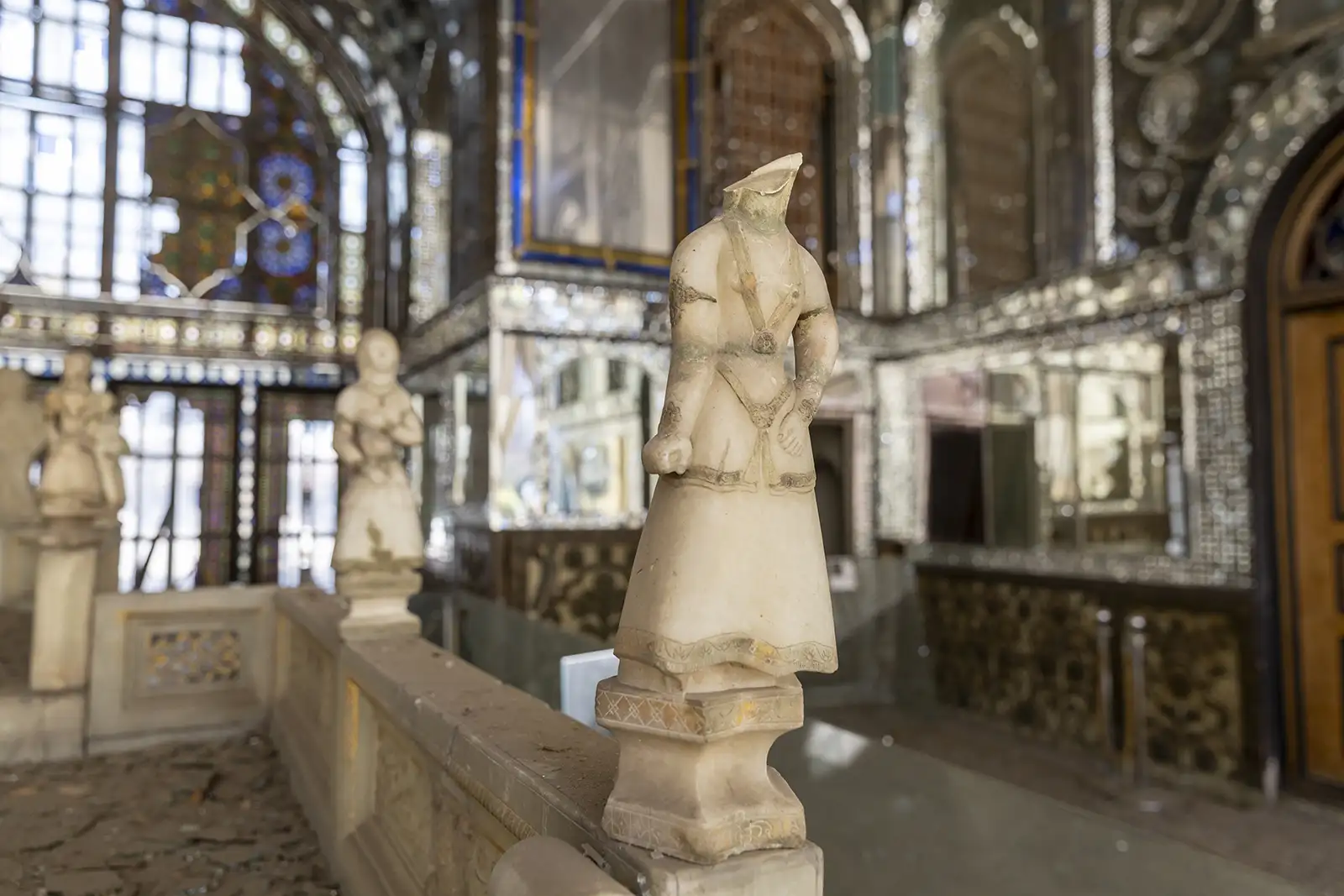
According to Iran's Ministry of Cultural Heritage, Tourism, and Handicrafts, 149 landmarks sustained damage in the 39 days of bombardment. Five of these locations are United Nations Educational, Scientific and Cultural Organization (UNESCO) World Heritage Sites, recognized for their "outstanding value to humanity." This rare trend poses crucial questions: Why were these protected edifices bombed in the first place, and why are there no investigations?
A couple of statues or museums sustaining incidental damage in a massive bombing campaign may be explained as flawed planning or an operational error, but the destruction of a large number of palaces, monuments and houses of worship raises alarm bells when dovetailed with U.S. President Donald Trump's apocalyptic rhetoric of "civilizational annihilation" and his threats of returning Iran to the "Stone Ages."
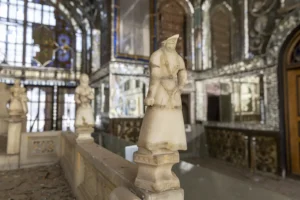
Tehran's Golestan Palace, a 15th century Qajar Dynasty royal residence referred to as Iran's Versailles; Isfahan's 17th century Chehel Sotoun pavilion, reputed for its architectural complexity; and Ali Qapu, the 430-year-old imperial palace known for the panoramic view it offers of Isfahan's Naqsh-e Jahan Square, are just a few of the historic and cultural sites hit by American and Israeli bombs during the war.
These exquisite components of Iranian life and history, which Trump has routinely insulted as he has commandeered the war effort, are not Iran's belongings only. They are relics of a distant past helping define the tapestry of human experience.
- Kourosh Ziabari
Significant locations similarly targeted but less frequently highlighted are the 1,800-year-old Falak-ol-Aflak Castle, an ancient hilltop fortress constructed during the Sasanian era, and the sprawling Qajar-era Sa'dabad Complex in Tehran, whose 15 subsidiary museums have been seriously damaged.
These exquisite components of Iranian life and history, which Trump has routinely insulted as he has commandeered the war effort, are not Iran's belongings only. They are relics of a distant past helping define the tapestry of human experience, which thrived in Mesopotamia and Persia and gave rise to new cultural ecosystems elsewhere. If this war of aggression has resulted in the endangerment of these properties, international stakeholders are naturally expected to speak out, explore legal pathways to accountability and navigate options that can enable a smooth reparation process as reconstruction work eventually begins.
The global response to different aspects of the war implies the impracticality of holding the perpetrators to account for what in many instances have amounted to war crimes, including the double tap strikes by the U.S. military that killed more than 150 students at an all-girls elementary school in Minab. Israeli and American operations to extrajudicially kill Iranian politicians also fall within this rubric.
Given the visible patterns of impunity surrounding the war on Iran, Israel and U.S. targeting of cultural heritage sites may not be the infringement that catalyzes legal action. Political will is elusive, in no small part due to the U.S. government's power and influence. That does not mean, however, that legal mechanisms should not be exhausted when international law is broken, even if precedent is lacking when it comes to the application of justice and accountability mechanisms to major powers and their allies.
The Convention for the Protection of Cultural Property in the Event of Armed Conflict, also known as the 1954 Hague Convention, is the international legal framework governing the protection of heritage sites in wartime. The treaty came into being on the heels of Nazi Germany's plunder of European art during World War II, meant to act as the judicial guardrail preventing future desecration of artwork and cultural property.
Different provisions of this treaty, which the United States signed on the same day it was opened for signature and subsequently ratified in 2008-09, mandate "protection," "safeguarding" and "respect" for cultural property, distinguishing them as fulfilling separate functions. The original convention instructs state parties to educate their armies and "foster in the members of their armed forces a spirit of respect for the culture and cultural property of all peoples."
The actions of the United States and Israel since the beginning of the war on Feb. 28, together with their menacing rhetoric about Iran, do not suggest a spirit of respect for the cultural patrimony of all nations.
- Kourosh Ziabari
The second protocol to the convention, adopted in 1999, reinforced many of the existing protections. For instance, it introduced an entire chapter on criminal responsibility for treaty violations, including steps related to prosecution, extradition and mutual legal assistance. It also stipulates that state parties should "cancel or suspend an attack" during periods of armed conflict if it becomes apparent that "the attack may be expected to cause incidental damage to cultural property."
The actions of the United States and Israel since the beginning of the war on Feb. 28, together with their menacing rhetoric about Iran, do not suggest a spirit of respect for the cultural patrimony of all nations. The attributable nature of the strikes on Iran's cultural sites further implies a willingness to deliberately flout the convention.
When Trump wrote in an April 7 Truth Social post that "a whole civilization will die tonight, never to be brought back again," some legal scholars and philosophers argued that it represented the most explicit intent to commit an act of mass atrocity. Whereas proving intent is often cited as a barrier to adjudicating genocide, Trump produced such evidence in writing and shared it with millions of people worldwide, although he did not pull the trigger.
Still, he had expressed similar sentiments years before this war. During his first term, Trump warned Iran in January 2020 against retaliating for the killing of Gen. Qassem Soleimani, infamously pledging to target "52 Iranian sites … some at a very high level & important to Iran & the Iranian culture."
With this mentality guiding the direction of the war, reinforced by Trump's penchant for holding grudges and his political platform's fixation on racial animus and cultural grievances, why should it be taken for granted that strikes on historic landmarks across Iran's vast territory were uniformly unplanned and merely accidental?
This critical question, shared by many who care about cultural property and conservation, merits scrutiny by distinguished journalists covering the White House and other national reporters.
While U.S. media has experienced increasing vilification and widespread restrictions during Trump's second term, some prominent journalists have enjoyed exclusive, direct access to the president, questioning him in phone conversations on the status of the Strait of Hormuz or the next steps in the war. Lamentably, they have not posed questions about strikes damaging ancient heritage sites, either directly or during press briefings with his secretaries.
Institutions tasked with enforcing international law have been under increasing strain. The illegal Russian invasion of Ukraine marked a watershed moment when many people lost faith in the viability of the "rules-based order." Israel's genocide in Gaza further exposed the double standards after Ukraine, thrusting the structures that sustained this fragile order into renewed crisis. For many, the order was already crumbling for decades.
The war on Iran is the latest test of credibility for the values and principles that the free world has long espoused as the key to salvation in a universal battle for democracy. These principles have not been able to safeguard Iran's cultural sites, let alone Iranian life. It remains to be seen if reparation and justice for all those to whom this heritage belongs can be won one day.
The views and positions expressed in this article are those of the author(s) and do not necessarily reflect the views of DAWN.