










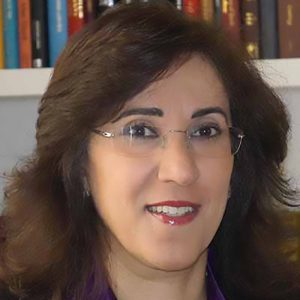
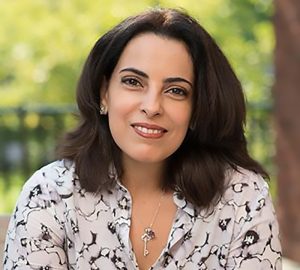

Yara Bataineh is an editorial associate at DAWN’s Democracy in Exile. She holds a bachelor’s degree in political science from the University of Jordan and a master’s degree in international relations from the University of San Diego. Her work has included refugee-focused initiatives and civic education programs in Jordan.
"It's OK to dream." That was the thought running through my mind as I watched Egypt's national team score its second goal against Argentina in the 2026 World Cup round of 16. From the opening whistle, the match felt uneasy. I found myself growing increasingly anxious as a series of inconsistent calls by the referees went against Egypt.
Frustration quickly followed. Argentina tripped, pushed and even struck Egypt's players in the face, yet the referee's whistle remained silent. Despite the frustration, I kept telling myself, "It's OK to dream." For a moment, it felt possible. Then the whistle blew, and Egypt's goal was disallowed. The stadium's energy shifted from hope to disbelief. What should have been a turning point became another decision that deepened the sense that the game was slipping away for reasons beyond the players' control.
Yet Egypt quickly scored again, briefly restoring that sense of hope. Then came another turning point: Mohamed Salah was brought down in the box, yet no penalty was given and no meaningful video assistant referee (VAR) review followed. The play immediately led to the winning Argentina goal. Decisions were straightforward on one side but difficult on the other, highlighting what many would later see as evident double standards.
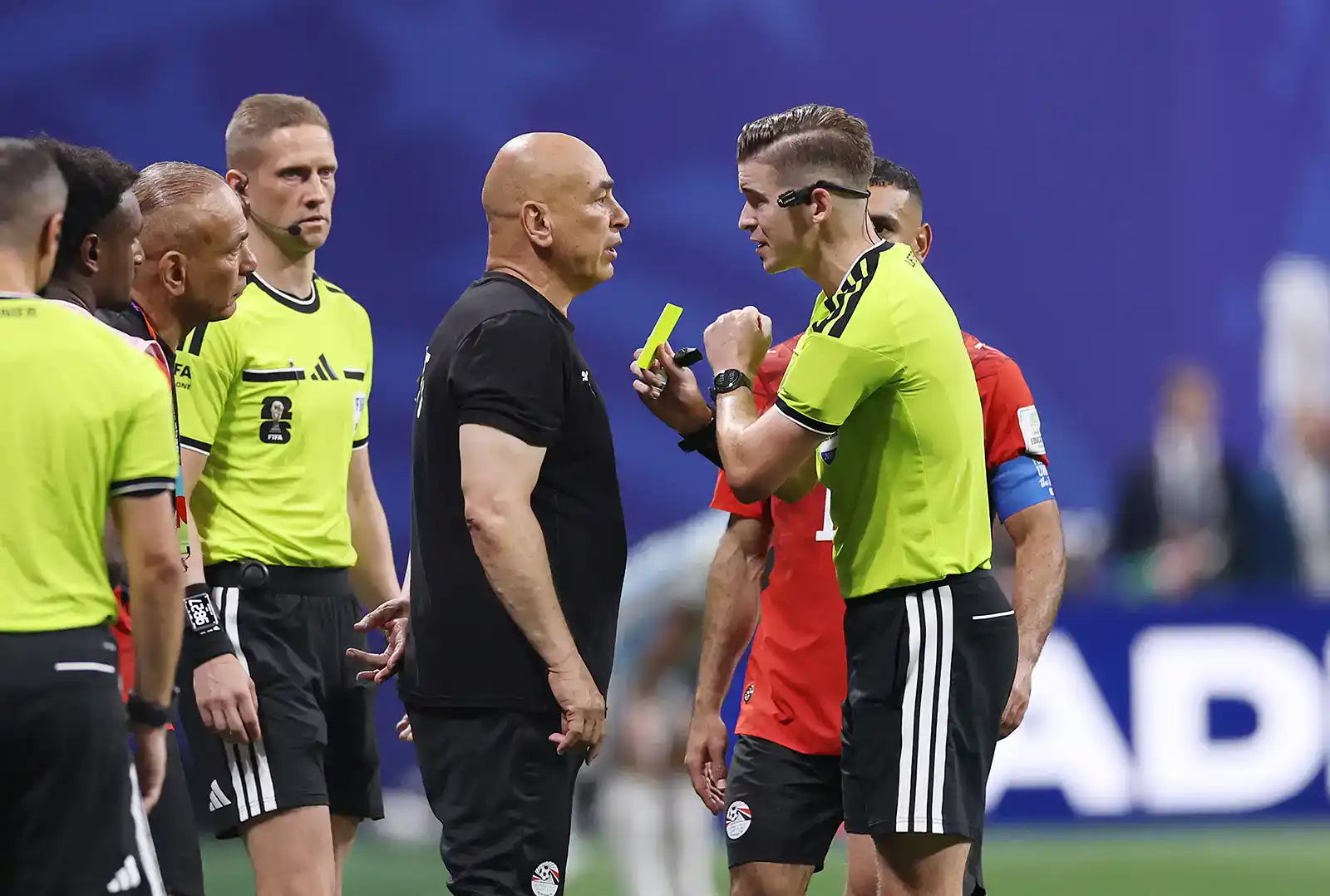
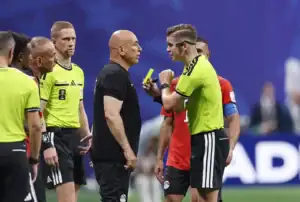
Egypt head coach Hossam Hassan crossed his forearms in an "X" gesture to protest the referee decisions. FIFA introduced the gesture in May 2024 to allow teams to report racism and demand action, with the protocol calling for officials to stop play and address the claim. However, Egypt's use of the signal was not taken seriously, as their protests were instead met with a yellow card for confronting a referee. The moment represents a reminder of the broader struggles Arabs face, including experiences of anti-Arab racism.
For so long, European teams have dominated the sport, and for reasons deeply connected to colonial history rather than superior coaching or talent.
- Yara Bataineh
"Why am I this sad? It's just soccer," I told myself afterward. But for many Arabs, it has never been just a game. I grew up watching every World Cup with friends and family, when we gathered every four years in front of the TV, united by an event we loved.
For so long, European teams have dominated the sport, and for reasons deeply connected to colonial history rather than superior coaching or talent. That history concentrated wealth and infrastructure in Europe, creating migration networks that continue to channel elite players from former colonies to European clubs and national teams. This pattern represents a form of neocolonial exploitation, whereby wealthier nations benefit from the extraction of talent from formerly colonized countries. That dynamic has long extended to resource extraction as well, contributing to national impoverishment around the globe while reinforcing inequalities.
Therefore, in the postcolonial reality of soccer, Arabs and Africans have often felt invisible. Yet, recently, that dynamic began to change. Morocco's run to the World Cup semi-finals in 2022, followed by a record number of Arab teams participating today, shifted something deeper. For the first time, it felt like we were not just watching the game; we were part of it. We no longer felt invisible.
Here we are, despite colonial exploitation that extracted our wealth and resources, despite decades of underinvestment in our soccer systems and infrastructure and despite political repression that has limited opportunities for generations. We made it anyway.
Across the Arab world, Egypt's victories were met with collective celebration. In Gaza, people gathered in large watch parties and cheered. In Libya, fireworks lit up Tripoli and Benghazi after Egypt advanced to the round of 16. Crowds gathered in Kuwait to watch, while in Lebanon, people took to the streets waving Egyptian and Lebanese flags, united in support. This moment revealed the limits of the postcolonial order that sought to transform a connected region into separate nations divided by borders and competing identities. Decades of state-building and political fragmentation have not erased this shared history and solidarity that still unites the Arab world.
After the game ended, I realized that I was not alone in that feeling. The frustration and sense of injustice were shared by many who watched the match unfold. This anger was expressed beyond the region and its people, with many recognizing the controversies surrounding the game and the treatment of Egypt's players.
In the postcolonial reality of soccer, Arabs and Africans have often felt invisible. Yet, recently, that dynamic began to change.
- Yara Bataineh
Former England captain Alan Shearer and former Arsenal striker Ian Wright criticized the inconsistent application of VAR, arguing that Salah's penalty claim deserved the same scrutiny as Egypt's disallowed goal. BBC Sport correspondent Dale Johnson called the decision inconsistent with the tournament's officiating standards. Criticism even extended to the Mayor of New York City, Zohran Mamdani, who said that Egypt was "robbed."
That double standard went beyond those playing the game itself. Before the match began, videos circulated online of Egyptian fans being singled out for additional searches as Argentine fans entered the stadium with fewer visible checks, fueling accusations of profiling and discrimination.
For many Arabs, Egypt's unjust treatment was not viewed in isolation. It resonated with a broader experience of anti-Arab racism and Islamophobia that have often reduced them to narratives of conflict rather than recognize their talent, culture and achievements. In this context, the controversy surrounding Egypt's match raised deeper questions about whose claims are believed and whose appeals are considered worthy.
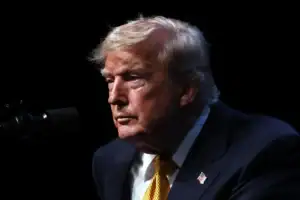
When President Donald Trump demanded that FIFA review the suspension of U.S. player Folarin Balogun, the decision was quickly reversed, clearing Balogun to play. No one needs a reminder that FIFA is corrupt, but this decision made it even clearer, going beyond murky procedures or bias. It highlighted how easily rules can be bent, rewarding some and punishing others, reflecting the confidence with which power steps in and gets its way.
This pattern was evident elsewhere. Iran's national team faced significant off-field challenges throughout the tournament, including travel restrictions and visa issues imposed by the United States that disrupted the team's preparation. For example, they were forced to return to their base camp in Mexico immediately after a match in Los Angeles instead of staying for a planned recovery session. Eleven Iranian staff members were denied entry to the United States. The Iranian Football Federation also had its ticket allocation for its fans revoked shortly before the tournament, leaving many fans unable to attend matches.
Arab and Muslim teams, players and fans faced similar unequal treatment, particularly in the United States, with restrictive visa policies, high costs, detentions and denied entries. Somali FIFA referee Omar Artan was even prevented from attending, despite his qualifications and years of FIFA screening.
Egypt's defeat will fade from memory, but the questions it raised should not. The institutions governing the world's most popular sport continue to reflect the same unequal distribution of power that shapes international politics. Powerful states routinely invoke universal principles while making exceptions for allies, reinforcing the perception that fairness depends on who the rules protect. That pattern of selective accountability has enabled powerful states and their allies, including Israel, to avoid meaningful consequences for documented human rights abuses and violations of international law in Palestine, Lebanon, Syria and Iran.
That is why Egypt's loss was never just about soccer. It was about a world in which power too often determines outcomes. I still think "it's OK to dream." But dreams alone are not enough. Until the same rules apply to everyone, the question will remain the same, in soccer and far beyond it: Who gets the benefit of the doubt, who gets fairness, who gets favors and who is left to play by rules that others can rewrite?
The views and positions expressed in this article are those of the author(s) and do not necessarily reflect the views of DAWN.