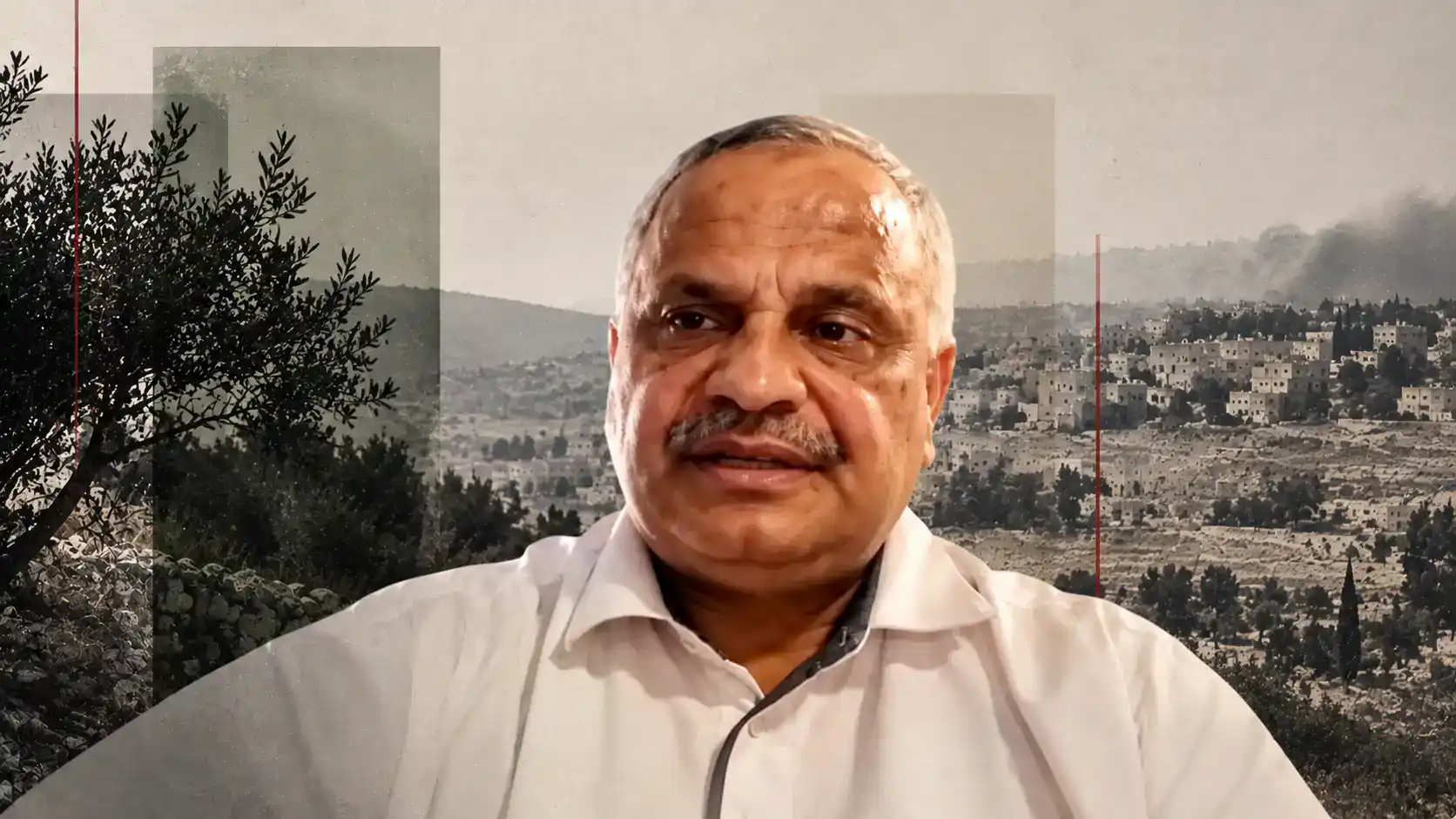




















Ahmad Hamaideh is a pseudonym used by a Jordanian activist who fears retaliation for writing under their real name.
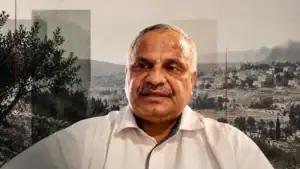
It doesn't take much to end up in a Jordanian jail cell these days. A social media post, even a repost, can be enough. In a defining sign of an internal legitimacy crisis, the ruling authorities are responding with arrests and torture. That repression is not new to Jordan, but it has intensified since the beginning of Israel's genocide in Gaza and is worsening amid the United States and Israel's regional war on Iran, reflecting a deeper anxiety within the regime itself. One recent case shows exactly how that fear plays out in practice: the case of an American Jordanian Drop Site News journalist, Ali Younes.
Jordanian intelligence officers detained Ali Younes on Aug. 17 at the airport upon his arrival in Amman. Jordan's General Intelligence Department (GID), working with Jordanian media outlets, then led an incitement campaign against Younes. Maj. Gen. Ahmad Husni, director of GID, ordered his arrest over Younes' alleged repost of an article questioning U.S. aid to Jordan. On Aug. 24, he was formally charged under Jordan's Cybercrime Law with undermining national security, threatening societal peace, sedition, hate crimes, incitement to violence and denigrating religion. Younes now faces up to three years in prison.
It is uncommon for an American to be arrested in Jordan for reposting content within the United States. Yet it is this exact scenario that highlights the authorities' panic.
It is uncommon for an American to be arrested in Jordan for reposting content within the United States. Yet it is this exact scenario that highlights the authorities' panic.
- Ahmad Hamaideh
The Jordanian state fears rising public anger toward the United States, which is also directed at the Kingdom's alignment with it, particularly as Jordan finds itself in the middle of the American-Israeli war on Iran. Alignment with Washington erodes the state's domestic legitimacy, pushing it to rely on external powers, with the U.S. at the center of that dependence.
Amman provides the U.S. with intelligence and security cooperation, alongside access to military bases. Jordan has hosted U.S. troops, helped defend Israel from Iranian attacks and worked alongside Washington in its so-called "war on terror," which has resulted in more than 4.7 million deaths.
Amman's close security and intelligence cooperation with Israel and the Gulf states further strengthens Washington's regional position. In return, it has provided Jordan nearly $34 billion in aid over 75 years, mostly for its security apparatus, enabling tight control over Jordanians through arrests and torture. This aid accelerated alongside the crackdown, nearly tripling since the Arab uprisings from around $700 million in 2010 to $1.8 billion in 2024.
This exchange, repression at home purchased with backing from abroad, is not exclusive to Jordan. Governments that lack legitimacy often look abroad for the support and recognition they cannot secure domestically. This explains the panic over a repost questioning Amman's relationship with Washington, a relationship many Jordanians oppose.
More than 90% of Jordanians believe the United States is equally responsible for Israel's genocide in Gaza, and 80% boycott Israeli and American products in solidarity with Palestinians. Jordanians have protested more than 500 times over Gaza and Jordan's ties to Israel since the genocide began.
That anger has translated into additional political action. In July 2026, hundreds of Jordanian activists, lawyers and retired military generals signed an open letter asking Jordan to expel U.S. forces. Many signatories belong to powerful tribes in Jordan, which the regime fears, as tribes have long constituted its base. Tribal dissent is thus far more dangerous than broader public dissent.
Alignment with Washington erodes the state's domestic legitimacy, pushing it to rely on external powers, with the U.S. at the center of that dependence.
- Ahmad Hamaideh
Tribal figures have taken this step before, most notably in April 2013 when 87 Jordanian activists of tribal origin signed an open letter to King Abdullah condemning the deployment of U.S. troops, calling them a legitimate target. Two months later, the National Committee of Retired Military Officers sent another open letter to King Abdullah, arguing against stationing American forces in Jordan. Ali Habashneh, the committee's head, described the establishment of a U.S. military presence in Jordan as "a black day" that marked "the return of colonialism."
In 2017, the Howaitat tribe, one of the most powerful in Jordan, protested the U.S. presence in large numbers, burning the American flag and angrily denouncing the monarchy after the conviction of a Jordanian soldier who killed three U.S. troops at Prince Faisal Air Base in southern Jordan. In January 2026, the Al-Dmour tribe barred the U.S. ambassador from attending a funeral in Karak, citing opposition to U.S. policy toward Gaza.
Despite mounting resentment, Jordanian authorities have shown no sign of loosening their ties with Washington. The resulting anger and repression have been deadly.
On March 25, 2025, security forces arrested and beat Hamza Bani Issa for pro-Palestinian activism, leaving him permanently blind in one eye. On July 19, 2025, Jordanian citizen Ahmad Al Ibrahim died in police custody after being tortured. Similarly, in 2018, Ibrahim Zahran died in custody, with leaked photographs showing signs of abuse, while authorities allegedly threatened his family not to speak out.
In May 2021, the Ajarmeh tribe protested and clashed with police in Naour, Amman, after a member was expelled from parliament and arrested for criticizing the king. In June 2018, Fares al-Fayez, a professor and member of Beni Sakhr, Jordan's second-largest tribe, was arrested for a speech at a protest where he accused the king of becoming a "demigod" while "we are slaves." His tribe responded by threatening to "shake the pillars of the Jordanian state," vowing to block the highway to Amman's airport and disrupt flights unless he was freed.
Not every target of repression has a tribe ready to shut down highways on their behalf. Ali Younes had no such backing, not even from the United States, of which he is a citizen. For a month, he faced criminal charges and a travel ban, yet no one from the U.S. Embassy visited him or observed his court appearances. Neither the embassy nor the State Department issued a public statement calling for the charges to be dropped.
Jordanian Americans like Younes are stuck between repression from Amman and indifference from Washington. The same aid meant to secure American interests has financed the machinery used against an American citizen.
These accounts are not a series of unrelated crackdowns. A clear thread connects them all. American aid to Jordan nearly tripled after the 2011 Arab uprisings, which also impacted Jordan. The more public frustration toward the United States grows, the more the authorities will suppress it, and the more they will lean on American backing to do so. This gap between the state and the people cannot widen indefinitely.
What happens if aid stops, leaving the regime to face a public it has spent years beating into silence?
Both the Jordanian authorities and tribes fear the growing threat of ethnic cleansing from the occupied West Bank into Jordan, which would pose a direct threat to the country's national security. Amman may be unable to confront Tel Aviv, especially if Washington is forced to choose between the two. It is unlikely to choose Jordan. The regime is, in effect, preparing for that future by alienating the very people it would need to face it.
The Jordanian state believes its survival depends on controlling dissent wherever it exists. Ali Younes learned that lesson firsthand.
Younes has returned to the United States now, yet the case against him remains open. The open case can be revived at will, intentionally exiling Younes by keeping him at a distance. That decision reminds activists that no one is protected, even abroad, effectively making them all potential exiles.
Ali Younes' arrest was never about the article he allegedly reposted. It was about the Jordanian authorities showing just how little dissent they believe they can survive moving forward.
The views and positions expressed in this article are those of the author(s) and do not necessarily reflect the views of DAWN.