
























Permanent Injunction Also Protects Work With Sanctioned Human Rights Defenders
(New York, November 24, 2026) – A federal judge on Monday barred the Trump administration from punishing Americans for sharing evidence with the International Criminal Court (ICC), or for working with the UN expert and Palestinian human rights groups sanctioned alongside it, Democracy for the Arab World Now (DAWN) and Taxpayers Alliance Against Genocide (TAAG), the plaintiffs in the suit, said today.
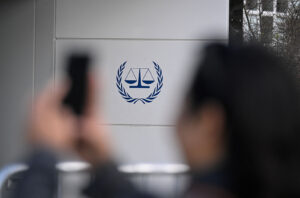
The ruling makes permanent an injunction the Court granted DAWN and TAAG in October and extends the protections to all Americans, making clear that using the ICC sanctions to restrict speech violates the First Amendment of the U.S. Constitution. The permanent injunction strips the Trump administration of one of its most expansive tools—the power to jail or impose crippling fines on Americans for assisting the ICC and for working with groups who were sanctioned for demanding accountability for U.S. and Israeli atrocity crimes—just weeks after the administration sanctioned the entire ICC.
"This landmark ruling dismantles a core part of Trump's ICC draconian sanctions regime," said Omar Shakir, Executive Director at DAWN. "The court has affirmed that every American has the constitutional right to advocate for justice on Palestine without fear of reprisal."
Executive Order 14203, issued in February 2025, grants administration officials the power to impose sanctions on foreigners for supporting the ICC's investigations into U.S. and Israeli nationals for atrocity crimes. Under this order, the administration had sanctioned ICC prosecutors and half its judges, as well as the leading Palestinian human rights groups Al-Haq, al-Mezan and the Palestinian Center for Human Rights (PCHR) and the UN Special Rapporteur on the situation of human rights in the Palestinian Territory occupied since 1967, Francesca Albanese. On October 9, 2026, it escalated its campaign by issuing institutional sanctions against the Court itself.
The executive order also made it a federal offense to provide "services" to—or receive them from—a sanctioned individual or entity. Anyone violating this prohibition could face up to 20 years in prison and up to $1 million in civil fines. Because the government can interpret the term "services" to encompass anything that confers a benefit on the recipient, Americans before this ruling risked criminal prosecution for submitting evidence about possible crimes to the ICC, or for exchanging information with and engaging in joint advocacy with the Palestinian human rights groups and Special Rapporteur Albanese. Faced with that threat, many U.S. groups have halted their ICC advocacy and severed professional ties with the Palestinian human rights groups and Ms. Albanese.
On October 13, 2026, Judge Jesse M. Furman of the U.S. District Court for the Southern District of New York ruled that the "services" prohibition violated the First Amendment because it regulated speech based on its content. However, that ruling only barred the Trump administration from enforcing that prohibition against DAWN and TAAG. The two organizations requested that the court expand the injunction to bar the administration from enforcing that prohibition against anyone and make it permanent. The government argued that the Supreme Court's 2025 decision in Trump v. CASA—which limited lower courts' ability to issue what are known as "universal" injunctions—barred the court from providing relief to anyone who was not part of this lawsuit. On November 23, the court rejected that argument, found that the "services" prohibition was categorically unconstitutional as applied to services that take the form of speech, and "may not be enforced against anyone." The ruling makes clear that the injunction bars "all enforcement of the Services Prohibition with respect to speech-based services" under the sanctions regime.
"The Supreme Court has made it increasingly difficult for lower courts to reign in government abuses by limiting the courts' ability to issue so-called 'universal' or 'nationwide' injunctions," explained Joseph Pace, DAWN and TAAG's attorney. "Typically, courts can now only offer relief to the plaintiffs—no matter how many thousands of nonparties are being victimized by an unconstitutional policy. This decision is a major victory, not just because it invalidates a key part of the ICC sanctions' regime, but because it universally bars the Trump Administration from using the sanctions to penalize anyone, anywhere in the country, for exercising their First Amendment rights."
The lawsuit, DAWN et al. v. Trump et al., No. 26-cv-5957, was filed on July 15, 2026, just two days after U.S. Secretary of State Marco Rubio threatened again to dismantle the ICC, including in a July 13 Wall Street Journal op-ed that references DAWN's advocacy for international justice. Federal courts in several other challenges to the ICC sanctions have provided protection to the plaintiffs who filed suit, but this is the first ruling to protect all Americans. The ruling does not remove the sanctions that have been imposed on the ICC, its staff, Ms. Albanese, or the Palestinian NGOs, but strikes down the sanctions' restrictions on speech and association. The government can appeal.
DAWN and TAAG will immediately move forward with their ICC work and resume working closely with Special Rapporteur Albanese and the sanctioned Palestinian civil society groups, the organizations announced. On November 11, TAAG held a press conference in The Hague and delivered evidence to the International Criminal Court, requesting the issuance of arrest warrants for Trump, Rubio, and other U.S. officials based on evidence of their role in aiding and abetting genocide in Gaza. DAWN will hold a press conference in The Hague on December 1, 2026 to announce its next steps as ICC member states meet there under a U.S. ultimatum to reign in the Court.
"We challenged Trump's Executive Order on the ICC because we refused to let his regime intimidate us into silence while it used our tax dollars to fund crimes against humanity," said Anna Marie Stenberg of TAAG. "This victory means that others can join us in challenging these crimes without fear of punishment for exercising their First Amendment rights. Ordinary people have a right to seek justice, and our government cannot take that right away. We must always stand up to a bully!"
Read the court's decision here.