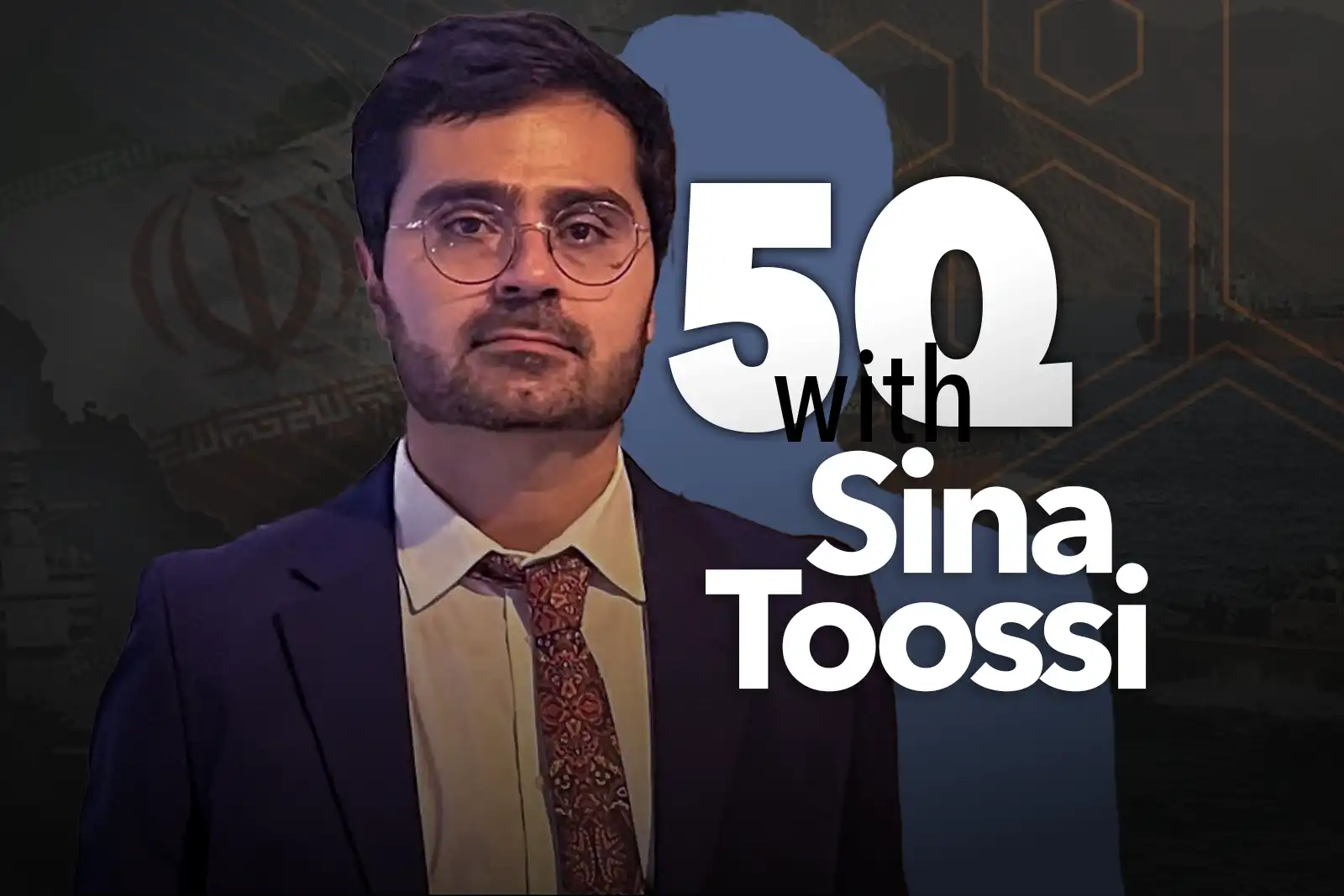



























Sina Toossi is a Senior Non-Resident Fellow at the Center for International Policy. He writes on U.S.–Iran relations, Iranian politics and society and nuclear nonproliferation. His work has appeared in Foreign Affairs, Foreign Policy, The Guardian and Al Jazeera English, among other outlets. He tweets at @SinaToossi.
Midterm elections in the United States have given the Democratic Party majorities in the House of Representatives and Senate, raising new questions about political opposition to U.S. President Donald Trump and his war of choice with Israel against Iran. Will the war heat back up, or is the status quo of occasional strikes increasingly becoming the norm? Does the political opposition have a real shot at checking Trump's expansive view of executive warmaking powers?
Non-Resident Fellow Sina Toossi answers these questions in Democracy in Exile's latest "5 Key Questions" series, exploring pathways for ending the war, where the Iranian, American and Israeli governments currently sit and the risks of renewed full-scale hostilities.
***
- Democrats have won control of both chambers of Congress in an election where the Iran war and its economic costs were major issues. How much can Democrats restrain Trump's foreign policy, particularly his ability to continue the war or launch new military attacks?
The midterms delivered a devastating political rebuke of Trump's Iran war, but translating that verdict into meaningful restraints on presidential war-making will require Congress to reclaim powers it has progressively surrendered over decades.
Democrats have important tools: the power of the purse, oversight and investigations, war powers legislation and the ability to block new authorizations or funding. The upcoming Dec. 11 government funding deadline presents an immediate opportunity to use Congress's spending authority to demand limits on the war, even before the new Congress takes office.
But the obstacles are considerable. Trump retains broad executive authority, Congress remains deeply divided over Iran and already fractious Democratic majorities will not alone be sufficient to override presidential vetoes. Congress' Nov. 19 Senate rejection of yet another war powers resolution illustrates these constraints, even if that outcome was not part of a Democratic majority yet.
The assumption that Washington can bomb its way to a better negotiating position has repeatedly proved to be misguided.
- Sina Toossi
Ultimately, Congress can make the war's continuation more politically and institutionally painful. But imposing binding restrictions on Trump's ability to wage war will require Democratic unity and significant Republican support. While war powers resolutions can pass with a simple majority, Democrats would need 60 votes in the Senate to overcome a filibuster on most funding legislation and two-thirds majorities in both chambers to override a presidential veto. Sustained public pressure could help secure the Republican defections needed to confront the executive branch.
- Trump still has roughly two months before the new Congress takes office. Do you think he'll use this period to pursue a negotiated end to the war, or could he launch another major strike against Iran, declare victory and then try to negotiate from a position of strength? What are the risks of that approach?
Trump faces a narrowing political window and a strategic dilemma largely of his own making. The war has failed to produce Iranian capitulation or collapse, while its economic consequences have contributed to a historic electoral defeat. He now has strong incentives to find an exit, but his longstanding belief in maximalism and coercive bargaining creates the danger that he will attempt another major military escalation before pursuing diplomacy.
That development would represent yet another extraordinarily risky gamble. Iran has demonstrated that it can and will absorb tremendous military punishment while retaining the capacity to retaliate and disrupt regional energy flows. Another American attack could invite a much broader Iranian response against U.S. forces, shipping and regional infrastructure, potentially triggering a new cycle of escalation. In fact, Iran has promised as much.
The assumption that Washington can bomb its way to a better negotiating position has repeatedly proved to be misguided. Trump has an opportunity to change course, but another attempt to impose a settlement through military force would likely leave him with an even bigger quagmire.
- How is Tehran likely to interpret the Democratic victory and growing anti-war sentiment in the United States? Will Iranian leaders see an opportunity to make a deal, or will they conclude that time is on their side and that they can wait for domestic political pressure to force Trump to back down?
Tehran interprets the midterms as confirmation that Trump's war is becoming politically unsustainable. Iranian leaders have long viewed the conflict as a contest of endurance, believing that Washington's overwhelming military superiority does not translate to the ability to impose its political objectives.
Iran has also spent months preparing for a prolonged blockade. It reportedly accumulated substantial oil revenues during the war's initial phase and the MOU period, selling at prices well above those assumed in its annual budget. While the renewed blockade has severely constrained oil exports, Iran has sought to expand overland trade routes, and Iranian officials claim sufficient foreign currency resources to meet the country's needs through March 2027. Meanwhile, Iran has intensified attacks on tankers circumventing its Hormuz restrictions, seeking to undermine U.S.-backed shipping workarounds. Despite considerable economic pressures, Tehran may therefore believe it has greater staying power and strategic leverage than Washington anticipated.
Trump faces a narrowing political window and a strategic dilemma largely of his own making. The war has failed to produce Iranian capitulation or collapse, while its economic consequences have contributed to a historic electoral defeat.
- Sina Toossi
The danger is that Iranian leaders overinterpret Trump's political weakness, concluding that additional escalation will force him to retreat. But there is also a genuine diplomatic opportunity. Tehran may calculate that a politically weakened Trump has greater incentives to negotiate, provided any agreement delivers meaningful sanctions relief and ends the blockade.
The central question is whether both governments recognize that time and escalation carry substantial risks. Currently, they both seem to believe they hold the leverage.
- Israel has its own objectives in Iran, which don't necessarily align with Trump's domestic political interests. How serious is the risk of Israel launching a unilateral attack against Iran, potentially drawing the United States into another round of fighting? And how might Tehran respond to an Israeli strike, even if Washington says it wasn't involved?
The risk is serious because Israel's strategic objectives do not necessarily align with Washington's. Israeli leaders appear more willing to pursue the collapse of the Iranian government, even at the cost of prolonged regional instability. They may also be less concerned than Washington about the consequences of a wider war in the Persian Gulf, including devastating attacks on energy infrastructure and disruptions to global shipping, particularly if they believe further escalation would decisively weaken Iran.
A unilateral Israeli attack could be particularly destabilizing because Tehran is unlikely to view Israel's actions as separate from American power projection. Israel's dependence on U.S. military assistance, intelligence and diplomatic support means Iranian decision-makers will likely regard Washington as responsible as well. Again, they've stated as such.
Iran has also been moving toward a more aggressive deterrence posture, seeking to demonstrate that attacks on its territory carry substantial costs. Another Israeli strike could provoke retaliation extending beyond Israel itself, especially if Tehran believes Washington enabled the operation.
This creates a dangerous possibility: An Israeli decision to escalate could undermine an emerging diplomatic opening and draw the United States back into a war that American voters reject.
- The election has demonstrated the political costs of the war, but opposition to war doesn't necessarily mean support for easing pressure on the Iranian government. Can the growing anti-war sentiment in the United States translate into a real diplomatic opening? What would a realistic agreement require from Washington and Tehran, and who has the power to make it happen?
The midterms have created a political opening for serious U.S.-Iran diplomacy, but decades of sanctions, mutual distrust and entrenched opposition to accommodation remain formidable obstacles.
A realistic settlement would need to address the central issues driving the confrontation. For Washington, that means credible, verifiable limits on Iran's nuclear program and arrangements that reduce the risk of renewed regional conflict. For Tehran, it means meaningful and durable sanctions relief, an end to the maritime blockade and assurances against further military attacks.
An initial agreement could prioritize restoring normal shipping through Hormuz, reciprocal de-escalation and more comprehensive negotiations, including on nuclear monitoring, following.
Ultimately, Trump remains the person with the greatest immediate power to change American policy. Congress can help create political space and provide oversight, but the president must decide whether to abandon the pursuit of Iranian collapse or capitulation.
The lesson of this war should be that military coercion cannot substitute for a negotiated political settlement. Another round of escalation would only deepen the damage, making diplomacy more difficult.
The views and positions expressed in this article are those of the author(s) and do not necessarily reflect the views of DAWN.