








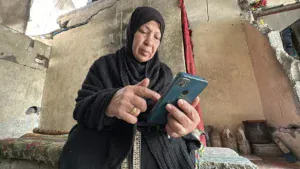









A Palestinian researcher from Gaza, specializing in English literature and translation. Despite war, displacement, and the destruction of her university, she continues her academic journey under siege, refusing to let her voice or her dreams be silenced. X: @GhadaRozzi
Nearly a year after Israel moved to suspend the operations of 37 international humanitarian organizations in Gaza, the question of aid has evolved beyond how many trucks enter the Strip or the total aid that reaches Palestinians. The crucial challenge today is whether the decades-old system that provides humanitarian relief and sustained services can continue functioning under Israeli restrictions and the U.S.-led Board of Peace's post-war plans. Equally concerning is accountability: Who will face consequences for the failed aid operation in the Gaza Strip?
On Dec. 30, 2025, Israeli authorities notified 37 international non-governmental organizations (INGOs) that the registrations allowing them to operate in Gaza would expire the following day. This news followed a registration framework Israel introduced in March 2025, which required organizations to disclose extensive information about their staff, funding and activities. Those failing to comply faced a 60-day wind-down period, alongside restrictions on bringing international personnel and humanitarian supplies into Gaza.
In fact, the INGO restrictions came amid the campaign to severely constrain UNRWA, the leading U.N. agency long central to delivering humanitarian assistance and essential services to Palestinian refugees. A May 2026 UNRWA Situation Report accounts for how, since March 2025, Israeli authorities have blocked the organization from directly bringing humanitarian personnel and aid into Gaza. Its international staff has been prevented from entering the territory since January 2025.
Israel's restrictions are disrupting the entire spectrum of the humanitarian sector. That effort is, of course, by design.
- Ghada Al-Rozzi
In this context, affected organizations rejected the requirements. Médecins Sans Frontières (MSF) announced on Jan. 30, 2026, that it would not provide lists of its Palestinian and international staff, citing the absence of adequate safeguards for their safety and the independence of its operations. Terre des hommes, a Swiss-based organization, similarly refused to disclose personal information about its Palestinian colleagues, warning of the risks to their safety and the implications for humanitarian principles.
Legal proceedings offered temporary relief for the organizations' operations but did not resolve the underlying dispute over the restrictions that, on Jan. 15, 2026, a U.N. panel of experts identified as violating the law. On Feb. 27, 2026, Israel's High Court issued an interim injunction preventing changes to the registration status of several organizations while their challenge proceeded. Humanitarian agencies continued to demand the removal of restrictions, warning that administrative barriers were obstructing essential operations. Meanwhile, organizations reported difficulties bringing supplies and international personnel into Gaza, leaving existing programs increasingly dependent on available stocks and local capacity.
In May 2026, Israel's High Court of Justice unanimously ruled against the humanitarian organizations' petition, allowing the restrictions to go forward.
Unmistakably, the consequences of the aid restrictions extend beyond the organizations directly targeted. In December 2025, the U.N. Humanitarian Country Team of the Occupied Palestinian Territory reported that INGOs collectively delivered approximately $1 billion in annual assistance to occupied Palestine. INGOs support field hospitals, primary healthcare centers, nutrition programs, emergency shelter, water and sanitation services and child protection, among many other essential services in conflict-torn environments. They also provide specialized personnel, technical expertise, international procurement networks and funding for Palestinian partners. In turn, grassroots Palestinian organizations bring established local networks, knowledge of community needs and direct access to affected communities.
By threatening the broader infrastructure connecting humanitarian resources to people who depend on them, the burden on Palestinian organizations has increased, including the Palestinian Medical Relief Society and Juzoor for Health and Social Development, both of which play an important role in delivering healthcare and humanitarian assistance in Gaza despite operating under severe constraints.
Despite their indispensable work, Palestinian organizations cannot simply replace international medical teams, replenish blocked supply chains or compensate indefinitely for reduced funding and restricted access. As frontline organizations, they are more competent in identifying vulnerable households, distributing available assistance, maintaining community services and connecting families with limited resources. Their continued presence amidst Israel's genocide should not be mistaken for evidence that the humanitarian gap has been filled, nor that the role of INGOs is any less vital. Instead, their increased role may conceal how much responsibility has shifted onto institutions that lack the equivalent resources of bigger, better-equipped international organizations.
In this sense, Israel's restrictions are disrupting the entire spectrum of the humanitarian sector. That effort is, of course, by design.
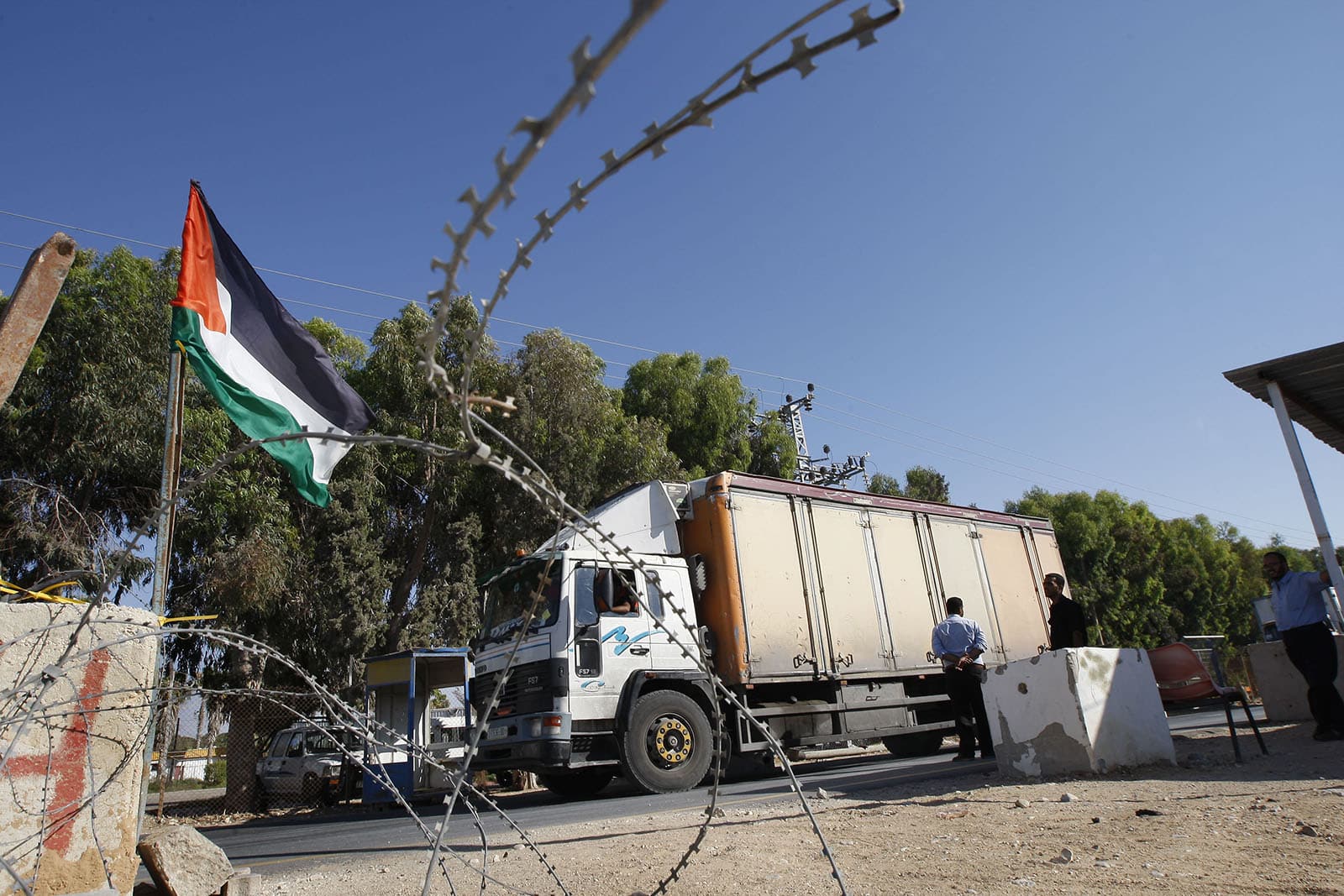
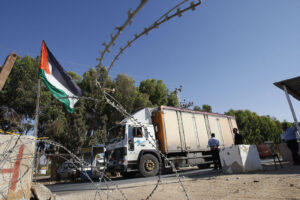
Crossing closures, insecurity, damaged infrastructure and wider import restrictions are ultimately part of a broader political question that Israel and the United States refuse to answer in any way that abides by international humanitarian law.
- Ghada Al-Rozzi
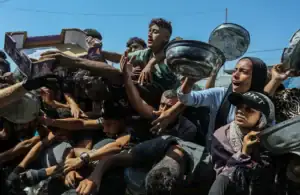
The U.N. Office for the Coordination of Humanitarian Affairs (OCHA) reported in July 2026 that declining aid coverage and funding constraints threaten a myriad of aid efforts across Gaza, including fragile improvements in food security. Healthcare services, OCHA warned, are likewise at risk: Shortages of insulin, dialysis supplies and essential medical equipment continue to restrict treatment for the most vulnerable. It also reported that funding shortages continue to force the closure of Women's and Girls' Safe Spaces (WGSSs), leaving survivors without adequate support. Restrictions on importing shelter materials and equipment have further complicated preparations for winter.
U.N experts have warned that "[b]anning life-saving organisations from operating in Gaza marks a new phase in a policy that renders life unbearable for a population already devastated by genocide." For civilians, institutional disruption translates to interrupted treatment, fewer protection services and less reliable access to shelter and essential supplies. Children, displaced families, the elderly and people with disabilities face particularly serious consequences when services disappear or become harder to reach. What has long been a man-made crisis is becoming further entrenched as the status quo.
To be sure, these problems cannot be attributed to the INGO registration framework alone. Crossing closures, insecurity, damaged infrastructure and wider import restrictions are ultimately part of a broader political question that Israel and the United States refuse to answer in any way that abides by international humanitarian law. Taken together, Israeli restrictions and the decision to implement and retain them demonstrate how states that have caused immense and intentional harm can pressure humanitarian actors to deepen the brittleness of an already fragile aid system.
As the occupying power, Israel has obligations under international humanitarian law to ensure civilians' basic needs are met and to facilitate the flow of impartial humanitarian relief into the Gaza Strip. Security concerns do not remove the requirement for humanitarian aid to reach people in Gaza, or the obligation to comply with international humanitarian law.
Governments that have condemned Israel's efforts to sideline INGOs, including and especially those limited few in the West, must move beyond empty statements and press releases. They must advocate for and operationalize the resumption of predictable access for humanitarian personnel, supplies and equipment, alongside independent scrutiny of registration decisions. Israel's ongoing efforts to strangle the Strip must come with real, tangible consequences. Palestinian civilians must be placed at the center of policy considerations.
In the weeks to come, this anniversary may only be measured by the number of suspended licenses, but it should really be measured by the humanitarian capacity lost, the responsibilities transferred to Palestinian organizations without adequate support and the civilians left facing the impacts. Gaza's humanitarian response remains active on paper, but without the institutions, resources and access needed to sustain it in the long term, its ability to protect lives will continue to erode.
The views and positions expressed in this article are those of the author(s) and do not necessarily reflect the views of DAWN.