




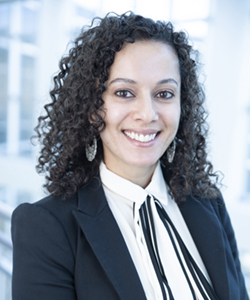

Hend Shaheen is a researcher with over a decade in leadership roles in civil society initiatives focused on independent media and training programs across the Arab world. She is a member of the World Liberty Congress.
"The war has paralyzed my daily life and forced me to rethink my future plans and projects," said Noueman Maalouf, a Lebanese freelance researcher, in an interview conducted in my effort to hear Lebanese perspectives on Israel's invasion and occupation of their country, ongoing since 2024. His words resonated throughout my conversations with other Lebanese. Those discussions, conducted between mid-June and mid-July, highlight not only the pain of those living through the war, but their resilience amid uncertainty.
I did not grow up with war. I have never known the dread of a house that might not be standing by morning, or the quiet arithmetic of counting family members after a night of shelling. I comprehended resilience as something almost mythical, a national trait that Lebanese wear like a badge, long tested but never quite broken. I did not imagine a family rushing back to their besieged neighborhood to save photo albums, a nervous system rewired to flinch at ordinary sounds or an artist quietly calculating whether a rehearsal was worth the risk of death.
Before I sat down with four Lebanese citizens working in the country's cultural and artistic scene, I expected to discuss politics. I received something else entirely: an intimate cartography of loss, told through the disrupted texture of daily life.
Before I sat down with four Lebanese citizens working in the country's cultural and artistic scene, I expected to discuss politics. I received something else entirely: an intimate cartography of loss, told through the disrupted texture of daily life.
- Hend Shaheen
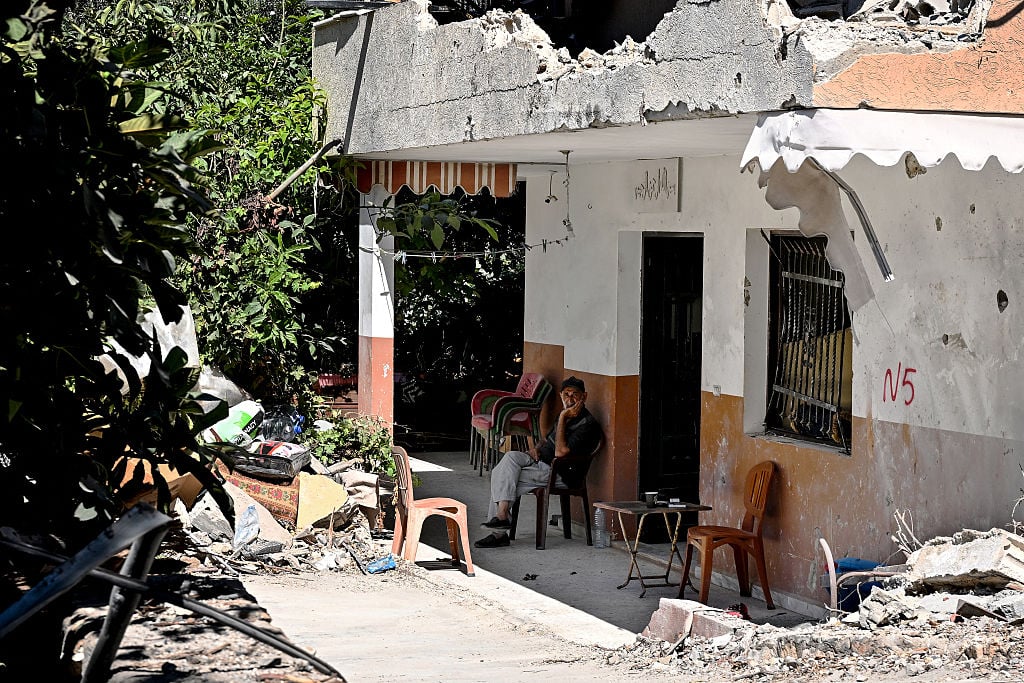
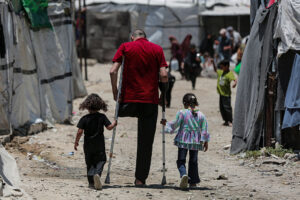
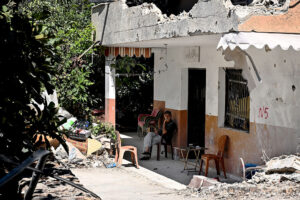
Before politics, before Hezbollah, before Israel and before debates over sovereignty, disarmament and the future of the Lebanese state, Lebanese knew what made their home, whether it be in Beirut, the south or towns that never asked to be on the frontline. They shared deeply personal stories of disrupted life, describing empty homes, hurried departures, sleepless nights, interrupted work and the exhausting uncertainty of waiting for reassuring phone calls after another round of Israeli strikes.
The Lebanon that emerged from these conversations reflects one in which war is woven into everyday life, shaping political opinions, family relationships, professional ambitions and people's ability to imagine a better future.
"I am part of a displaced family. My social environment changed when my immediate and extended family moved to Beirut," Maalouf explained from his temporary home. "We lost our routine and new problems arose, from searching for a new place to rent to dealing with the high cost of living. But the hardest part was waiting for reassuring news about our home after the airstrikes that hit nearby."
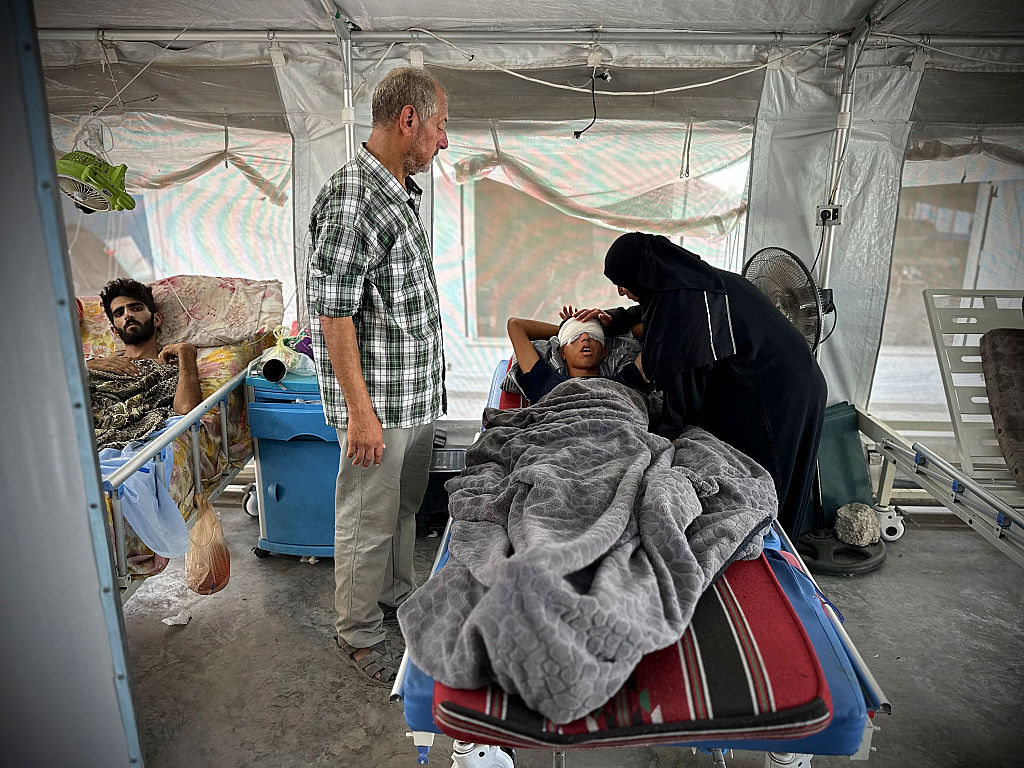
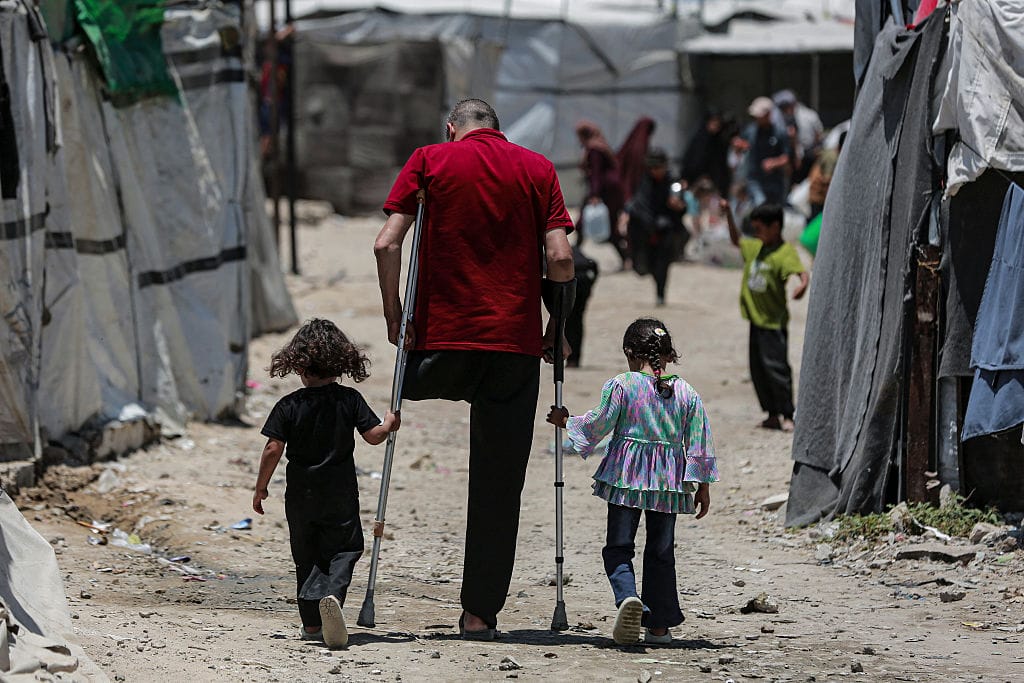
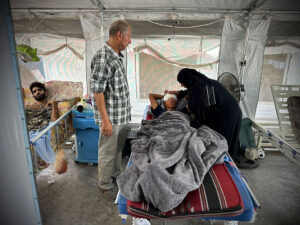
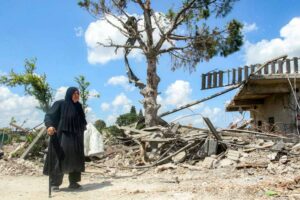
Maalouf's experience reflects a broader humanitarian reality in Lebanon today amid Israel's illegal invasion and occupation of much of the country's south. According to the United Nations Population Fund, approximately 1.2 million people were displaced during the latest Israeli campaign, including 620,000 women and girls. At the time of reporting, over 136,000 internally displaced people were living in collective shelters. Overcrowding and prolonged displacement have increased exposure to gender-based violence and other protection risks.
Maalouf's story, like so many others, began with forced displacement. His family searched for temporary housing while facing the rising cost of rent and the emotional burden of waiting to learn whether his family's home had survived Israeli bombardment. At one point, after a temporary ceasefire, his family rushed to retrieve personal belongings before Israeli strikes resumed.
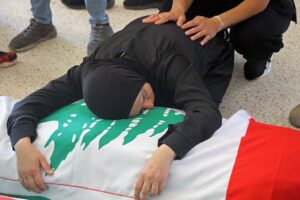
"We hurried back with our photo albums," he recalled, "as if we were attending the funeral of our home." This story has stuck with me.
The impacts of war are measured through casualty figures and territorial exchanges. Yet Maalouf's account serves as a reminder that they are equally measured through interrupted routines and the quiet grief of watching ordinary life disappear.
This experience is not unique to Lebanon, reflecting a broader pattern that has marked the country through successive wars and Israeli invasions. Families face intensifying economic pressure, with uncertainty almost a permanent condition. The latest Israeli war on Lebanon has once again upended the lives of millions. Reconstruction remains uncertain and the lack of accountability for Israel's war crimes continues to delay long-term solutions.
Listening to Maalouf speak, I thought less about maps and more about memory. What does it mean to lose a house, a community and the routines that make it a home? How does one plan for tomorrow when it depends on the next Israeli operation?
Before politics, before Hezbollah, before Israel and before debates over sovereignty, disarmament and the future of the Lebanese state, Lebanese knew what made their home, whether it be in Beirut, the south or towns that never asked to be on the frontline.
- Hend Shaheen
If Maalouf described war through displacement, Farah Qaddour, a musician and researcher from Beirut, described it through the body. "My nervous system became primed to receive bad news and loud noises," she told me. "I developed panic attacks."
Unlike the visible destruction captured by cameras, Farah described an invisible aftermath that lingers long after explosions cease. Every unexpected sound becomes a potential threat. Every phone call carries the possibility of devastating news. Every morning carries the repeated uncertainty of hunger and displacement.
For Qaddour, the psychological consequences of repeated wars cannot be separated from Lebanon's broader political crisis. Years of economic collapse, institutional paralysis and a legacy of internal conflict heavily connected to recurring Israeli military aggressions have left Lebanese navigating layers of trauma that extend beyond any single conflict.
Research on the cumulative impact of prolonged conflict reveals that repeated exposure to war reshapes people's sense of security, their expectations of the future and their relationship with everyday life. In Lebanon, where generations have lived through repeated and ongoing violence, the boundary between emergency and normality long ago became blurred.
Tala Maher Itani, a 38-year-old development practitioner residing in Beirut, framed this psychological burden as the consequence of an entire lifetime marked by recurring war. "I have never witnessed what long-term peace or long-term stability is," she told me. "The circle of trauma that I first experienced never healed, while in grief a new trauma circle emerges." For Tala, the latest Israeli war deepened wounds that had never fully healed.
She described losing her job, struggling with chronic insomnia and gradually abandoning the belief that lasting achievements were possible. "I became a true, proud pessimist," she reflected, explaining that the regional dimensions of the conflict left her emotionally disoriented.
In these conversations, I noticed something striking: None of the participants spoke about resilience in celebratory terms. International audiences often admire the resilience of Lebanese society, almost portraying it as a defining national characteristic. Yet these discussions highlighted that resilience is not a choice in Lebanon. Rather, it is often what remains when stability is no longer available.
The emotional exhaustion that Lebanese of all backgrounds described is also reflected in national public opinion. According to the Arab Barometer's 2025 Lebanon survey, conducted before the latest round of escalation, Lebanese respondents remained deeply pessimistic about the economy, governance and political institutions. Yet they expressed cautious hope for the country's recovery.
These conversations also forced me to rethink the relationship between culture and conflict. As someone who has long worked with artists across the Arab region, I expected discussions about interrupted performances or postponed projects. Instead, I encountered deeper disruption. "Working in the arts becomes a luxury during wars," Qaddour said.
Displacement and economic hardship undermine artistic work. Funding declines, audiences shrink and the emotional capacity for creativity weakens. Yet Qaddour conversely argued that art and culture remain essential during war. That artistic work preserves memory, strengthens community and helps societies process experiences that politics alone cannot explain.
Ziad Ahmed Itani, a Beirut-based professional theater artist, echoed this from the perspective of theater. "The intangible aftermath of the war strikes Beirut from the south on a daily basis," he reflected.
For him, war's impact extends beyond destroyed buildings. It infiltrates rehearsal rooms, creative processes and artists' ability to imagine long-term projects. Even when performances continue, they do so under the shadow of uncertainty.
Wars destroy infrastructure. They also threaten imagination. Theater, music, art and literature give individuals a way to insist that society is more than its conflicts. They preserve stories that statistics cannot tell and create spaces where collective memory survives long after headlines move elsewhere.
For Ziad, war is also generational. Born at the beginning of Lebanon's 1975-90 civil war, he has lived much of his life in a society repeatedly interrupted by violence. Today, however, the experience carries a different weight.
"The problem today is that I'm no longer alone," he told me. "I have a daughter, and I want her to learn how to cope with the hardships and horrors of war." His words shifted the focus from memory to inheritance, even as they are one and the same.
What does it mean for one generation to teach another how to survive a war rather than avoid it? This question haunts me. The answer is far from easy or clear, especially for Lebanese who are rarely given a choice in the matter.
Lebanon's children have inherited more than political division. They have adopted the emotional scars of displacement, insecurity and uncertainty that torment Lebanese society. Yet this generation has also inherited communities that continue to create, teach, organize and imagine a future beyond conflict.
With despair comes hope. Lebanon is no exception to this human condition.
Living through war inevitably raises deeper political questions, including what conflict will mean for the next generation's future. The cycle of war cannot continue, yet it cannot end in a way that emboldens Israel through a continued lack of accountability. Without accountability, the conditions that sustain repeated violence remain unchanged.
In these conversations, I understood that the next generation in Lebanon deserves a future shaped by stability, where the sound of a passing car or a closing door does not trigger fear, and where daily life is not defined by anticipation of the next Israeli strike. Yet ending the cycle of war requires more than temporary ceasefires. It requires confronting the structures that allow it to persist while putting the people stuck in the middle at the center of solutions to end the fighting.
The views and positions expressed in this article are those of the author(s) and do not necessarily reflect the views of DAWN.