









Farah Abu Samra is a Palestinian journalist and second-year English Translation student at Al-Azhar University in Gaza. She is interested in reporting on humanitarian issues and telling stories from Gaza that highlight the experiences, struggles and resilience of Palestinians.
When a baby girl, about two weeks old, was pulled from the rubble of a home in Gaza, there were no family members there to tell rescuers who she was.
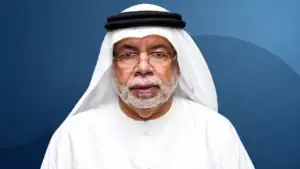
She was taken to a hospital without a name, without identification papers and without a loved one who could confirm where she belonged. According to Dr. Ismail Ibrahim Al-Thawabta, Director General of Gaza's Government Media Office, hospital staff initially registered her as an unidentified child.
A nurse later called her "Amal," or "Hope."
According to Al-Thawabta's account, the search eventually led to the baby's grandmother, who was staying at another hospital. Her photograph and information about where she was discovered helped reconnect her with family.
This tragedy is hardly unique to Gaza. Yet Amal's story highlights a basic but often ignored question in the Strip today: What happens to a child and their identity when war breaks the chain of people and records that normally establish who that child is?
In an emergency, protecting a child does not end with recovering the child and getting them to safety. Medical teams also require records to identify the child and establish their family connections.
- Farah Ehab Abu Samra
In an emergency, protecting a child does not end with recovering the child and getting them to safety. Medical teams also require records to identify the child and establish their family connections. In Gaza, as Dr. Al-Thawabta explained, repeated displacement, damaged services and the difficulty of moving safely have made that process far more complicated.
The United Nations Child Fund (UNICEF) estimates that around 17,000 children in Gaza were unaccompanied or separated from their families about one year into the conflict. That figure is likely higher three years into Israel's genocide, especially as UNICEF estimates that 58,000 children have lost one or both parents since October of 2023. Identifying, registering, tracing and reunifying these children is a difficult endeavor due to insecurity, restricted access and continuous population movement.
In April 2026, UNICEF reported that it had helped reunite just over 1,000 children in Gaza with their families. Of this group, 11 children had been evacuated from the Strip as premature babies in November 2023, many without their parents. For some parents, reunification marked the first moment they could hold their child. But reuniting them required efforts to identify families and complete the necessary procedures before they could be safely returned. These cases highlight how family separation can continue long after the immediate emergency has passed, as well as how great the need is to help the thousands of other children reconnect with their families.
The U.N. humanitarian arm, the Office for the Coordination of Humanitarian Affairs (OCHA), reported in September 2026 that Child Protection partners identified 29 unaccompanied or separated children who were receiving alternative care and protection services. Only one child was reunited with their family. Behind each number is a child facing a situation that may be very different from the next.
A child can become separated from their parents in many ways, especially in a conflict zone. It can happen during the evacuation of a hospital, while families are moving from one place to another, after the destruction of a home or when a child is taken for emergency medical treatment and relatives cannot reach them, to name a few examples. In the case of many children, that separation is permanent when Israeli forces have murdered both parents.
The United Nations Child Fund (UNICEF) estimates that around 17,000 children in Gaza were unaccompanied or separated from their families about one year into the conflict. That figure is likely higher three years into Israel's genocide.
- Farah Ehab Abu Samra
This problem represents one of the less visible consequences of war. Rubble can be photographed. Crowded hospitals can be seen. Displacement can be counted. But losing a document, a name or a family connection is different, potentially following a child for years.
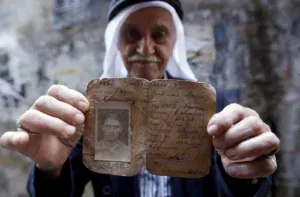
According to Al-Thawabta, hospitals in Gaza may initially assign an unidentified child a temporary medical number alongside other available information like photographs, distinguishing physical marks, estimated age, the place and date the child was found and any other relevant details. Those details can be as small as the child's clothing or belongings, and they can become the only clues connecting a child to a family.
Under UNICEF's child protection guidance, children who become separated from their families should be, as efficiently and safely as means allow, taken into professional care where they are registered. From this baseline, efforts are made to identify the child, including collecting information about their circumstances and relatives to support reunification. If that effort fails, children may be placed in alternative care while tracing efforts continue.
In Gaza, tracing can involve comparing where a child was found with reports of missing children, contacting local community representatives and, when appropriate, sharing information through public channels, Al-Thawabta said. Yet even if someone claims to be a child's relative, the process is not necessarily over. The relationship must also be verified.
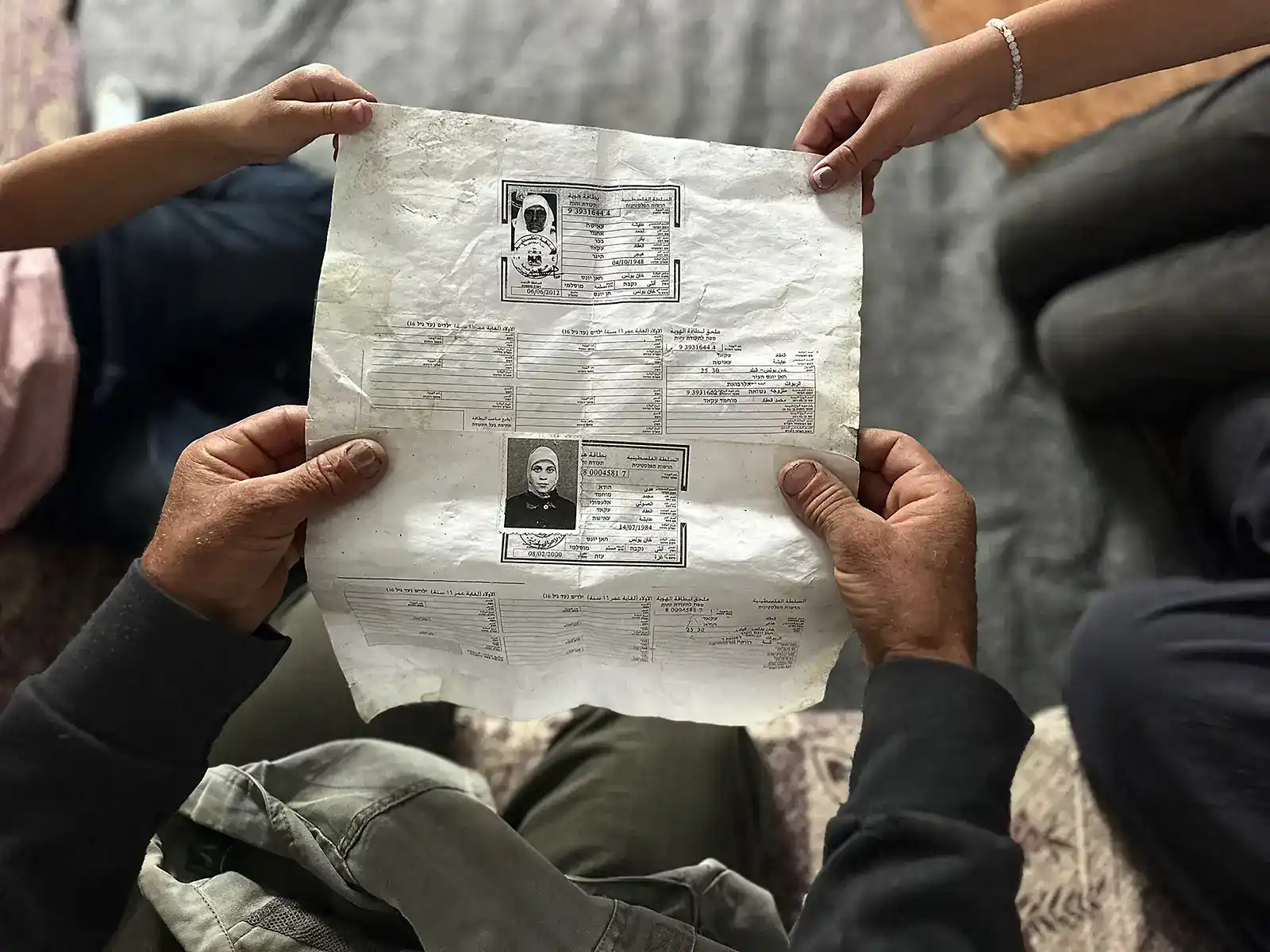
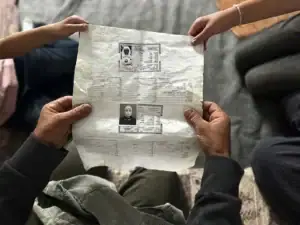
Reunification requires more than matching a name with a photograph. Under normal circumstances, a child's identity is built into a system of records: a birth certificate, medical records, parents' names, a place of birth and other official documents. War can disrupt that chain.
A family may leave their home in a hurry. A parent may be separated from a child during an evacuation. A hospital may be damaged or become difficult to reach. A child may survive while the documents connecting them to their family do not. Here, identity represents a chain of evidence linking a child to their parents, their place of birth and their legal and medical history.
In this sense, authorities and child protection services must establish the child's identity and verify the relationship before a child can safely be returned to relatives. While some projects aim to help these efforts, such as Japan's efforts to give Palestinian children in Gaza bracelets containing their personal identifying information, the challenge ultimately remains.
Al-Thawabta said Gaza's institutions have had to deal with some cases through emergency procedures rather than the normal civil registration system. He also raised concerns about the difficulties of conducting DNA testing inside the territory. UNICEF has similarly documented major disruptions to child protection and essential services in Gaza. As a consequence of continued displacement, it has become harder to identify and follow up with children and families.
The challenge is keeping enough pieces of a record alive for someone to reconstruct a child's identity later. Yet "later" carries its own risks. According to UNICEF, prolonged family separation can expose children to additional protection risks. That risk makes unaccompanied children's access to essential services and psychosocial support more difficult.
For a child found alone, the first step home may begin with something as ordinary as a photograph, a number written on a hospital record, a piece of clothing or a person who remembers where the child was found. Sometimes it may begin with a temporary name. The goal is to recover the child's real name, their origin and the story that connects them to their family.
As seen over the last three years of Israel's genocide in Gaza, a home can disappear in a matter of minutes. A family can lose contact for years. But for a child who survives, one photograph, one record, one name or one remembered detail may become the vital string that keeps their identity from disappearing alongside everything else.
The views and positions expressed in this article are those of the author(s) and do not necessarily reflect the views of DAWN.