







On the evening of Sept. 28, Egyptian security forces knocked on the door of journalist Mohamed Ashraf Abu Omeira. Before dawn, he and his colleague Abdullah Qadry had been taken. The raids continued the next day: Islam Barakat was seized from his home in Gharbia, Omar Helal was similarly taken in Port Said and Mohamed Mahmoud and Mohamed Adel were stopped on the streets of Cairo. Within 48 hours, the entire editorial team of the fact-checking platform Matsada2sh — six journalists — was being held in undisclosed locations, their phones and laptops confiscated.
The authorities stayed silent for two days. Then, on Oct. 1, the Interior Ministry finally confirmed the arrests, describing Matsada2sh as an unlicensed entity run from abroad that spreads false content to destabilize the country and linking it and its founder, Abdelrahman Mansour, to the Muslim Brotherhood. The statement carefully mentioned that only one of the six was a member of the Journalists Syndicate, a detail that speaks volumes about who gets to grant and revoke journalist titles.
The irony is hard to miss. Founded in 2018 by the late journalist Mohamed Abu al-Ghait, Matsada2sh spent eight years debunking disinformation, including claims spread by Brotherhood-affiliated outlets and figures. The organization now stands accused of the very issue it was built to fight, highlighting Cairo's worsening crackdown on the free press that has more recently sought to shut down another investigative outlet, Madr Masr.
The Committee to Protect Journalists counted 19 behind bars before the Matsada2sh team joined them, and Egypt ranks 169 out of 180 countries on Reporters Without Borders' 2026 World Press Freedom Index.
- Ahmed AbdelHalim
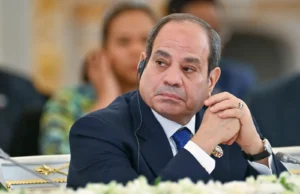
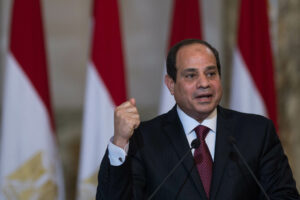
These developments represent the latest chapter in a story that began in the summer of 2013, when Egyptian President Abdel Fattah El-Sisi's new regime redefined its relationship with the media through a purely securitized lens, treating independent journalism as a threat to be monitored and contained after a military coup brought Sisi to power. That December, the charge of "joining a terrorist group" became a ready-made template for any dissenting voice. In one prominent example at the time, photojournalist Mahmoud Abu Zeid, known as "Shawkan," was arrested while covering the military-led dispersal and massacre of the Rabaa sit-in in Cairo and spent more than five years behind bars.
Legislation soon gave this approach legal cover. The 2015 counterterrorism law imposed steep fines for publishing figures that contradict official accounts of security operations, while the 2018 media laws handed the Supreme Council for Media Regulation sweeping powers to block outlets. Since May 2017, the Egyptian state has blocked over 600 websites, Mada Masr among them. Meanwhile, most of the country's channels and newspapers were absorbed by United Media Services, a company owned by the Egyptian General Intelligence Service, until the line between owner and censor had all but disappeared.
At the heart of this system sits the Supreme State Security Prosecution, which prosecutes cases for the state, and its favorite tool, pretrial detention. Fifteen-day detention orders are renewed repeatedly until they approach the two-year legal limit, at which point journalists reappear as a defendants in new cases on the same charges, a practice known as "rotation." Then there are terrorism lists: In April 2023 alone, 33 journalists were added to one, a designation that brings travel bans and asset freezes.
Together, these tools keep Egypt among the world's leading jailers of journalists. The Committee to Protect Journalists counted 19 behind bars before the Matsada2sh team joined them, and Egypt ranks 169 out of 180 countries on Reporters Without Borders' 2026 World Press Freedom Index.
Matsada2sh has been here before. In August 2023, plainclothes officers raided the home of its editor, Karim Asaad, after the platform identified Egyptians aboard a private jet seized in Zambia carrying gold and cash. The posts were deleted before Asaad was taken to an unknown location, and he was released a day later after the intervention of Journalists Syndicate head Khaled el-Balshy.
Mada Masr knows this pattern too. In November 2019, security forces stormed its Cairo office and briefly detained editor-in-chief Lina Attalah and two colleagues, days after the outlet reported that Sisi's son Mahmoud had been removed from his intelligence post and sent on a diplomatic mission to Moscow.
That history is repeating itself. Less than a month after the September 2026 raids, it became clear the crackdown would not stop at one outlet.
From Karim Asaad's 2023 raid to the assault on Matsada2sh and Mada Masr, Cairo is once again cracking down on journalists and the freedom of expression more broadly.
- Ahmed AbdelHalim
On Oct. 19, just hours after Mada Masr joined seven independent Arab media organizations in launching a solidarity newsroom to fill the gap left by Matsada2sh, Attalah was summoned by the State Security Prosecution with no reason given. During a six-hour interrogation, she was questioned about Mada Masr's coverage of protests inside prisons and its legal status, charged with running an unlicensed website and spreading false news and ultimately released on bail. The next day, she was referred to trial on the licensing charge alone.
The first hearing, on Oct. 27, was swift. The court denied defense requests to review the case file, submit evidence, call witnesses and appointed a lawyer unknown to the defense team despite eight of Attalah's lawyers being present. It then imposed the maximum penalty, a fine of 3 million Egyptian pounds ($53,400 U.S. dollars), closure of Mada Masr's website and the confiscation of its equipment. Attalah was held for hours until the fine was paid. During her release, she learned of a one-year prison sentence issued against her in absentia in 2024, yet she had never been notified of the case. Her retrial is set for Nov. 11, and the appeal of the closure ruling is set for Nov. 25.
Here, the Matsada2sh irony repeats itself. Mada Masr applied for a license in 2018 and never received a response, while its website has been blocked inside Egypt since 2017. The license thus becomes a double-edged instrument of repression: The state withholds it but punishes its absence.
The trajectory reveals the state's steady escalation against Egyptian press freedoms. From Karim Asaad's 2023 raid to the assault on Matsada2sh and Mada Masr, Cairo is once again cracking down on journalists and the freedom of expression more broadly. Yet with only one of the six Matsada2sh journalists holding syndicate membership, the space for mediation that saved Asaad is shrinking. Since 2023, the syndicate under Khaled el-Balshy's leadership has advocated for detained journalists, but membership rules requiring formal employment at a print outlet exclude most of those working in digital media. Security agencies exploit that gap to question journalists' professional status and strip them of even minimal protection.
What ties these cases together is a single mindset. For a security establishment that treats information as a battlefield, independent journalism is dangerous precisely because it is credible, and a verified investigation is far harder to wave away as Brotherhood propaganda. The state has therefore moved from silencing individual voices to dismantling the infrastructure of independent reporting itself: licenses, syndicate membership, access to readers and solidarity.
Its real fear, however, is news it cannot control.
A state that claims to fight rumors is eliminating one of the most effective tools against them, leaving Egyptians caught between an official narrative that monopolizes truth and an opposition broadcast from abroad. More than a decade on, that same security mindset still governs Egyptian journalism, ready to strike whenever an independent voice tells people a simple but crucial truth: verify before you believe.
The views and positions expressed in this article are those of the author(s) and do not necessarily reflect the views of DAWN.