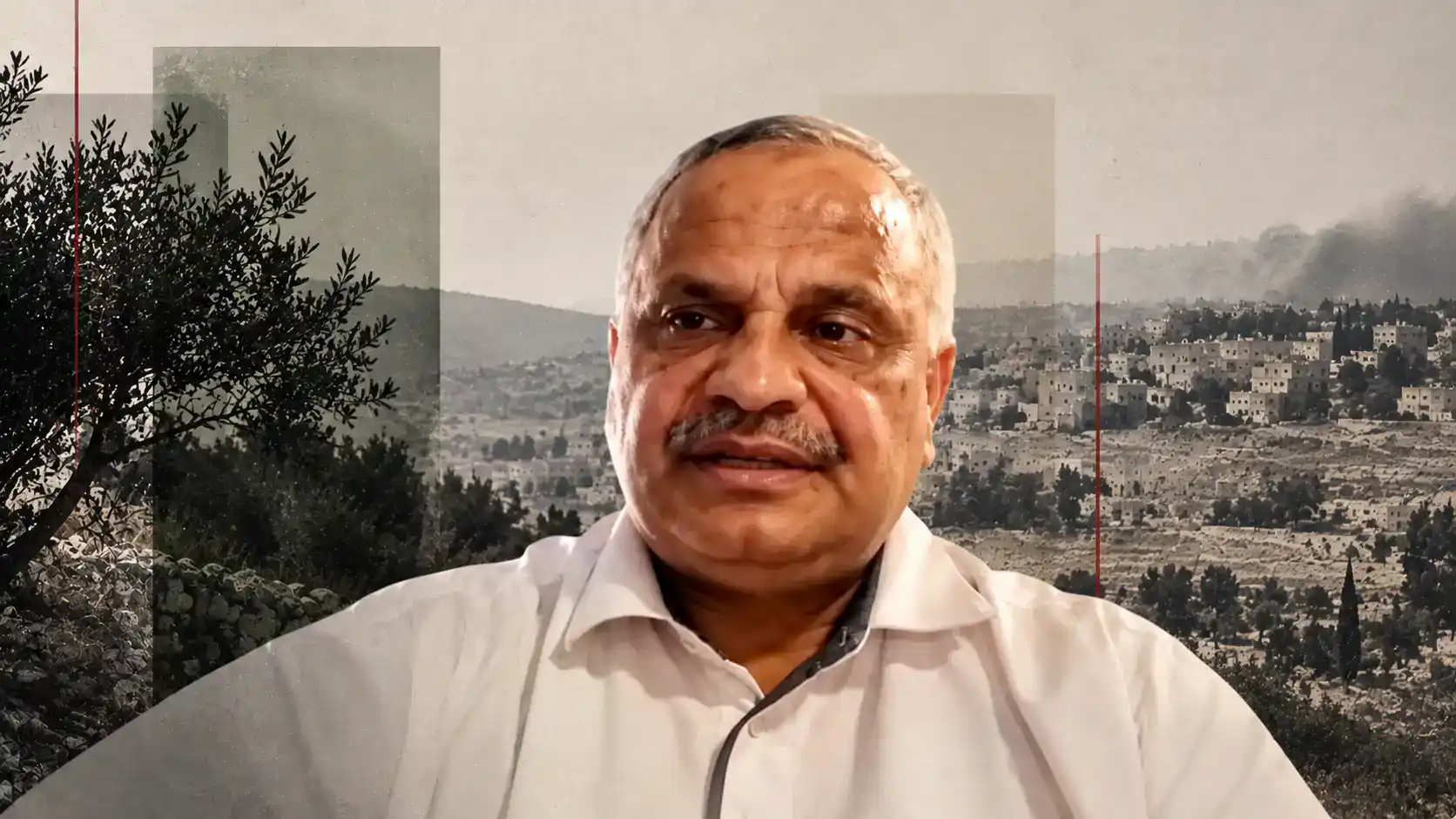










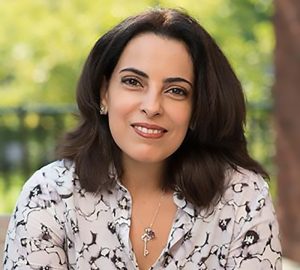


Hend Shaheen is a researcher with over a decade in leadership roles in civil society initiatives focused on independent media and training programs across the Arab world. She is a member of the World Liberty Congress.
Societies are rarely, if ever, homogeneous in their approach to political subjects like war, peace and sovereignty. Lebanon is no exception, with competing camps seemingly projecting binary perspectives on issues like Lebanese Hezbollah and Israel, with the central government sitting, indefinitely and precariously, in the middle. Speaking with Lebanese citizens of all backgrounds, these competing camps reflect far more complexity, desiring the same outcome for the country's future while depicting a story of a country, community and people seeking to move forward after decades of war, occupation and absent governance.
Outsiders often discuss Hezbollah in absolutes, portraying it either as a legitimate resistance movement confronting Israeli aggression or as an armed organization whose autonomy prevents the emergence of a sovereign Lebanese state while harming Lebanese citizens and others across the Middle East. Such binaries dominate international headlines, but they also fail to capture the nuance, historical context and competing Lebanese perspectives surrounding the group.
Questions surrounding Hezbollah's weapons and state sovereignty, long the core issues facing Lebanese society, produced stark differences in opinions between the four different Lebanese citizens interviewed for this story. These distinctions are indicative of the broader national positions on the group. Each participant highlighted the principle of state authority but disagreed sharply over what disarmament means, whether it is achievable now and what risks Lebanon might face in the process.
Societies are rarely, if ever, homogeneous in their approach to political subjects like war, peace and sovereignty. Lebanon is no exception.
- Hend Shaheen
For Farah Qaddour, a musician and researcher in Beirut, the issue cannot be separated from the history that produced Hezbollah and the regional conditions in which it emerged. She argued that forming an opinion requires "an in-depth reading of the region's history, the history of the occupying state and the histories of national resistance movements that predate the party's very existence."
Her concern is that a rapid approach to disarmament could trigger another internal conflict. "In a quick and superficial way," she said, "I believe that disarmament would lead to a civil war, one that many external parties are seeking, and that Lebanese people of all stripes are trying to avoid." At the same time, Qaddour did not present the current situation as sustainable either. If the status quo persists while the party lacks leadership capable of reading and responding to the Lebanese context, she warned, "the situation will become even more complex."
Qaddour resisted a simple yes-or-no position on disarmament: "Frankly, I do not have a clear, unified opinion on this matter." She did, however, place Israel at the center of her understanding of the evolution of resistance in Lebanon. "Israel is the enemy and is the main reason for the shift of the resistance from a national to a religious character."
Ziad Ahmed Itani, a theater artist in Beirut, approached the issue from the principle of state sovereignty. "The time has now come for Hezbollah to disarm," he said, arguing that "the price paid for its possession of weapons is far too high." For him, Hezbollah's armed role has become a burden not only because of its military power, but because of the political consequences of maintaining an armed actor outside the authority of the state.
Ziad was unequivocal in describing the weapons as "a burden on Lebanese society," arguing that Hezbollah constitutes "an obstacle that cannot be ignored." He characterized Hezbollah's military capacity as "an Iranian tool rather than a national or Lebanese one." This approach is rooted in the idea that decisions with national consequences should be made through Lebanese state institutions.
Noueman Maalouf, a freelance researcher from southern Lebanon, similarly began from the principle of state authority but placed much greater emphasis on the difficulty of implementing policies supportive of it under today's conditions. "The necessity of the state's monopoly on the use of force" is an absolute principle, and "disarming is fundamental and necessary." Yet he immediately added a crucial qualification: Integrating an armed faction into the Lebanese state, "given the prevailing geopolitical situation, is not realistic."
Maalouf also acknowledged the possibility that a handover of weapons could generate violence or internal conflict. In his view, the risk exists, particularly because Lebanon lacks the institutional capacity needed to facilitate such a transformation. The question for this camp goes beyond the necessity of disarmament, asking whether Lebanon currently possesses the political and institutional strength to carry it out without producing further instability.
Outsiders often discuss Hezbollah in absolutes, portraying it either as a legitimate resistance movement confronting Israeli aggression or as an armed organization whose autonomy prevents the emergence of a sovereign Lebanese state while harming Lebanese citizens and others across the Middle East.
- Hend Shaheen
Tala Maher Itani, a 38-year-old development practitioner residing in Beirut, was the most explicit in linking Hezbollah's armed role to the functioning of Lebanese democracy. "Any decision of war or defense outside governmental consent, I am against," she said. In her view, Lebanon's parliament should have the authority to make decisions as consequential as entering a war: "The reason we are a democracy and have a functioning parliament is to vote on decisions as big as whether we should partake in a war."
For Tala, Hezbollah's trajectory has made disarmament increasingly inevitable. She pointed to its training in Iran, its involvement in the Syrian conflict, allegations of illicit financial activity and what she sees as its failure to offer sustainable policies for the country. She had once hoped Hezbollah could be incorporated into the Lebanese Army, allowing its military experience to serve the national institution, but concluded that its ideology "feeds on chaos, sectarianism and brainwashing."
These four positions reveal important distinctions in Lebanon between the principle of state sovereignty and how and when it should be restored. Qaddour emphasized history and the danger of internal conflict. Ziad centralized the state's authority and the cost of maintaining an independent armed force. Maalouf accepted disarmament as necessary but questioned its feasibility under present conditions. Tala connected disarmament to democratic decision-making and the state's monopoly over decisions of war and defense.
Peace with Israel proved an equally divisive subject for the Lebanese interviewed for this story, exposing an important distinction between peace, normalization and the absence of war. None described the current moment as presenting a straightforward path toward reconciliation. Instead, they approached the question through history, justice, diplomacy and the limits of what Lebanon can realistically achieve.
For Qaddour, the answer was clear and unequivocal: "Personally, I cannot imagine or accept any kind of peace or normalization with Israel." Her rejection is rooted in her refusal to recognize what she describes as Israel's "right to exist." For Farah, normalization would require accepting a political reality that she fundamentally rejects.
Yet she also offered a distinction between principle and political reality. "I know we will reach some kind of agreement, [but] not in the form people imagine," she said, suggesting that it could involve "a new demarcation of borders" or changes to laws governing contact with Israel. Still, "The war certainly hasn't changed my opinion on the issue of peace."
Maalouf similarly rejected normalization, but placed justice at the center of his argument: "There can be no peace without justice." For him, true justice is accountability for those Israel killed, recognition of those displaced, compensation for destroyed homes and livelihoods, restoration of environmental damage and documentation of the war. He called for "compensation and recognition from the occupying state, an apology and prosecution for the war crimes committed by that entity."
Maalouf acknowledged that this may sound unrealistic: "Yes, this is utopian talk," but he quickly underlined the distance between the idea of normalization and the conditions he believes make peace legitimate. "How can there be peace? How can there be normalization, and with whom? With those who have not taken responsibility for their crimes?"
Ziad took a different route, looking at the experience of other Arab states. "None of the Arab countries that have signed normalization agreements with Israel actually want that normalization," he argued. He pointed to Egypt as an example, describing it as the first Arab country to sign a peace treaty with Israel while arguing that its people "never agreed to normalize relations with that entity." For him, a formal agreement does not necessarily produce social acceptance, as the Egyptian public's pro-Palestinian stances highlight.
Ziad also warned that Israel may have objectives that extend beyond the terms of diplomatic agreements. In his view, "Israel still has hidden goals that are not on the table: the establishment of a religious and extremist state with expansionist aims." This position separates a treaty that ends or reduces conflict from the deeper process of normalization and reconciliation.
Tala was the most willing to distinguish diplomacy from broader normalization. "Let's be realistic," she said, "Lebanon cannot militarily defend itself and its land and sovereignty." She rejected any "multi-level peace and the exchange of economic and social relations," but supported diplomacy if it brings an "absence of war." At the same time, she described Israel as "a colonial, apartheid and genocidal state," arguing that any peace process must recognize and accept that Lebanese society is divided on such issues if it hopes to succeed.
"The peace boat won't sail if half of the population is onboard and the other half is left on the shore refusing to board," Tala said. Her formulation captures a recurring concern across the interviews: Even if an agreement becomes politically possible, its legitimacy depends on whether Lebanese society can accept it. She summarized the broader diplomatic landscape with a sharp observation: "Lebanon is now good at dramatic diplomacy and Israel has always been good in theatrical diplomacy."
Taken together, these interviews reveal different Lebanese viewpoints on sovereignty and the future of the state. Their differences become equally visible when the conversation turns to Israel. Yet that diversity makes Lebanon what it is today.
Rather than consensus, these positions highlight a shared interest: An insistence that Lebanon's future cannot be reduced to a binary choice between Hezbollah and Israel. The path ahead is where disagreement lies, with the same underlying questions persisting: Who has the authority to decide when Lebanon goes to war? What does sovereignty mean when the state itself remains weak? Can peace exist without justice? Can any agreement endure if it lacks domestic legitimacy?
Lebanese are still debating the answers to these questions. That uncertainty is not necessarily a failure of the conversation. In a country shaped by repeated conflict, political paralysis and competing claims to sovereignty, disagreement and debate may be one of the clearest signs that Lebanese still believe that they can build a state that they desire. That debate should be welcomed because the mere act of engagement reflects hope for something better.
The views and positions expressed in this article are those of the author(s) and do not necessarily reflect the views of DAWN.