




















Lucas Howarth studied international relations at the University of Maryland and spent a year in Amman, Jordan, where he attained near-native fluency in Arabic while working with refugees and orphanage caregivers. He is an intern at DAWN. X | LinkedIn
In late June, Lebanon, Israel and the United States signed a tripartite security agreement, a Faustian bargain leaving the restoration of Lebanese sovereignty in Western hands. This is not a novel arrangement. It reflects a long history of foreign powers intervening in Lebanon, cultivating domestic partners along sectarian lines to further their geopolitical ambitions, often at the expense of Lebanese unity.
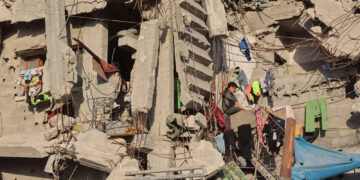
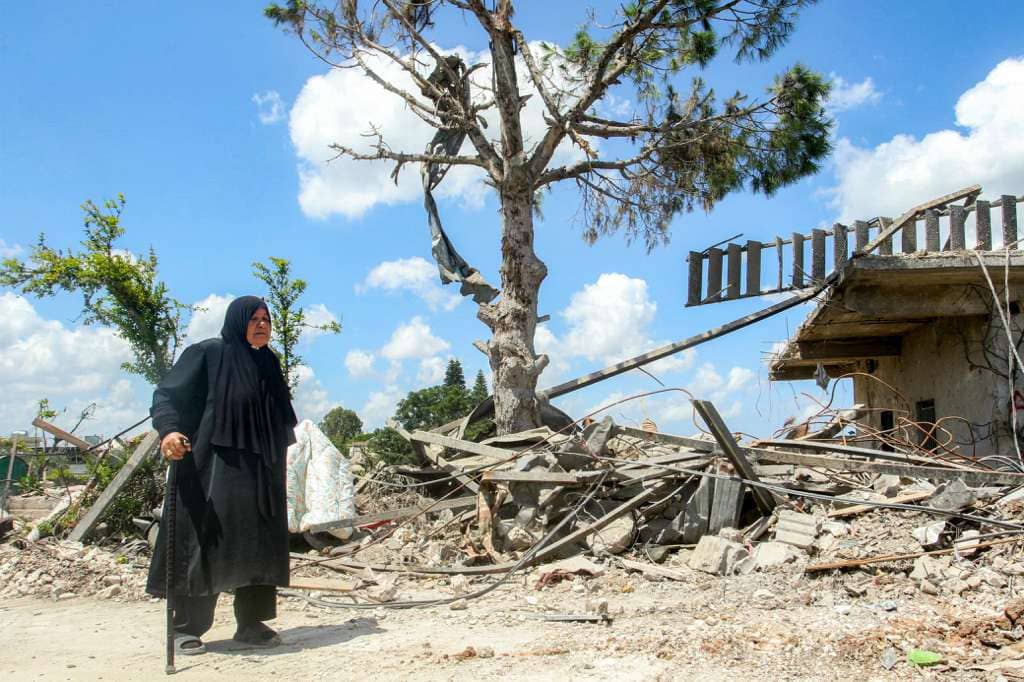
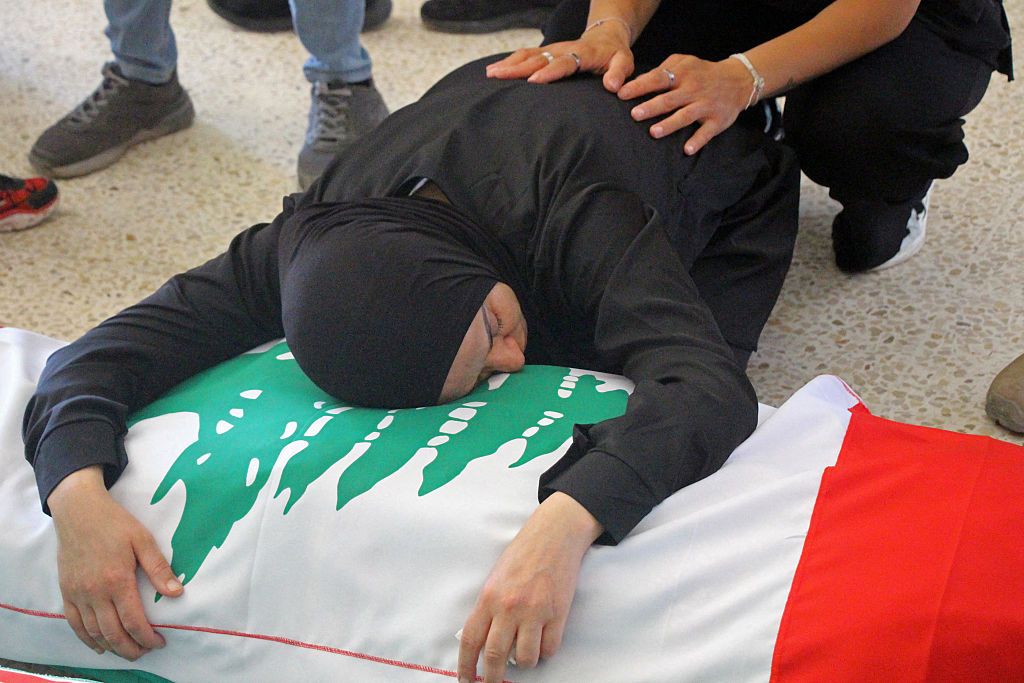
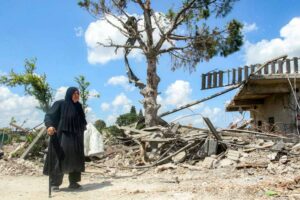
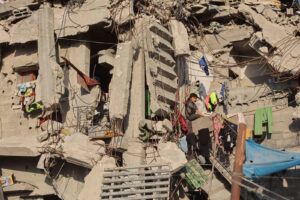
Israel's occupation and bombardment of Lebanon have displaced over one million Lebanese and killed thousands. The current phase of the conflict began in October 2023, when Hezbollah, a key ally of Iran, launched strikes on Israel in solidarity with Hamas and in response to Israel's genocide in Gaza. That war never truly ended, with Israel repeatedly violating multiple so-called "ceasefires" to indefinitely prolong its brutal occupation of Lebanon.
In theory, the June agreement seeks to end the fighting and centralize state authority. Lebanese President Joseph Aoun and his allies, mostly Christians and Sunni Muslims, advocate for Hezbollah's disarmament as a step toward sovereignty, a central component of their broader reform agenda that has significant but weakening cross-sect support.
Yet the deal's key provision, conditioning Israel's withdrawal from Lebanon on a Washington-verified disarmament of Hezbollah, has sparked backlash. Among other provisions, many believe this line favors Israel by conditioning Lebanese territorial integrity on foreign determinations, including Israeli leaders who regularly state that they will not leave Lebanese territory.
In late June, Lebanon, Israel and the United States signed a tripartite security agreement, a Faustian bargain leaving the restoration of Lebanese sovereignty in Western hands.
- Lucas Howarth
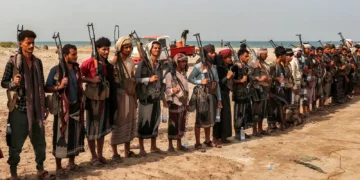
In response, the similarly multifaith but Shia-dominant opposition, led by Hezbollah's political wing and its allies in the Amal Movement, has rejected the deal. Protests erupted in Beirut as Hezbollah Secretary-General Naim Qassem condemned the terms as undermining Lebanese sovereignty. Speaker of the Parliament Nabih Berri of Amal warned it could foment civil strife.
The deal's supporters lean on segments of the population exhausted by war and economic crisis, viewing Western security guarantees as the best path toward achieving their vision of national sovereignty. Opponents, however, note a central pitfall: The United States and Israel are more interested in replacing Iran's influence in Lebanon with their own than allowing true Lebanese self-determination.
In Lebanon's sectarian political system, these divides run along religious lines at first glance. The Christian president and Sunni prime minister find themselves opposed to Qassem and Berri, prominent Shia leaders. However, history reveals that the true schism is over the definition of sovereignty itself.
Western commentary often reduces the complex ethnoreligious demography and conflicts of West Asia to sectarian rivalries. For example, the Sunni identity of the Gulf monarchies is described as the defining factor in their rivalry with Shia-majority Iran, obscuring the broader geopolitical divide between pro- and anti-Western regional powers. Lebanon, likewise, is routinely portrayed as mired in ancient sectarian hatreds, with substantial blame cast upon Iran, Hezbollah and its Shia supporters, sidelining the role of other foreign powers and their domestic allies in similarly weakening social cohesion.
Identity, of course, creates real divides. Religious and ethnic prejudices are strong motivators of conflict globally. Nevertheless, the orientalist reduction of West Asian material realities to sectarian antagonisms is not insightful, eschewing the structural and historical roots of tension while obscuring policy solutions. Instead, addressing today's fissures requires understanding the historical processes that produced them.
When France intervened in the 1860 Mount Lebanon Civil War, it claimed to be protecting Maronite Christian communities from reprisals following the Ottoman Tanzimat reforms. Yet Napoleon III had other geopolitical designs: fostering closer ties with Maronite elites to undermine the Ottoman Empire's regional grip. Paris achieved just that, establishing the semi-autonomous, Christian-governed Mount Lebanon Mutasarrifate in 1861.
This colonial divide-and-rule strategy continued into the 1923 French Mandate for Syria and the Lebanon, with France granting Maronites political and economic benefits while sidelining other sects. The mandate's Grand Liban province centered around the Francophile Maronite communities of Mount Lebanon, annexing Beirut, the Beqaa Valley and other districts. The Sunni, Shia and Druze populations of these areas had little influence over the state. Two decades of French mandatory rule saw successive Christian presidents partner with France to dominate Lebanese politics, with the 1926 constitution introducing a preferential sectarian allotment of legislative seats. With Lebanon's formal independence in 1943, elites of different sects adopted the National Pact to enshrine this consociational system. Lebanon would have a Christian president, a Sunni Muslim prime minister and a Shia Muslim speaker of the National Assembly, institutionalizing sectarian antagonisms rooted in France's colonial rule by largely sustaining that colonial system.
By intervening to privilege certain communities while sidelining others, and by tying political power to sectarian identity, foreign powers long ago transformed Lebanon's diversity into systemic antagonisms.
- Lucas Howarth
Within this history, Lebanon's Shia have experienced particular marginalization, traditionally underrepresented in government and public administration. Most lived as poor farmers or laborers in the underdeveloped southern region, exposing them to Israeli assaults later in the 20th century. Shia support for Hezbollah's modern-day resistance stems from this history, including the 1948 Nakba, when Israeli forces invaded and occupied 15 villages, committing a massacre of around 90 civilians in the Shia-majority village of Hula.
These foreign interventions continued throughout the postwar period. The Cold War era saw a more active American role in West Asia, especially after a successful Pan-Arabist coup in Iraq and a failed one in Jordan in 1958. The logic of "containment" dictated that Washington cede no ground, real or perceived, to the Soviet Union. Israel helped operationalize that thinking in the region.
As leftists and Pan-Arabists gained popularity and organized widespread protests against the Western-aligned government in Lebanon, President Camille Chamoun sought the United States' support. President Dwight D. Eisenhower sent thousands of Marines to Beirut in July 1958, strengthening Chamoun to cement American regional influence. The first overt U.S. intervention in West Asia commenced where France had left off.
Not two decades after the 1958 Lebanon Crisis, a long and bloody civil war provided another opportunity for foreign interference. Although it involved numerous factions, foreign support dictated alliances. The conflict, erupting in 1975, ravaged Lebanese society for 15 years. Yet for the United States, Syria, Iran and Israel, it presented an opportunity to advance their geostrategic ambitions.
When the civil war ended with the signing of the Taif Agreement, which modified the sectarian balance of power in Lebanon's political system, a new era began. Nonetheless, the system continued to center sect, exposing the country to the same foreign meddling occurring today.
The makeup of the 2005 Cedar Revolution alliances, which largely laid the foundation for today's political blocs and their competing interpretations of sovereignty, obscures the centrality of the decades-long Syrian and Israeli occupations of Lebanon to those blocs' politics. The Taif reforms failed to fully address the Shia community's demands for proportional parliamentary representation, much less the abolition of the confessional system itself. The group's continued marginalization and its supporters' exposure to conflict provided ample opportunity for Syria and Iran to bolster movements like Hezbollah, filling a decades-old vacuum.
Sectarianism persists in the faltering post-Taif reality, especially after the 2019 financial collapse and subsequent mass protests. Lebanese elites of all sects long ago constructed an unsustainable patronage system, forcing reliance on corrupt structures at the expense of a capable, accountable and unified state for all. They preserve their class position by weaponizing this system, maintaining the fragmentation of Lebanese society at the expense of true sovereignty. In this context, Israel, Iran, Syria, Saudi Arabia, France and the United States both perpetuate and establish this system, continuing to capitalize on Lebanon's colonial history, treating Lebanon as a bargaining chip.
By intervening to privilege certain communities while sidelining others, and by tying political power to sectarian identity, foreign powers long ago transformed Lebanon's diversity into systemic antagonisms. The latest iteration of this dynamic is the Israeli and American plan to pit the state against Hezbollah and through the tripartite security framework. Lebanon's historic antagonisms may often manifest along sectarian boundaries, but make no mistake: Foreign intervention has always been the culprit, not religious diversity.
The views and positions expressed in this article are those of the author(s) and do not necessarily reflect the views of DAWN.