













Hassan Herzallah is a Palestinian writer and translator based in Gaza. He holds a bachelor's degree in English Translation and writes about Middle East affairs, life under siege, displacement and the daily realities of Gaza.
"If it rains or strong winds come, we are afraid the wall will fall on our tent again."
My friend Tareq once said this to me about the wall next to his tent, a daily reminder of the danger surrounding him. That fear is not unfounded: On March 16, a damaged wall collapsed onto tents housing displaced families near Tareq's camp, killing three people and injuring others. He was among those who survived, although he suffered hand injuries, while his brother's leg was injured.
Since that day, rain and wind have no longer represented ordinary changes in the weather for Tareq. They carry the possibility that the same scene could happen again.
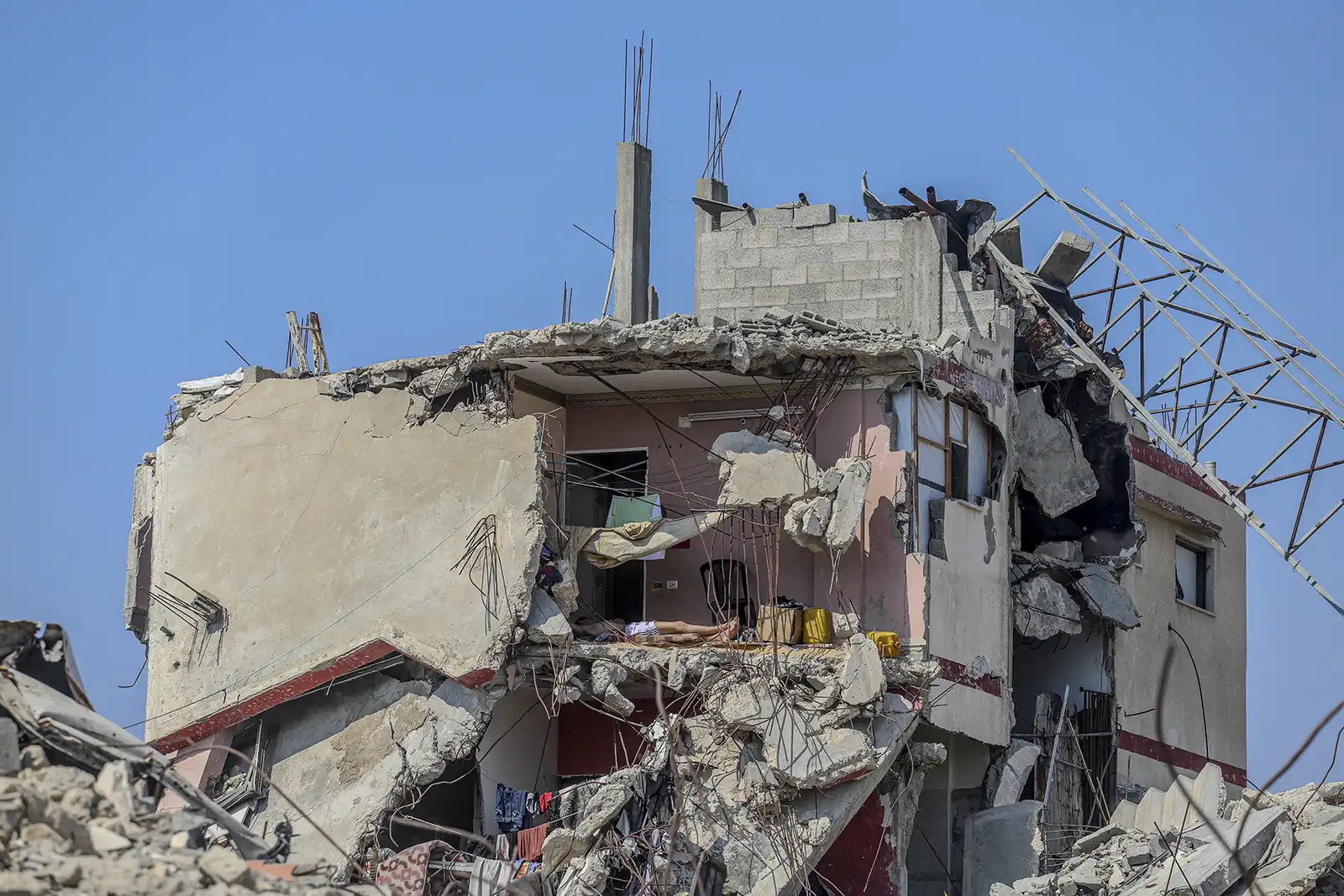
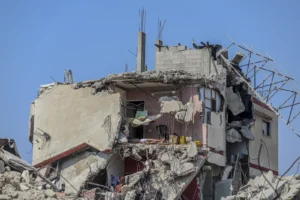
Three years into Israel's ongoing genocide in Gaza, the housing crisis is expanding beyond the homes that Israel destroyed. For those of us here, the remaining buildings and the severe damage they have suffered represent both a brutal memory and a present danger. The Sept. 16 collapse of the Al Saada Building in Gaza City represents the latest expression of that danger.
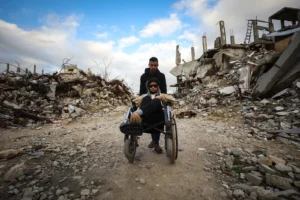
Years of bombardment and repeated displacement have forced hundreds of thousands of Palestinians to move and seek shelter elsewhere, often multiple times. With Israel controlling large areas of the Strip and the space available for people in Gaza increasingly limited, many families have found themselves trapped in narrow areas amid destruction affecting around 82% of structures, as of August 2026.
Three years into Israel's ongoing genocide in Gaza, the housing crisis is expanding beyond the homes that Israel destroyed.
- Hassan Herzallah
With so few alternatives, many displaced families are forced to shelter inside these structures, despite the risk that they could collapse at any moment. Others have turned to worn-out tents and other temporary shelters because they have nowhere to go. For most, the difference matters little: whether worn-out concrete or torn plastic, these shelters offer minimal protection from Gaza's harsh weather.
As winter approaches, these fears are growing. As the last few years have shown, rain and strong winds expose the fragility of both damaged buildings and temporary shelters. Displaced Palestinians, meanwhile, must continue to search for safety. Under the current conditions, they have little choice. This reality is a daily focus for those of us in the Strip.
On Sept. 15, I was sitting at my favorite cafeteria by the sea with some friends near the displacement camp where I live. That day, the weather was extremely hot and dry. We talked about our living conditions, including our prolonged displacement and the absence of basic services.
Bader, one of my friends, joked: "I've reached a point where I sleep in the tent and dream that there is a fan turned on above me. That's how much we miss electricity and how unbearable the heat has become."
Despite his lighthearted tone, Bader's words were more than a joke. Summer spent living inside tents is difficult for families without electricity or cooling options, amid Israel's widespread destruction of Gaza's infrastructure. Put simply, the summer season is hot, leaving hundreds of thousands exposed to these conditions.
Amongst us, Tareq complained the most about the summer. Every time we met at the cafeteria, he would swim in the sea before joining us, trying to find a moment of relief from the long, hot days inside his tent.
That day, he arrived as usual and sat with us after swimming. "It's so hot, guys … honestly, this situation is unbearable," Tareq said. "I wish winter would come and we could get some relief."
In that moment, winter seemed like a welcome respite from the suffocating heat. Reality quickly proved how far from the truth that belief was in practice.
Years of bombardment and repeated displacement have forced hundreds of thousands of Palestinians to move and seek shelter elsewhere, often multiple times.
- Hassan Herzallah
Later that day, the weather began to change. As the sun set, the day's heat faded, cooling the air. Returning to my tent, I checked the weather on my phone. The forecast predicted rain and strong winds in Gaza.
That night, I awoke to the sound of rain. I ignored it, assuming our tent would be fine. By morning, water had leaked into the small kitchen beside our tent, and the wind had shifted the plastic sheets we used for protection. Around the camp, families inspected their tents and tried to repair the damage. Spanning a few hours, a brief change in the weather had again exposed the vulnerability of our shelter.
Later, I returned to the cafeteria to charge my phone. Only then did I see the news about what had happened overnight across Gaza.
I saw images of the collapsed Al Saada Building in Gaza City. The six-floor building collapsed after sustaining severe damage earlier in the war. Displaced families had been living inside and around the building, simply hoping to find some shelter. The collapse killed 21 of them.
The tragedy on Sept. 16 served as a reminder that the destruction in Gaza goes much deeper than the buildings and neighborhoods that Israel has completely flattened. That damage also affects the structures that remain standing. Three years into the genocide, over 2,000 buildings and residential units remain at risk of collapse. Walls once meant to protect are today another source of fear and danger.
At that moment, sitting calmly on the beach, I thought about Tareq. The images of the collapsed building reminded me of the same danger he had spoken about many times before.
He usually arrived early, swam for a while, and then joined us. But that day, he did not come. I tried calling him, but his phone was switched off.
The next day, when I arrived at the cafeteria as usual, Tareq was already there. He began telling me what had happened during the storm.
Like many other families displaced in Gaza, Tareq and his loved ones were still staying in their tent next to the wall of the damaged building he feared. That night, they watched the wall beside them, knowing a collapse would repeat their previous experience, with even more devastating results.
For Tareq, the wall is a daily reminder of the danger surrounding him and his family. Likewise, winter has transformed from cooler days to yet another test for his family, living between a temporary shelter and damaged walls, the crumbling of which can mean death.
Just weeks earlier, Tareq sat with us by the sea, in part hoping that same winter would relieve him from the heat. Now, he waits for the same season with a different, more sober question: Will the place he calls home protect him and his family through the coming winter, or will it bring about their death?
The views and positions expressed in this article are those of the author(s) and do not necessarily reflect the views of DAWN.