













Dr. Abdelkader Cheref is a Professor of Africana Studies at Southern Illinois University. As a former Fulbright scholar, he holds a PhD from the University of Exeter. His research interests are primarily politics in Africa, the MENA region, decolonial/postcolonial studies, Islam/Islamism and political violence.
On Nov. 1, the 35-year United Nations peacekeeping mission in the disputed Western Sahara region, known as the Mission for the Referendum in Western Sahara (MINURSO), abruptly ended after the U.N. Security Council failed to renew its mandate. Russia and the United States vetoed each other's draft renewal resolutions. The U.S. draft proposed extending MINURSO's mandate until April 30, 2027, removing reference to an independence referendum for the Sahrawi people and positioning Morocco's autonomy plan as the exclusive framework for future negotiations. Now, with no U.N. mission, that outcome appears destined.
The end of MINURSO raises fresh concerns about the future of the peace process and the risk of renewed conflict in Western Sahara, a vast desert territory along Africa's northwestern Atlantic coast that boasts valuable mineral reserves, highly productive fishing grounds and possibly significant offshore oil reserves. A long history of competition over these resources sits at the core of the conflict.
Following a period of decolonization throughout the 1960s, Spain relinquished Western Sahara under the promise of an independence referendum amid the global self-determination movement of the time. However, the 1975 Madrid Accords instead transferred administrative control to Morocco and neighboring Mauritania. This reckless management of a region with longstanding political and territorial grievances triggered an armed conflict involving Morocco, Mauritania and the Polisario Front, an Algeria-backed liberation armed group representing the indigenous Sahrawi people of Western Sahara in a fight for self-determination. The conflict lasted more than 15 years and claimed over 16,000 lives.
The United Nations insists that ending the mission does not strip the Sahrawi people of their right to self-determination, and it has called on all sides to show restraint to prevent further conflict.
- Abdelkader Cheref
To date, Western Sahara remains one of Africa's longest-running territorial disputes. While the Polisario Front holds 20% of Western Sahara's territory, Morocco controls the remaining 80%. The Kingdom considers Western Sahara an integral part of its territory and refers to it as its southern provinces, whereas the Polisario demands self-determination and holds territory along the eastern border, known as the "Free Zone." The United Nations classifies Western Sahara as a non-self-governing territory, while critics of Morocco's control of the territory describe it as Africa's last colony.
Morocco advocates granting itself autonomy over Western Sahara under Moroccan sovereignty, placing the issue at the center of its foreign policy. Meanwhile, the Polisario seeks an independent Sahrawi Republic, operating largely from camps in southwestern Algeria's Tindouf, where upwards of 173,000 Sahrawi refugees live.
In 1991, the U.N. brokered a ceasefire and established a peacekeeping mission to monitor the truce and prepare a referendum that would allow the people of Western Sahara to determine the territory's future, including the possibility of independence. However, the vote never took place because of disagreements over voter eligibility. Morocco wants to include Sahrawis living in the territory under its control, while the Polisario insists on using Spain's 1974 colonial census. Morocco's settlement policies since the 1975 Green March, a contentious moment when Rabat sent 360,000 Moroccan volunteers into Western Sahara to force Spain's withdrawal, have altered the territory's demographic composition, adding another layer of complexity to the dispute.
In 2020, the United States recognized Morocco's sovereignty over Western Sahara in exchange for Morocco normalizing relations with Israel. Shortly after, Israel recognized Moroccan rule over the territory in line with the Abraham Accords, alongside the United Arab Emirates, Bahrain and Sudan, organized by U.S. President Donald Trump's first administration. The Polisario ultimately withdrew from the ceasefire in 2020, with tensions and low-intensity hostilities persisting since.
Those recent shifts inform disagreements over MINURSO's future, which intensified following a significant transformation in the UNSC's position last year. In October 2025, the council adopted Resolution 2797, which supported Morocco's autonomy proposal as the foundation for negotiations. By omitting any reference to a referendum on self-determination, the resolution reflected growing international support for Morocco's position, particularly from Paris, London and Washington. Conversely, Russia and China continue to favor a referendum that includes independence as a legitimate option.
In this context, the recent vetoes are unsurprising. After it vetoed the U.S. resolution, Moscow's delegation introduced a counter-resolution seeking to extend MINURSO's existing mandate until Oct 31, 2027. The American delegation likewise used its permanent member veto, leaving the mission without an agreed mandate and effectively bringing its 35-year presence to an end.
The end of MINURSO creates a volatile geopolitical vacuum, leaving the Sahrawi people without international oversight and protection while introducing severe security risks to a region already facing immense challenges. For the Maghrebi populations, this resulting instability represents a worst-case scenario.
- Abdelkader Cheref
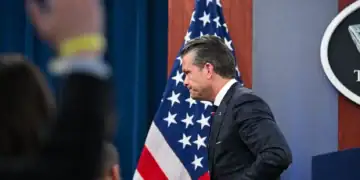
United States U.N. Ambassador Mike Waltz criticized Russia's veto, accusing it of preventing "historic steps toward finally ending a 50-year conflict." Nevertheless, he reaffirmed Washington's commitment to working with U.N. Special Envoy Staffan de Mistura and both parties "to negotiate a lasting peace." Though Washington defended its position, arguing that the status quo was no longer acceptable, Algeria expressed "deep regret," accusing the United States of excessive bias toward Morocco.
Russia defended the principle of self-determination. Its U.N. Ambassador, Vassily Nebenzia, accused opponents of Moscow's alternative proposal of contributing to the "political assassination" of MINURSO. The Polisario Front's U.N. representative, Sidi Omar, thanked Russia and warned that the U.S. proposal risked legitimizing Morocco's occupation. He claimed it "would have undermined the free exercise by the Sahrawi people of their inalienable right to self-determination and independence."
Meanwhile, Morocco's royal palace welcomed the mission's non-renewal, describing it as an instrument for internationalizing the dispute and presenting its withdrawal as a step toward removing the issue from the Security Council's agenda. It also reiterated its commitment to the ceasefire.
Following the mission's termination, U.N. Secretary-General António Guterres expressed concern about the deteriorating security situation and the possibility of renewed hostilities. He urged all parties to respect and promote the rights of the people of Western Sahara, exercise maximum restraint and avoid actions that could heighten tensions or undermine regional stability.
The United Nations insists that ending the mission does not strip the Sahrawi people of their right to self-determination, and it has called on all sides to show restraint to prevent further conflict. Yet, undeniably, MINURSO's sudden termination has significantly heightened uncertainty in Western Sahara, raising the risk of renewed conflict as the core dispute between Morocco and the Polisario Front persists.
Three potential developments could come to characterize the future of the conflict.
First, political deadlock is poised to persist, driven by Morocco's unyielding push for regional dominance and the Polisario Front's unwavering demand for full independence. Second, the deficit of an active U.N. peacekeeping presence heightens the probability of a military clash, particularly within resource-abundant territories and the contested free zone. Finally, geopolitical shifts are likely to accelerate as Western nations increasingly align with Morocco's autonomy framework, while Algeria and the Polisario lobby for renewed multilateral intervention from the international community.
Similarly concerning developments could worsen on the regional front. Regardless of the U.N. decision, the Western Sahara dispute remains a critical breaking point in the Morocco-Algeria rivalry. Algeria views Morocco's tightening control over the territory as a major strategic defeat. Diplomatic relations between Rabat and Algiers were severed in 2021, and tensions have intensified following Morocco's normalization of diplomatic ties with Israel, culminating in a diplomatic upgrade to full embassies in September. Within this volatile context, ending MINURSO's mission could further worsen bilateral relations and trigger a dangerous regional arms race.
Ultimately, the end of MINURSO creates a volatile geopolitical vacuum, leaving the Sahrawi people without international oversight and protection while introducing severe security risks to a region already facing immense challenges. For the Maghrebi populations, this resulting instability represents a worst-case scenario.
The views and positions expressed in this article are those of the author(s) and do not necessarily reflect the views of DAWN.