























EU, States Should Act to Block Crippling U.S. Sanctions
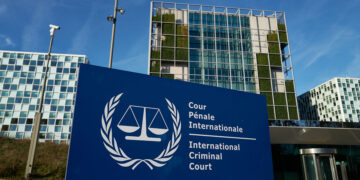
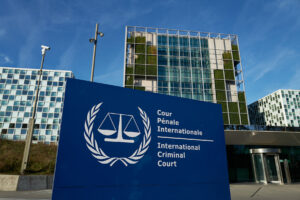
(Washington, D.C., October 22, 2026) – The European Union and states should activate blocking measures to counter U.S. sanctions against the International Criminal Court, Democracy for the Arab World Now (DAWN) said in letters sent today to the European Commission, the Netherlands and the United Kingdom.
Invoking regional and national measures quickly would shield the International Criminal Court and those designated, including Court officials, prosecutors and judges and respected human rights defenders, from the extraterritorial reach of crippling U.S. sanctions.
On October 19, 2026, the European Commission said that the activation of its blocking statute "still remains on the table." The next day, in front of the European Parliament, it added that it stands ready to act "should the Commission put this option forward."
"The EU and key backers of the ICC like the Netherlands and the UK have loudly condemned the U.S. sanctions, but words alone will not protect the ICC from the existential threat that it faces," said Omar Shakir, Executive Director at DAWN. "Washington says it will dismantle the ICC 'brick by brick'. Europe laid those bricks and fortified them with blocking regulations. It should activate these measures now to shield the Court, before the U.S. sledgehammer fully strikes."
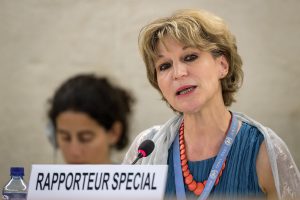
On October 9, 2026, the United States designated the entire ICC as a sanctioned entity. This follows individual sanctions it levied in prior months against thirteen of the Court's judges, prosecutors and other staff, U.N. Special Rapporteur Francesca Albanese and three leading Palestinian human rights organizations. Secretary of State Marco Rubio said "Either the ICC will end its threats, or we will end the ICC." He vowed to dismantle the Court "brick by brick." General License 13, issued concurrently with the institutional sanctions against the ICC, temporarily authorizes specified transactions needed to maintain the Court's operations through April 7, 2027. The administration says the license gives states parties time to show "meaningful progress" on U.S. demands. Rubio added: "If these efforts do not bear fruit, we will continue to adjust accordingly." The Court responded the same day: "The Court cannot stand alone. Its fate now rests also in the hands of the states that created it."
U.S. sanctions have already had a significant impact. One of the sanctioned ICC judges, Kimberly Prost, has described losing access to her credit cards and said her "whole world is restricted." Sanctioned Palestinian organizations have had difficulties paying their staff. The Court and its insurer AXA ended their contract by mutual agreement on October 1 because of sanctions exposure. Irish MEP Barry Andrews told the European Parliament on October 20 that the payments company Stripe has withdrawn services to ICC judges and that Judge Prost "cannot do any banking." Dutch MEP Dirk Gotink said European banks are already considering withdrawing services, even for payments between European companies: "We don't have six months, we have six days." ABN AMRO, the Court's primary bank, faces U.S. exposure through its American business, the Dutch financial daily FD reported this week. The Court's Registrar has said that a 2025 assessment found that about 92 percent of the Court's judicial processes depended directly or indirectly on a U.S. company or a company with a significant U.S. nexus.
On October 13, 2026, a U.S. federal court granted a preliminary injunction protecting DAWN and its co-plaintiffs from sanctions enforcement affecting their advocacy. The order does not provide protection to the Court, others sanctioned by the U.S. or their service providers.
The EU and key Rome Statute signatories have spoken out forcefully against the sanctions. Dutch Prime Minister Rob Jetten said on October 9 that the Netherlands will defend the Court "brick by brick." The European Council requested the Commission on October 16 "to take all appropriate initiatives contributing to the protection of the Court and the mitigation of sanctions, specifically towards EU companies so that they can continue providing services to the Court."
They, though, have yet to move from statements of solidarity to concrete measures to protect the Court. The Dutch parliament adopted motions in October 2025 and April 2026 asking the government to push for activating the The EU Blocking Statute (Council Regulation (EC) No 2271/96). It adopted further motions on October 13 and 14 asking the government to study a public payment channel for the Court and to explore all other means to protect the Court, its staff and its suppliers. The government has not publicly announced a designated payment institution or a timetable for establishing the proposed channel.
Dutch Foreign Minister Tom Berendsen has called the Blocking Statute "the last resort we have" and "a drastic remedy." Belgium has asked for its activation, Spain supports it, and 58 members of the European Parliament urged the Commission President on October 13 to invoke it. In a plenary debate on October 20, speakers for five of the Parliament's seven political groups, from the center-right European People's Party to The Left, called for activation now. Irish Minister Thomas Byrne, speaking for the Council, said it "stands ready to examine all possible options, including the activation of the Blocking Statute, should the Commission put this option forward." High Representative Kaja Kallas replied that "these sanctions are not in effect yet," that "we have one shot and one shot only to get it right," and that companies should "not over comply."
In a written answer on March 11, 2026, the U.K. government said it had not issued specific guidance to banks or financial services firms. The UK's blocking regulation still lists only U.S. measures on Cuba and Iran.
In its letter to the Netherlands, DAWN asks it, as host to the ICC, to designate a public institution to guarantee the Court's payments and to formally request activation of the EU Blocking Statute before the opening of the Assembly of State Parties in The Hague on November 30. The Commission has now said publicly that the Netherlands is leading the work on practical measures to keep the Court running. The letter calls on the government to secure a written continuity arrangement with ABN AMRO and the state's shareholding vehicle NLFI, and to offer the Court sovereign hosting for its data and communications. It further asks the government to guarantee entry and protection for participants in the Assembly.
The letter to the European Union, addressed to Commission President Ursula von der Leyen and Financial Services Commissioner Maria Luís Albuquerque, asks the Commission to formally list U.S. sanctions as falling under the Blocking Statute and to secure early non-objection from Parliament and the Council so that it is in force before sanctions take full effect on April 7. It further calls for a restrictive policy on exemptions, and for issuing guidance with banks and the European Banking Authority that a U.S.-only designation creates no obligation under EU law to freeze assets or end services. In 2018 the Commission adopted the delegated regulation listing U.S. sanctions on Iran twenty-nine days after Washington announced them.
The letter to the United Kingdom, addressed to Prime Minister Burnham, Foreign Secretary Ed Miliband, Chancellor John Healey and Business Secretary Jonathan Reynolds, calls for adding U.S. sanctions to its own blocking regulation, before US sanctions take effect, and for coordinated Treasury, OFSI and FCA guidance to the financial sector that U.S. designations create no obligation under U.K. law. UK ministers can add the U.S. measures against the ICC to the country's blocking regulation through secondary legislation, without waiting for EU action or a new Act of Parliament. The letter also calls for setting up a support package for British staff and counsel of the Court, a parliamentary answer on whether any UK sanctions regime can reach coercive interference with an international court, and a voluntary report on the measures the UK has taken under the Assembly's December 2025 resolution. David Alton, a member of the House of Lords, has asked the government whether it is considering expanding its blocking legislation. The answer is due October 28.
"Washington has given states 180 days to act against the Court. We are asking them to use the same 180 days to act for it," said Raed Jarrar, Advocacy Director at DAWN. "Europe again and again failed to act as the U.S. and its allies have dismantled the rules-based international order. Trump and Rubio are banking on them doing the same with the ICC. Failure to use existing tools to protect the Court may well spell the Court's demise, undermining access to justice for victims of the world's most serious crimes."