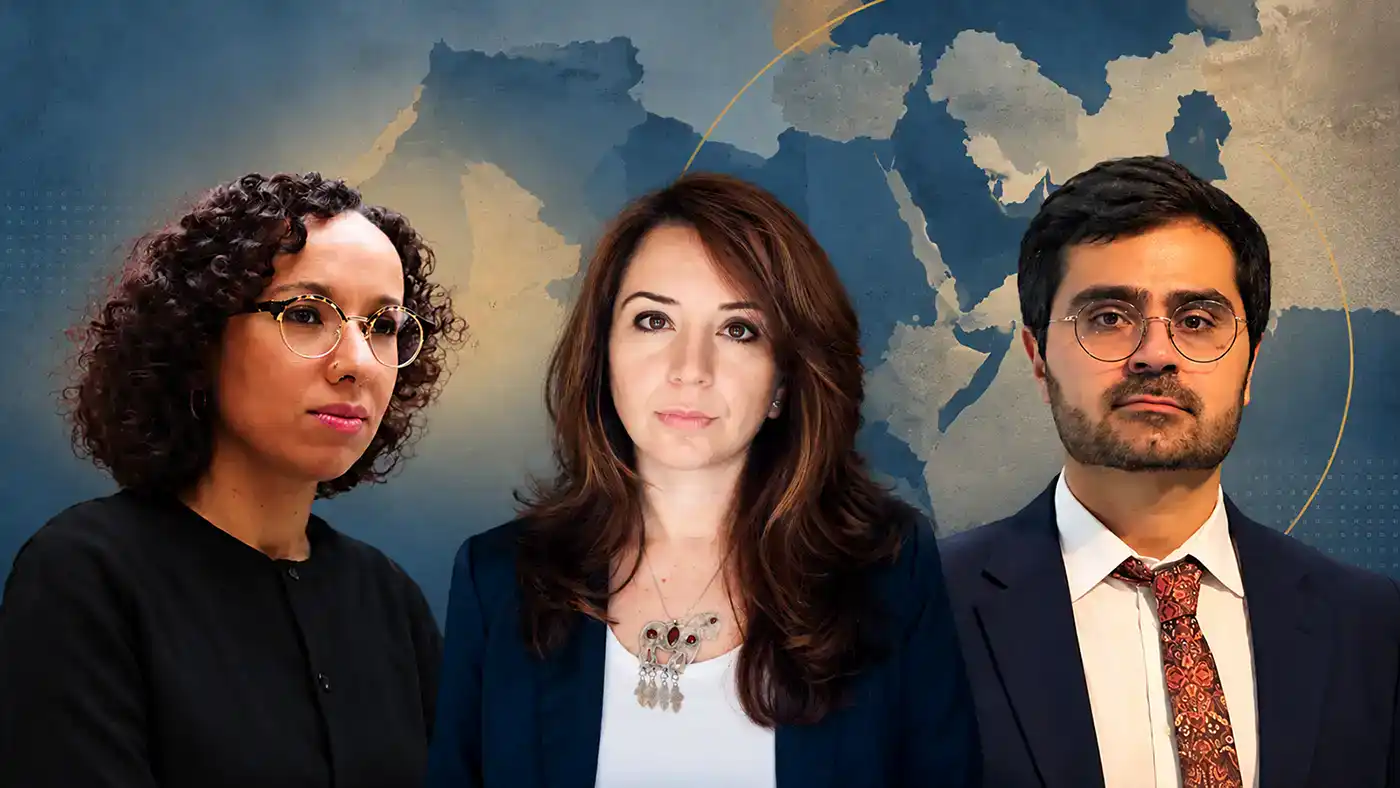











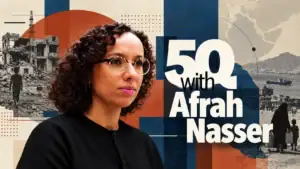








Afrah Nasser is a former Program Officer at the Office of the U.N. Special Envoy for Yemen and previously served as a Yemen researcher at Human Rights Watch. Nasser is a recipient of the Committee to Protect Journalists’ International Press Freedom Award.
The war in Yemen has reignited over the last four months, with devastating effects both in the country and beyond. Yet, once again, key misperceptions about the conflict, its primary actors and its roots are once again clouding the historical and current factors driving the fighting. In a limited and hyper-politicized media environment, information is often diluted and oversimplified, if not outright propagandized. These factors make ending the war more difficult.
Non-Resident Fellow Afrah Nasser breaks down the information gap undergirding the Yemeni Civil War, highlighting the difficult media environment, facts about the primary belligerents in the conflict and the possible path ahead in the latest in Democracy in Exile's "5 Key Questions" series.
***
How can we best understand current conflict dynamics in Yemen today? What is going on at the front lines, and where may the war be headed?
The current conflict has roots in different periods in Yemen's modern history. Key moments include the Houthis Movement's (Ansar Allah) efforts to revive the traditional Zaydi Hashemite Imamate, which ruled northern Yemen on and off for over a thousand years until it was overthrown by a republican revolution in 1962; the six Sa'ada Wars (2004-2010) between the Houthis and the Yemeni army; the civil war that began in 2014 as a result of the Houthi takeover of Sana'a; and the ongoing Houthi war with Saudi Arabia.
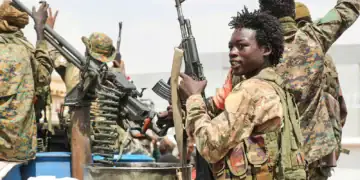
Yemen's frontlines are extremely fluid, and local media coverage is relatively tainted by propaganda on all sides of the conflict, making it difficult to understand developments. There is limited independent and impartial media coverage on the fighting in Taiz, the crackdown on the southern movement and eastern Yemen's resource rich Hadramout Governorate. However, what is clear is that the fighting is developing into another war of attrition between the Houthis, the Internationally Recognized Government of Yemen (IRG) and Saudi Arabia, as neither side is close to an absolute victory.
Yemen's frontlines are extremely fluid, and local media coverage is relatively tainted by propaganda on all sides of the conflict, making it difficult to understand developments.
- Afrah Nasser
Beyond surface-level misconceptions, who are the Houthis and who are they fighting? What are the primary historical, religious, and political roots of the Houthi (Ansar Allah) Movement? What crucial nuances do recurring mainstream narratives consistently miss or oversimplify?
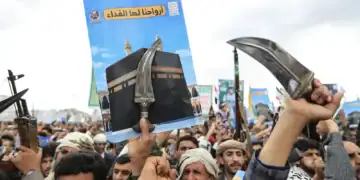
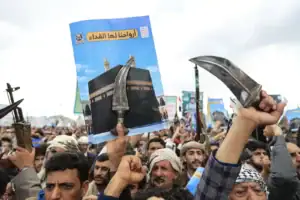
It's important to define the Houthis as not an Islamist movement because they are a local power rather than belonging to international jihadism. The Houthis are a Yemeni, non-state paramilitary movement that emerged in the 1990s. They are rooted in northern Yemen's historical peripheral marginalization rather than being an Iranian proxy.
As they are an opportunistic and pragmatic actor driven by domestic grievances, the Houthis are masters at exploiting support from anywhere, including the Axis of Resistance. It's a rigid, theology-driven movement that operates as an unyielding armed authority. In Yemen's Civil War in the 1960s, the Houthis' ancestors, the Zaydi Shiite Royalist forces, secretly received support from Israel to counter Egyptian troops in Yemen. That says a lot about the Houthis' identity.
How does the cycle of selective media attention deepen the Yemeni Crisis? Why does Yemen repeatedly slide off the global radar until acute escalation occurs, and how does this intermittent, crisis-driven focus actively undermine long-term diplomatic engagement and humanitarian response?
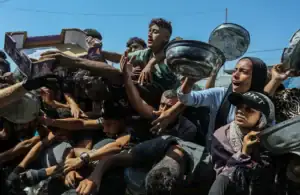
We live in a world where mainstream Western media dominates narratives globally. While Yemeni journalists provide constant media coverage on Yemen, attention on the country typically only occurs once it is picked up by these outlets. This coverage is fickle, constituting Parachute Journalism that only covers Yemen when there is breaking news, portraying Yemenis purely as passive, helpless victims of famine, disease and poverty ("the world's worst humanitarian crisis").
The existence of a humanitarian crisis does not mean that Yemenis can be reduced to passive victims, even when experiencing a dire humanitarian situation. Yemeni civilians are active political and social actors involved in ensuring localized ceasefires. Community leaders lead frontline aid distribution, while armed civilians resist Houthi aggression in their villages and cities. Many others continue to sustain civil society.
This reporting gap undermines the international community's diplomatic efforts and the necessity to resolve the conflict in Yemen. It also undermines international public opinion on peace in Yemen. The gap similarly reduces a complex fight for sovereignty into a simplistic humanitarian crisis, stripping Yemenis of their political agency and obscuring the root causes of the conflict from the international community.
Without addressing the historical root causes of the conflict in Yemen, any peace deal will simply initiate the countdown to the next war.
- Afrah Nasser
Are there realistic prospects for preserving a unified Yemeni state versus formal partition? What would a viable end to the conflict look like?
It's almost impossible to predict if Yemen will remain united or not, especially as the war of attrition continues. The war in Yemen requires moving from conflict management to a comprehensive political deal that addresses the root causes of the conflict.
Drawing on lessons from historical grievances in Yemen — such as the post-1962 status of the Hashemite community — and comparative contexts like Ethiopia, what specific political will and mechanisms are required from domestic, regional and international actors to ensure transitional justice, accountability and non-repetition of the conflict?
Those who don't learn from history are doomed to repeat it. What we see in Yemen and Ethiopia, where I have roots, and the resumption of conflicts based on a long history of war, is a clear example of how unaddressed collective grievances, systemic disenfranchisement and punitive peace arrangements seed long-term cycles of revenge and political resurgence. Without addressing the historical root causes of the conflict in Yemen, any peace deal will simply initiate the countdown to the next war.
A durable peace requires a drastic restructuring of the governance system in all of Yemen, moving away from exclusionary power-sharing and toward a system that guarantees inclusive citizenship and institutional protections. Addressing peripheral marginalization and ensuring communities in Yemen have a stake in their own administration is a critical aspect of sustainable conflict resolution.
The views and positions expressed in this article are those of the author(s) and do not necessarily reflect the views of DAWN.