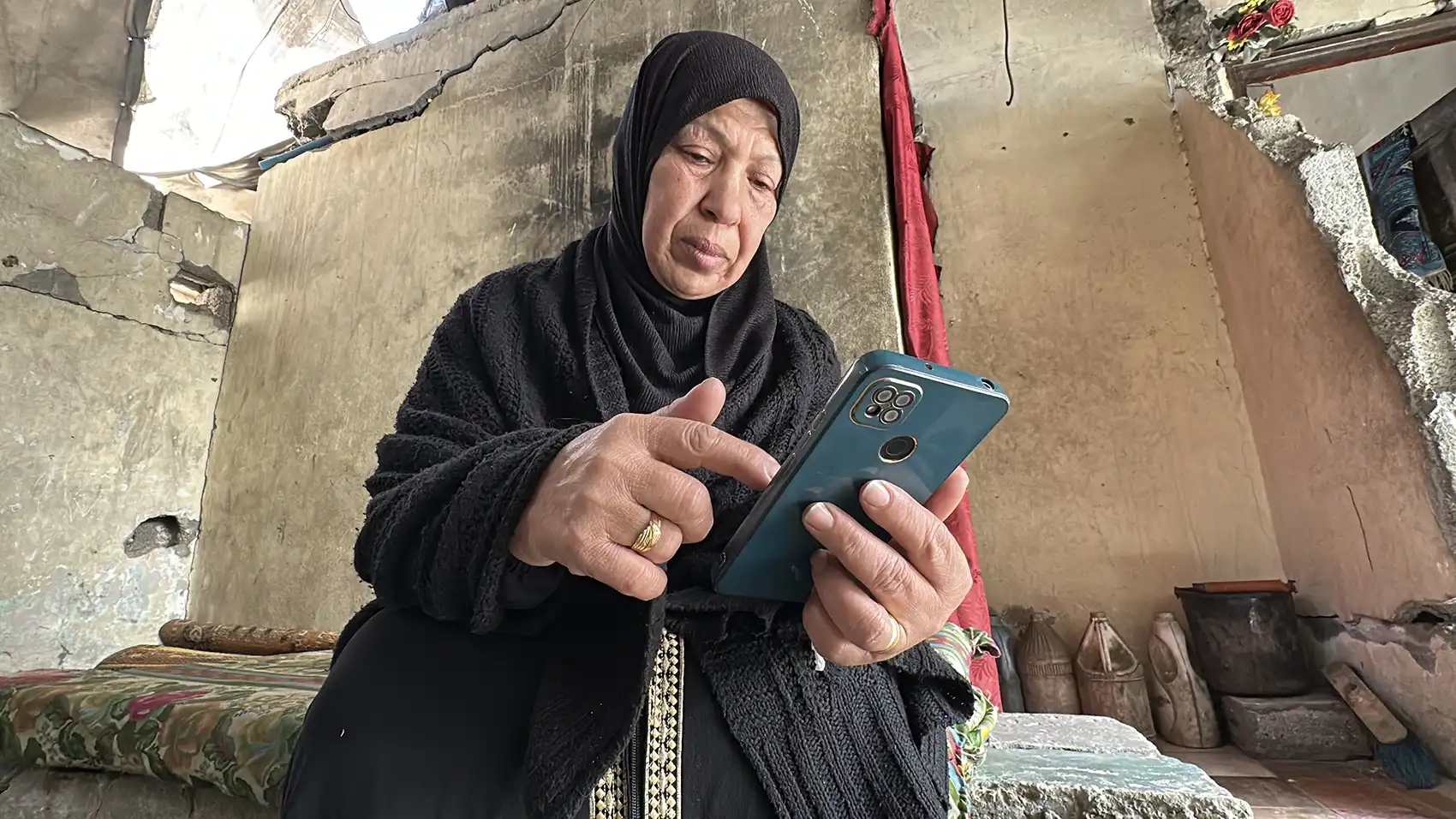













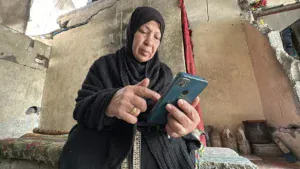





















A Palestinian researcher from Gaza, specializing in English literature and translation. Despite war, displacement, and the destruction of her university, she continues her academic journey under siege, refusing to let her voice or her dreams be silenced. X: @GhadaRozzi
For a Palestinian using a wheelchair in Gaza, moving from one place to another means navigating broken roads, rubble and overcrowded displacement sites. A journey to a hospital, a water point or even a bathroom can require help from relatives, making Israel's ongoing decision to block wheelchairs from two Australian charities from entering the Strip since 2025 all the more deplorable. What should offer a basic means for mobility has become a daily negotiation with an environment increasingly difficult to navigate for people living with life-changing injuries or other disabilities amid Israel's genocide.
This is the reality facing thousands of Palestinians whose injuries have permanently altered their lives. As of April 1, 2026, the World Health Organization (WHO) estimated that 172,043 people had been injured in Gaza due to the Israel-Hamas war since October 2023. About 43,011, or one in four injured people, were estimated to have potentially life-changing injuries. More than 5,000 limb amputations were also estimated to have occurred, with children accounting for roughly one in five amputees. Indeed, Gaza has the highest number of child amputees in modern history.
These numbers describe only part of the problem. People who survive catastrophic injuries often need months or years of surgery, prosthetics, physiotherapy and rehabilitation to even moderately return to their old selves. The WHO estimates that between 49,462 and 55,914 injured Palestinians in Gaza require this kind of extended rehabilitation.
For a Palestinian using a wheelchair in Gaza, moving from one place to another means navigating broken roads, rubble and overcrowded displacement sites.
- Ghada al-Rozzi
Yet the health system needed in the Strip to help rehabilitate these individuals has been severely weakened because of Israeli military operations and as part of Israel's efforts to make Gaza unlivable. Meanwhile, access to rehabilitation equipment, assistive products and specialized care remain heavily constrained, entirely due to Israeli controls on the import of such items and expertise. The U.N. Office for the Coordination of Humanitarian Affairs (OCHA) predicts that 20,000 mobility aid products are still needed in Gaza.
The problem does not simply end when a person receives a wheelchair or another assistive device. The OCHA reported in June 2026 that, because of Gaza's harsh living conditions and extensive infrastructural destruction, the average lifespan of a wheelchair for an active user had fallen to less than three months. For people whose mobility already depends on specialized equipment, the loss or damage of a wheelchair can quickly mean renewed dependence on others for movement, increased difficulty accessing essential services and inhibitions to daily activities.
Moreover, for those with physical disabilities preceding the war or a consequence of it, the destruction around them adds another layer of hardship. Damaged roads and buildings, repeated displacement and inaccessible shelters can make leaving a shelter or reaching basic services physically dangerous in a place already rife with risks. In a condensed area housing over 2 million people, where 82% of all buildings are destroyed or damaged, the circumstances the physically disabled face are arduous.
For people whose mobility already depends on specialized equipment, the loss or damage of a wheelchair can quickly mean renewed dependence on others for movement, increased difficulty accessing essential services and inhibitions to daily activities.
- Ghada al-Rozzi
In September 2025, United Nations experts reported that some people with physical disabilities had been forced to crawl through rubble or had to be dragged on mattresses as they were forcibly displaced by Israel. They also warned that inaccessible aid distribution points and shortages of wheelchairs, medical equipment and other supplies were placing people with disabilities at heightened risk. The so-called Gaza Humanitarian Foundation exemplified these fears, with the most physically capable receiving aid at a limited number of aid sites that already lacked enough supplies in what experts described as a morally reprehensible "Hunger Games" scenario.
In May 2025, the WHO reported that at least 94% of Gaza's hospitals had been damaged or destroyed. Then, in October 2025, the WHO said that only 14 of 36 hospitals remained operational. Those numbers have barely improved. As such, the healthcare system itself has struggled to absorb the consequences of mass injury. Hospitals continue to face severe shortages of medical supplies and healthcare workers, while insecurity repeatedly obstructs patients and medical teams from reaching care.
For some patients, specialized treatments unavailable in Gaza mean medical evacuation is the only route to receiving the care they need. But evacuation is not simply a matter of receiving a medical referral. According to the WHO, patients must pass through a multi-stage process involving referral approval, acceptance by a receiving country and a security clearance before movement can take place. A medical referral does not guarantee that a patient will leave Gaza or that their departure will take place in time to address their medical condition, nor does it guarantee that their return will include the ongoing care they require.
Nearly three months after the Israel-Hamas ceasefire of October 2025 that required border restriction easing to allow for medical evacuations, the WHO estimated that 18,500 patients still required urgent medical evacuation, despite more than 10,700 patients having been evacuated cumulatively. In October 2025, the WHO reported that more than 700 patients had already died while waiting for evacuation. One year later, at least 10,000 more patients still require evacuation for medical treatment due to Israeli restrictions, while other reports suggest as many as 15,000 await the chance to leave.
For someone living with a life-changing injury, survival does not end when the wound closes. Without rehabilitation, assistive devices and reliable access to healthcare, an injury can mean dependence on family, interrupted education or work and the loss of independence.
In Gaza, even the wheelchair meant to restore mobility can become difficult or impossible to use. That reality leaves those with physical disabilities in the Strip to wonder whether the roads, hospitals, equipment and borders will allow them to move forward at all. That fear is one they should never have to face but increasingly see as their indefinite reality.
The views and positions expressed in this article are those of the author(s) and do not necessarily reflect the views of DAWN.