












Fin de Pencier is a Canadian journalist and filmmaker based between Lebanon and Palestine. Instagram and X: @finlookedintoit
Metula is the northernmost community within Israel's internationally recognized borders. A village on a hill with red rooftops and freshly paved streets, its beauty is dwarfed by the many Lebanese villages, visible just across the border, that Israel has reduced to rubble.
To the west lies Kfar Kila, one of dozens of razed Lebanese villages now completely inaccessible to its former inhabitants and transformed into forward operating positions for Israeli troops. Further in the distance, the village of Deir Mimas comes into view, a Christian community whose glistening white cross graces the center of the town and appears almost unscathed by Israeli strikes. Metula has experienced minimal damage from Hezbollah fire.

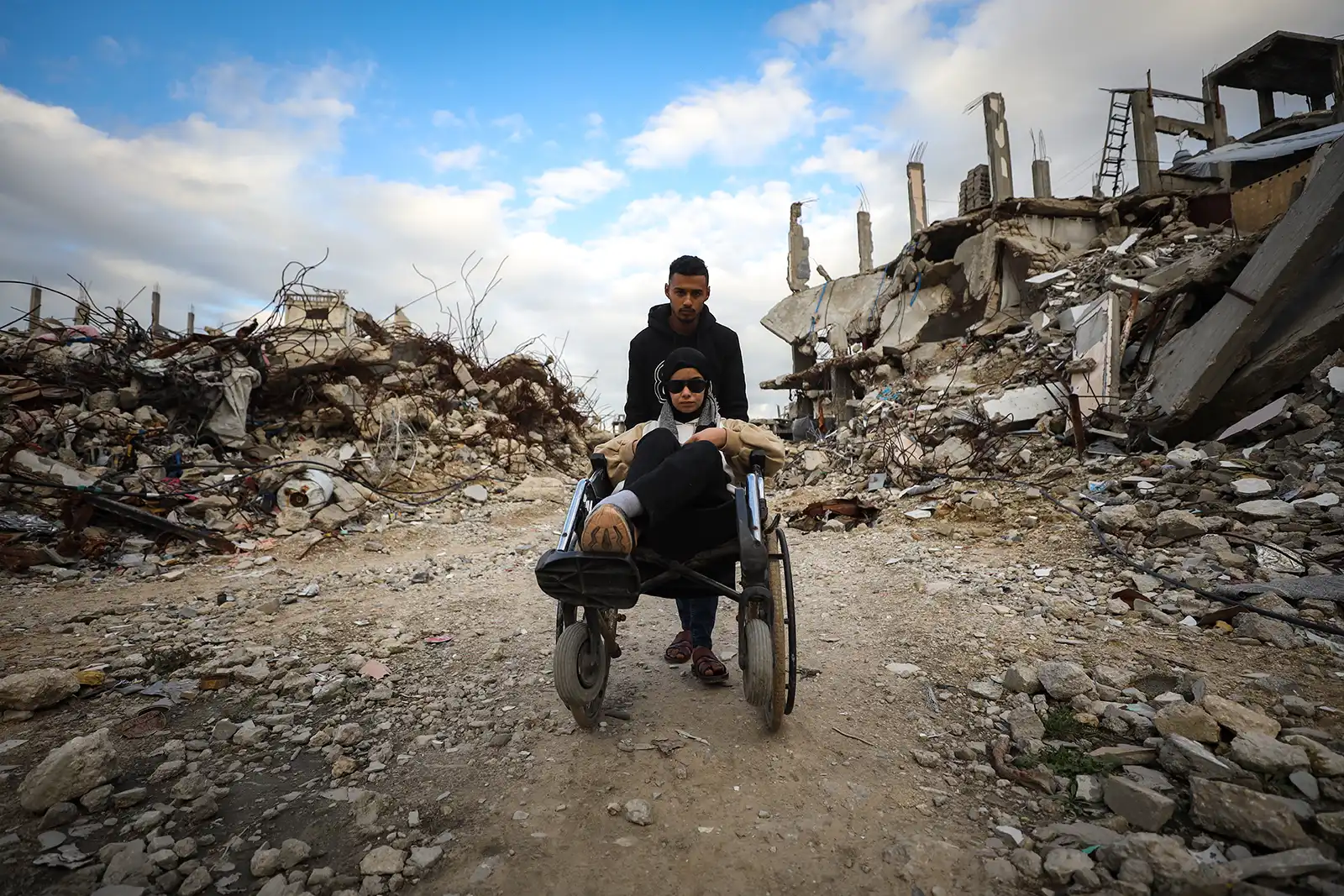
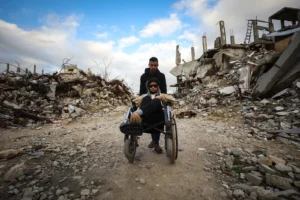
Across southern Lebanon, the pattern is unmistakable: Israel has razed and ethnically cleansed dozens of Shia villages, while leaving a small number of Christian villages like Deir Mimas and Rmeich relatively unscathed. But the survival of these Christian villages is inseparable from that of southern Lebanon itself, large swaths of which Israel has rendered uninhabitable.
A May satellite analysis by investigative outlet Bellingcat found that 46 of the 54 towns and villages inside Israel's 'Yellow Line' — its occupation zone extending roughly 5-10 kilometers (3-7 miles) into sovereign Lebanese territory — had already been heavily damaged or, in some cases, razed to the ground. Israel has continued that destruction since.
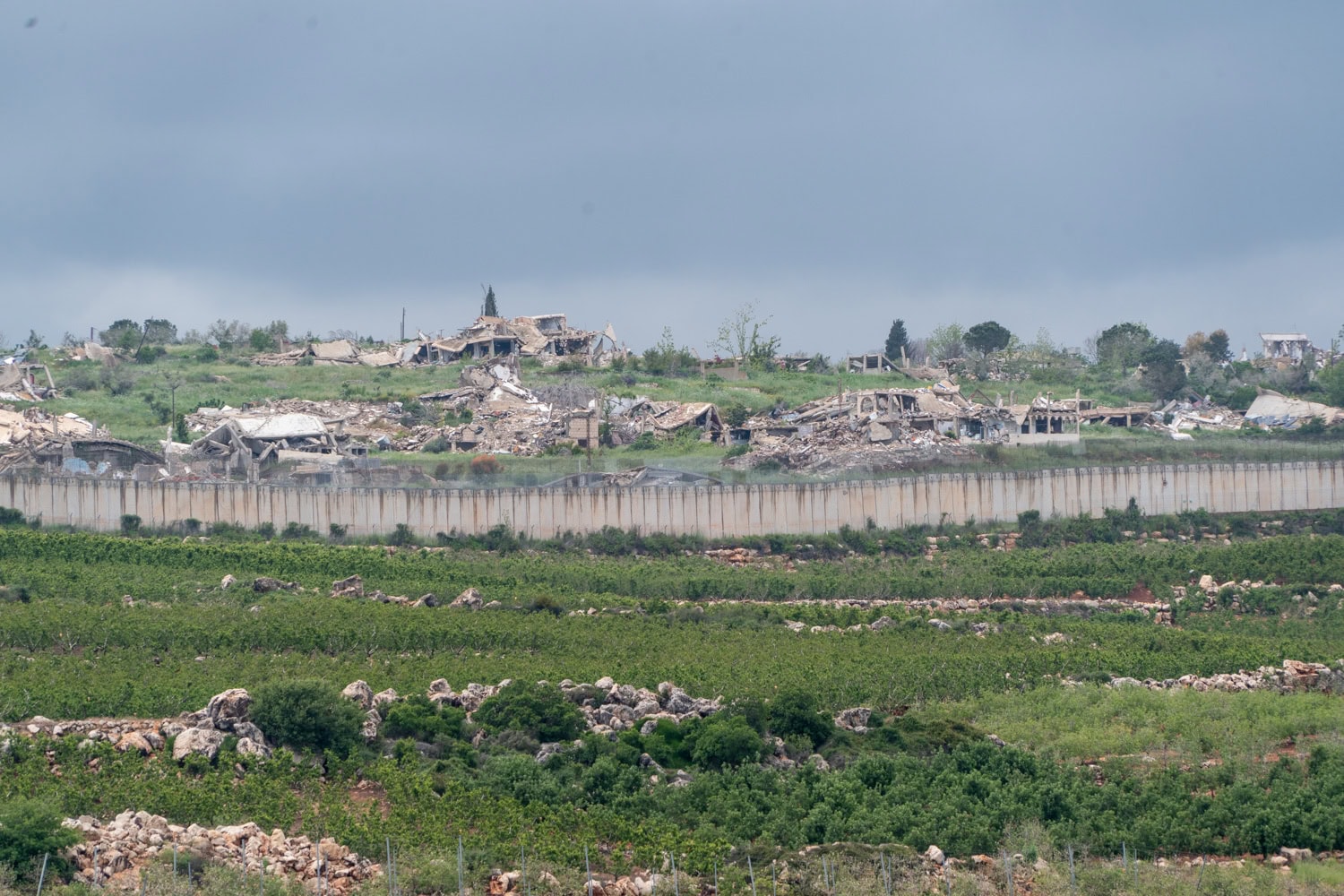
An August estimate by Lebanon's National Council for Scientific Research found that Israel had damaged or destroyed nearly 85,000 housing units in the region. That figure is likely an undercount, according to a joint investigation by Lighthouse Reports and the Financial Times, as at least 20-30% of buildings had yet to be assessed at the time amid ongoing Israeli attacks.
Across southern Lebanon, the pattern is unmistakable: Israel has razed and ethnically cleansed dozens of Shia villages, while leaving a small number of Christian villages like Deir Mimas and Rmeich relatively unscathed.
- Fin de Pencier
Not all Christian communities have been spared. A BBC Verify analysis found that Israel destroyed nearly a third of the residential buildings in the Christian village of Qouzah between March 3 and April 16.
Christian communities in southern Lebanon have long walked a precarious line between Israel and Hezbollah. While some support Hezbollah-aligned, Christian political parties like the Free Patriotic Movement, others are fiercely anti-Hezbollah, represented most prominently by the Lebanese Forces. Many Christians also fought for the South Lebanon Army (SLA), Israel's proxy force, during its occupation from 1982-2000.
According to an April 2026 poll conducted by Statistics Lebanon, a polling firm, 83.84% of Lebanese Christians viewed the Lebanese Armed Forces (LAF) as their source of protection in "times of danger," compared with 8.4% who chose "militias" aligned with political parties or "self-defense." But as Israeli forces advanced in March, the LAF withdrew from several key frontline positions, leaving Christian and Shia communities alike without their support.
The true scale of Hezbollah's military presence in southern Lebanon is difficult to determine after three years of war. Prior to the latest war, the International Institute for Strategic Studies estimated that as many as 40,000 Hezbollah fighters were concentrated in the south, compared with roughly 60,000 LAF personnel nationwide.
In an interview with Fox News in early July, Netanyahu claimed that "some Christian villages" in southern Lebanon had asked to be annexed by Israel "because we protect them against Hezbollah." The leaders of 15 Christian villagers then issued a joint statement denying such an overture had been made.
In a statement to Democracy in Exile, the mayor of Rmeich, Milad al-Alam, rejected the idea that these villages constituted remote outposts, "but rather [are] the beating heart of Lebanon, filled with patriotism and committed to their land and to their Lebanese identity."
Rmeich is a predominantly Maronite Christian village that sits roughly two kilometers from the Israeli border. It is primarily sustained by agriculture, with tobacco fields and olive groves stretching across the surrounding countryside. "Our people have been without work for nearly three years because of the war that began in October 2023," said Rmeich's Parish priest, Najib al-Amil.
Lebanese residents living inside Israel's Yellow line are forced to request permission from the Israeli military to access their communities. Those requests are processed through a U.S.-led monitoring system, which coordinates convoys carrying residents in and out.
The journey used to take two hours before the war but now takes more than 18 hours, according to a resident of Rmeich named Charbel, who is withholding his real name due to security concerns given the sensitive situation on the ground.
The survival of these Christian villages is inseparable from that of southern Lebanon itself, large swaths of which Israel has rendered uninhabitable.
- Fin de Pencier
"The convoys are capped at 30 vehicles," he explained. "Our main concern is safety during the convoy, in case someone from Hezbollah tries to sneak in. In terms of aid, there is plenty of grain and basic supplies, but nothing comforting.
"Think of it like a big prison," he said.
In an interview with Democracy in Exile, former Israeli diplomat and political analyst Shaiel Ben-Ephraim said there was recently a debate within the Israeli military over whether to forcibly displace Lebanese Christians. "For now, they're being given a chance to cooperate," he said.
"But they don't particularly want to cooperate with Israel, nor Hezbollah," he explained. "They just want to be left alone. In the long run, I don't think we'll see full-blown ethnic cleansing like with the [Lebanese Shia], but I fear for their safety," he said.
Although Israeli forces are once again allowing farmers to cultivate some of their land, access remains restricted near the border, al-Amil explained. Meanwhile, Israel has demolished structures and uprooted trees and wildlife in other areas, he said.
"There are also some fields we haven't been able to cultivate because of their proximity to the border," he said. "The Israeli army fires shots into the air whenever they see anyone approaching the border as a scare tactic to force the residents back into town."
The U.S.-Iran Memorandum of Understanding, which established a regional ceasefire amid the broader war, explicitly called for Israel to end its military operations in Lebanon. That deal has failed, with the 60-day period in which a broader comprehensive agreement between Washington and Tehran was supposed to be signed now long-passed. Israel still occupies large swaths of the country and launches frequent airstrikes.
A new Lebanon-specific agreement, known as the Trilateral Framework, calls for Israel to end its occupation and for Hezbollah to disarm. But that would require the LAF to disarm Hezbollah by force, something the former has long resisted due to the political implications of such a campaign. Israel, meanwhile, has rejected withdrawing in tandem with LAF deployments, insisting Hezbollah disarm first, whereas Hezbollah refuses to fully disarm while Israel occupies Lebanese territory.
Statements by Israeli leaders, including Defense Minister Israel Katz, that the occupation will be "indefinite" have deepened fears that Israel is unwilling to compromise or withdraw.
Lebanon's Christian villages, meanwhile, remain caught in the middle. Many have helped their displaced Shia neighbors, but Israel views even limited assistance with suspicion. In April, the New York Times reported that Israel had warned Christian leaders their villages could be targeted for sheltering Shia intentionally and forcibly displaced by its operations.
This comes as the United Nations Committee on the Elimination of Racial Discrimination urged Israel on Aug. 26 "to cease the use of rhetoric that dehumanises the population of Lebanon" and to refrain from any rhetoric "that legitimises collective punishment or incites violence, including on grounds of national or ethnic origin, descent or religion." The Committee warned that rhetoric from Israeli officials characterizing Shia as "enemies" could constitute the crime of collective punishment.
For now, most of these Christian villages remain standing. But as Israel's occupation leaves them increasingly cut off from the rest of Lebanon, amid an increasingly uninhabitable south, they risk becoming unviable as Lebanese communities. This has fuelled fears that Israel sees their future not within a sovereign Lebanon, but under continued Israeli occupation or, eventually, as a part of Israel itself.
The views and positions expressed in this article are those of the author(s) and do not necessarily reflect the views of DAWN.