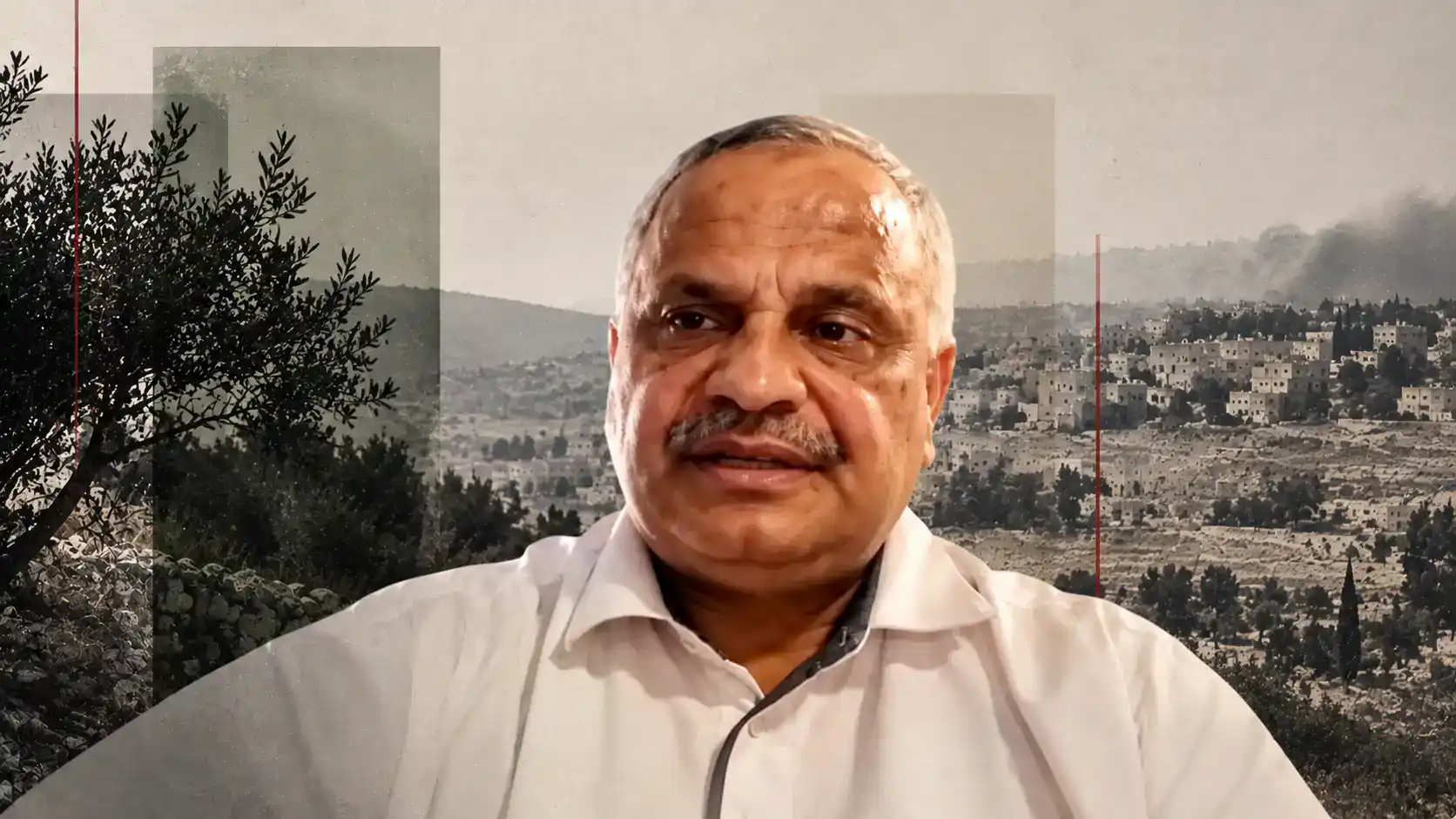






















Mohsen Farshneshani is the Principal Attorney at the Sanctions Law Center.
Israel's global economic interdependence is what gives sanctions their power. Israeli banks, insurers and major companies depend heavily on access to global markets. The businesses, developers and institutions sustaining the settlement enterprise depend, in turn, on them. That gives Western governments, including the United Kingdom following its Sept. 8 decision to introduce a new sanctions framework, considerable leverage if they use it strategically.
Sanctions on Israel are now poised to become substantially stronger, which is overdue. But sanctions that appear strong on paper are not automatically effective in practice. The objective should be to use Israel's international economic ties to change behavior, through measures strong enough to create sustained pressure, without diluting them in implementation or incentivizing the kind of isolation that could push Israel toward the "Super-Sparta" future its hardliners envision.
So far, Western governments have used that leverage narrowly. For the past two years, they have mostly sanctioned individual settlers and groups tied directly to violence or displacement in the occupied West Bank, including East Jerusalem. Those measures were not meaningless. Some sanctioned settlers suddenly found bank accounts frozen and ordinary financial dealings disrupted.
But the approach had an obvious limit. Governments could punish the settler who attacked a Palestinian, and sometimes the organization or financier supporting them. They were far less able to reach the contractor building an illegal settlement, the company supplying it or the bank financing its expansion. Nor did they generally prohibit their own companies and citizens from doing business with the settlement economy.
That is beginning to change.
The United Kingdom's plans for a new "comprehensive sanctions regime" to address illegal settlements and settlement expansion, including an import ban on settlement goods and targeted sanctions against companies and individuals providing construction, infrastructure, financing or real estate-related services mark a potential sea change. While the regulations have not yet been issued, Miliband said the regime is expected to be in place between March and June 2027, with more immediate measures already underway. He also stressed that the regime would target settlements, not Israel, and preserve trade with Israel inside the Green Line separating the 1967 line legally defining Israel and the Occupied Palestinian Territory (OPT).
Governments should adopt clear rules prohibiting their businesses and citizens from engaging in settlement-linked activity. Enforcement must be strong and serious.
- Mohsen Farshneshani
This shift is welcome and overdue. Yet it also raises a difficult question: How should governments increase pressure in a way that actually shifts the state of Israel's behavior?
International law also offers governments a clearer direction. In July 2024, the International Court of Justice found Israel's continued presence in the OPT unlawful. It said states must not recognize or assist that unlawful situation and must distinguish in their dealings between Israel and the occupied territory.
A new sanctions regime should give practical effect to those obligations by using Israel's international economic ties as leverage.
That leverage runs through Israeli banks, insurers and major companies. These institutions must respond not only to domestic political pressure but also to regulators, shareholders, creditors and foreign counterparties whose access to global markets is at stake. We saw how this developed after the first U.S. settler sanctions in 2024 under U.S. President Joe Biden's administration, when Israeli banks froze the accounts of sanctioned customers despite pressure from Israeli politicians not to comply. European sanctions later created similar friction.
Governments should therefore adopt clear rules prohibiting their businesses and citizens from engaging in settlement-linked activity. Enforcement must be strong and serious. Banks and companies with international exposure should have every incentive to cut ties with sanctioned extremists, settlement developers and the prohibited settlement activity.
Escalation should be deliberate, sustained and conditional. If institutions refuse to comply or help circumvent the restrictions, governments should begin targeting the most egregious facilitators. If settlement expansion and other conduct sustaining the occupation continue, governments can broaden both the actors targeted and the activities prohibited. Where behavior changes, there should be a credible path to relief.
This only works, however, if governments resist the temptation to weaken sanctions after announcing them. In the United Kingdom, Canada, Australia and the European Union, targeted sanctions have been a slow and largely symbolic move. In 2024, after U.S. sanctions led Israeli banks to restrict sanctioned settlers' accounts, the Treasury Department issued guidance that reduced much of the disruption.
Escalation should be deliberate, sustained and conditional. If institutions refuse to comply or help circumvent the restrictions, governments should begin targeting the most egregious facilitators.
Mohsen Farshneshani
The lesson is simple: Sanctions are shaped by the names that appear on a government blacklist, but more importantly, by how regulators tell banks and companies to behave afterward. Implementation and enforcement can make or break the policy.
For now, it seems that the danger of escalating too far and too quickly may have been averted, considering London chose a phased rollout. That approach is a marked contrast with sanctions on Russia, where Western governments moved within days to target the core of the Russian financial system and immobilize central-bank assets. The more immediate danger is the reverse: that deliberate sequencing turns into delay, or that sanctions are diluted before they can exert sustained pressure.
Still, sanctions can erode the leverage they depend on.
Israeli Prime Minister Benjamin Netanyahu has openly prepared his country for a more autarkic nation, a "Super-Sparta" capable of surviving greater international isolation. Governments should be careful not to make that vision self-fulfilling, especially as more insulation would weaken the external leverage that can constrain abuses against Palestinians living under occupation.
The costs of the government's policies should become visible to Israeli society without becoming so sweeping that hardliners can portray permanent isolation as inevitable. If economic pain comes to be seen as indiscriminate, or as permanent regardless of what Israel does, the incentive shifts from changing course to adapting to isolation. Hardliners can then argue that the outside world is hostile no matter what, while the very economic links underpinning the international community's leverage gradually weaken.
That development is the sanctions trap: mistaking pressure itself for strategy.
The key is to use Israel's deep ties to the global economy to reshape the calculus sustaining expansionism and other hardline policies, but not to drive the country into isolation. Sanctions should remain tied to the conduct they seek to change, escalating when that conduct continues and preserving meaningful off-ramps when it changes.
Sanctions are leverage, not a comprehensive peace plan or strategy in and of itself. Their purpose is to change incentives and bring conduct into greater conformity with international law and norms.
Done well, sanctions can turn Israel's international integration into leverage for a just and durable peace. Done too timidly, they will fail to change the calculus. Done indiscriminately, they risk helping hardliners build the very "Super-Sparta" they envision. The point is to make isolation a consequence Israel can still avoid, not a future it learns to survive.
The views and positions expressed in this article are those of the author(s) and do not necessarily reflect the views of DAWN.