












Ramona Wadi is a freelance journalist and book reviewer. Her writing covers a range of themes in relation to Palestine, Chile and Latin America. X: @walzerscent | Bluesky: Ramona Wadi
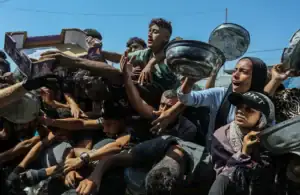
Just over one year into the so-called "ceasefire" in Gaza between Hamas and Israel, the U.S. Board of Peace (BoP) has failed to formulate an effective humanitarian program. As U.S. President Donald Trump's peace plan stalls, the United Nations Relief and Works Agency for Palestine Refugees (UNRWA), the primary aid mechanism supporting Palestinian refugees in multiple countries and in occupied Palestine, publicly remains sidelined from negotiations over Gaza's future. Instead, BoP officials continue to malign the only agency with the capacity to seriously address the humanitarian crisis, reflecting the ongoing colonial mindset driving Israel's military occupation, ethnic cleansing and genocide in Gaza.
As the annual U.N. General Assembly proceeded last month, the Board of Peace issued a statement on X on Sept. 25, claiming its policy on UNRWA remained unchanged. "We will only work with trusted partners who will deliver for the people of Gaza and contribute to a deradicalized Strip," the post read, adding that "UNRWA fails on those litmus tests." The statement concluded with an obscure reference to reducing Palestinian dependency on aid and supposed efforts to build a thriving economy in Gaza.
Just one day earlier, the Trump administration revealed its Gaza recovery plan during a meeting on the sidelines of the UNGA. The 6-month plan will span 66 programs covering housing, waste removal and diesel production, among others. It will require $18 billion, of which only $280 million has supposedly been collected.
In May, the Financial Times confirmed that the BoP had not received any donations to its World Bank-administered fund. So far, U.S. Ambassador to the U.N. Jeff Bartos' appeal to fund the Board of Peace instead of UNRWA has not yielded substantive results, proving the Board lacks the buy-in and legitimacy necessary to raise sustainable funding.
U.S. Ambassador to the U.N. Jeff Bartos' appeal to fund the Board of Peace instead of UNRWA has not yielded substantive results, proving the Board lacks the buy-in and legitimacy necessary to raise sustainable funding.
- Ramona Wadi
Thus, the Board of Peace sits at a crossroads as negotiations with Israel stall. The reason for this development is clear: Talks with Israel depend on the speed and willingness of its compliance with Trump's would-be peace plan. In this regard, UNRWA sits in a precarious position.
While the BoP continues to shun UNRWA while posturing about its supposed humanitarian successes, the agency's former Commissioner-General, Philippe Lazzarini, recently painted a different picture. Contradicting the Board's stated refusal to work with UNRWA, Lazzarini said that members from the Board and the National Committee for the Administration of Gaza (NCAG) have been open to collaborating with the U.N. agency behind the scenes. In fact, they have met on multiple occasions.
The NCAG is a transitional, technocratic and apolitical Palestinian committee established under the U.N. Security Council and BoP to eventually govern Gaza. To date, Israel continues to block its entry into the Strip.
Around the same time, an unnamed Board of Peace official told the Associated Press on background that UNRWA's programs "may persist if they are serving Gazans well." That report also noted that an unnamed U.N. official shared minutes from a meeting in which UNRWA and the NCAG discussed collaboration.
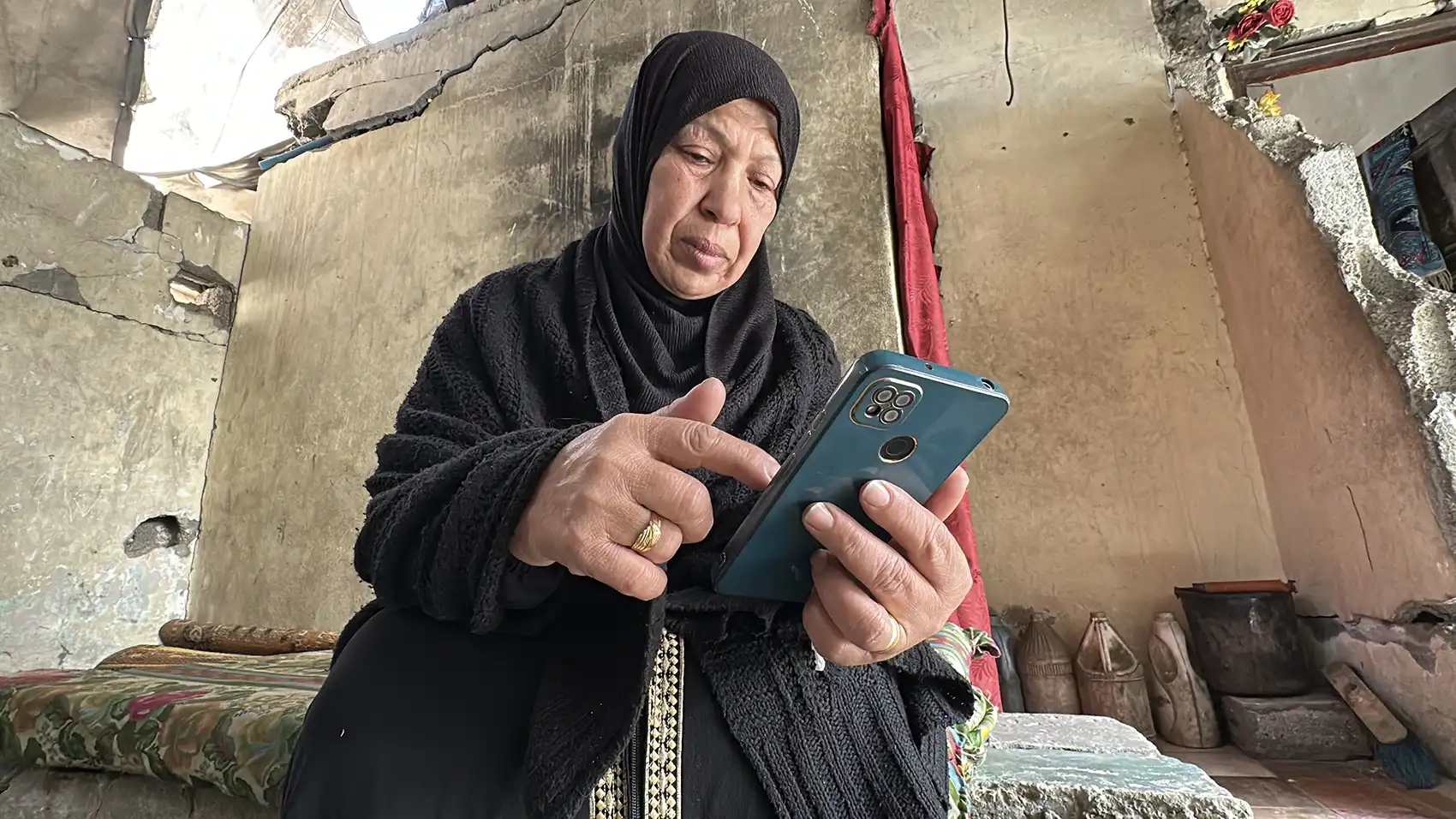
As U.N. Secretary-General Antonio Guterres said at the UNGA, UNRWA faces severe restrictions because Israel targets both the agency's workforce and premises. Since October 2023, Israel has killed 392 UNRWA personnel and aid workers supporting them. In June this year, Israeli forces closed the Qalandia Training Center, a UNRWA-run institution, in occupied East Jerusalem. Funding is another pitfall: UNRWA faces a deficit of $100 million, largely due to U.S. aid cuts based on false accusations of terrorist infiltration, imperiling Palestinian refugees' welfare as the agency's operations are curtailed. Washington was the largest UNRWA donor before the cuts.
As U.N. Secretary-General Antonio Guterres said at the UNGA, UNRWA faces severe restrictions because Israel targets both the agency's workforce and premises.
- Ramona Wadi
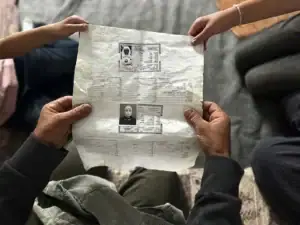
Since 1950, UNRWA has faced numerous funding deficits. The agency was established in December 1949 by UNGA Resolution 302 (IV) as a temporary endeavor until the international community identified a permanent solution. Paragraph 5 of the resolution notes that "continued relief is necessary … and constructive measures should be undertaken at an early date with a view to the termination of international assistance for relief."
That termination never materialized. As Israel deepened its colonial expansion and displacement of Palestinians, UNRWA became an indispensable and legitimate yet underfunded and indefinite humanitarian paradigm for Palestinian refugees. Under current conditions, its role remains vital seven decades later.
Likewise, Israel's recent attacks on UNRWA's camps and facilities, which have attracted condemnation, had earlier precedents. In 1953, Israel attacked the al-Bureij refugee camp in Gaza, killing 50 Palestinians. Another Israeli attack in 1957 on the UNRWA camps in Khan Younis and Rafah killed 275 and 111 Palestinians, respectively, a majority of whom were refugees.
It is Israel's rejection of UNRWA, due to the organization representing the strongest connection to Palestinian refugee status, that has led Washington to work against it. For Trump officials, these efforts began in his first term, when the White House attempted to end the agency in support of Israel's goals regarding refugee status. Fortunately, that effort failed.
Yet those efforts continued into Trump's second term. The Board of Peace's public refusal to work with UNRWA, while collaborating with the agency behind closed doors, represents an extension of Israel's rejection of the body. In this context, the BoP serves as the organizational structure necessary to further Trump's and Israel's anti-UNRWA and anti-Palestinian agenda. Ironically, the Board has also allowed itself to be stalled by Israel on the pretext of Hamas refusing to disarm, even as Israel consolidates its military occupation in Gaza, with plans for colonial settlements already drawn up.
This colonial mindset does not bode well for the future.
In a recent interview discussing his book "Témoin de Gaza: ce qui ne s'efface pas" ("A Witness of Gaza: What Cannot be Erased"), Lazzarini spoke about the international community's hypocritical inaction on this front. "We knew everything, and we all knew what the implications would be, not only the human implications in Gaza and for the rest of Palestine and the region," he wrote, "but also the consequences for the future interpretation of international law, for Security Council and General Assembly resolutions, and International Court of Justice rulings." When he finished the book, Lazzarini asked himself: "Why did we wait so long?"
There are several reasons as to why, and all carry historical precedent. With the U.N.'s recognition of Israel as a member state in 1949, humanitarian aid was never given the necessary priority. If the international community had prioritized UNRWA and genuinely engaged in decolonization, the Palestinian people could have addressed humanitarian deprivation early and possibly embarked on a political path to secure their land and rights. With each passing decade, Israel remained in motion as the Palestinian people remained tethered to a humanitarian paradigm that was never destined to overcome humanitarian deprivation, but to simply exist inside a colonial status quo.
The result was indefinite aid to Palestinians within preestablished funding agreements that allowed broader systemic issues to be ignored, leaving tougher political questions at play while inadvertently enhancing Israel's colonial expansion. Through this process, the only option forced upon Palestinians was to wait.
The victim is not UNRWA. The agency is, after all, the face of a paradigm that was destined to fail because it could not battle colonialism on the humanitarian front. The real victims are the Palestinian people. Whether UNRWA works in the shadows with the Board of Peace or is completely excluded, Palestinians continue to be trapped between ethnic cleansing and international oblivion, shouldering the costs of a failing system that was never meant to work in their favor from its very inception.
Despite these hardships, UNRWA's existence testifies to the reality of Palestinian refugees. Without it, Palestinian refugee visibility is eliminated. It must survive.
The views and positions expressed in this article are those of the author(s) and do not necessarily reflect the views of DAWN.