








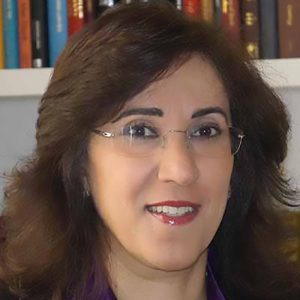



Ali El Zein is a Lebanese Australian journalist and researcher based in Beirut. He has worked as a lawyer, journalist and sports coach in Shatila Refugee Camp. His work focuses on the intersection of law and politics and has appeared in Deepcut News and the Australian Broadcasting Corporation.
Disarming Palestinians in Lebanon has historically been framed in purely securitized terms, with policymakers failing to adequately address the legal, political and economic realities sustaining parallel or extraterritorial forms of governance in the country's refugee camps. In the context of disarming non-state actors, policymakers should address the political, economic and security conditions that create and drive the demand for weapons in a holistic manner, refraining from approaches that sustain a status quo of violence and destitution in the camps.
Successive Lebanese governments failed to address the question of arms outside of state authority for the past half-century. The debate has typically focused on Lebanese Hezbollah but also includes Palestinian militias. Then, in August 2025, a self-proclaimed reform government led by Lebanese President Joseph Aoun and Prime Minister Nawaf Salam placed the state's monopoly on arms on its cabinet agenda for the first time. To do so, it tasked the Lebanese Palestinian Dialogue Committee, a government agency, with leading a renewed push to disarm Palestinian factions in the country. Importantly, Palestinian Authority President Mahmoud Abbas supported that decision.
The question of Palestinian arms has been a fixture of Lebanese politics since the Cairo Agreement of 1969 between the Palestine Liberation Organization (PLO) and the Lebanese government, which allowed a Palestinian military presence in Lebanon. This presence carried on through Lebanon's 1975-90 civil war, even after the departure of the PLO in 1982, with groups including Fatah, Hamas, Islamic Jihad, the Popular Front for the Liberation of Palestine and a host of other secular and Islamist factions continuing to operate in the refugee camps.
The question of Palestinian arms has been a fixture of Lebanese politics since the Cairo Agreement of 1969 between the Palestine Liberation Organization (PLO) and the Lebanese government, which allowed a Palestinian military presence in Lebanon.
- Ali El Zein
Palestinian refugees represent one of the most economically disadvantaged and excluded sectors of Lebanese society, empowering the role of non-state armed groups. The basis of this exclusion is the fear of Tawteen, translated differently across official documents as "implantation," "colonization," "settlement" or "naturalization." The term carries some linguistic ambiguity, yet its meaning in the Lebanese context has primarily focused on Palestinian refugees in Lebanon and the unanimous rejection of their naturalization.
The Lebanese constitution's preamble explicitly prohibits Tawteen, stating, "There shall be no … settlement of non-Lebanese in Lebanon." However, like the Lebanese, many Palestinians in Lebanon also reject Tawteen, fearing that naturalization would extinguish their right to return to Palestine after being forcibly displaced and ethnically cleansed by Israeli militias upon the creation of Israel in the 1947-49 Nakba.
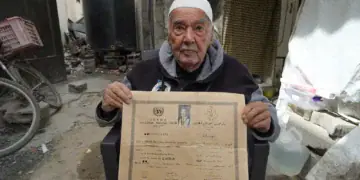
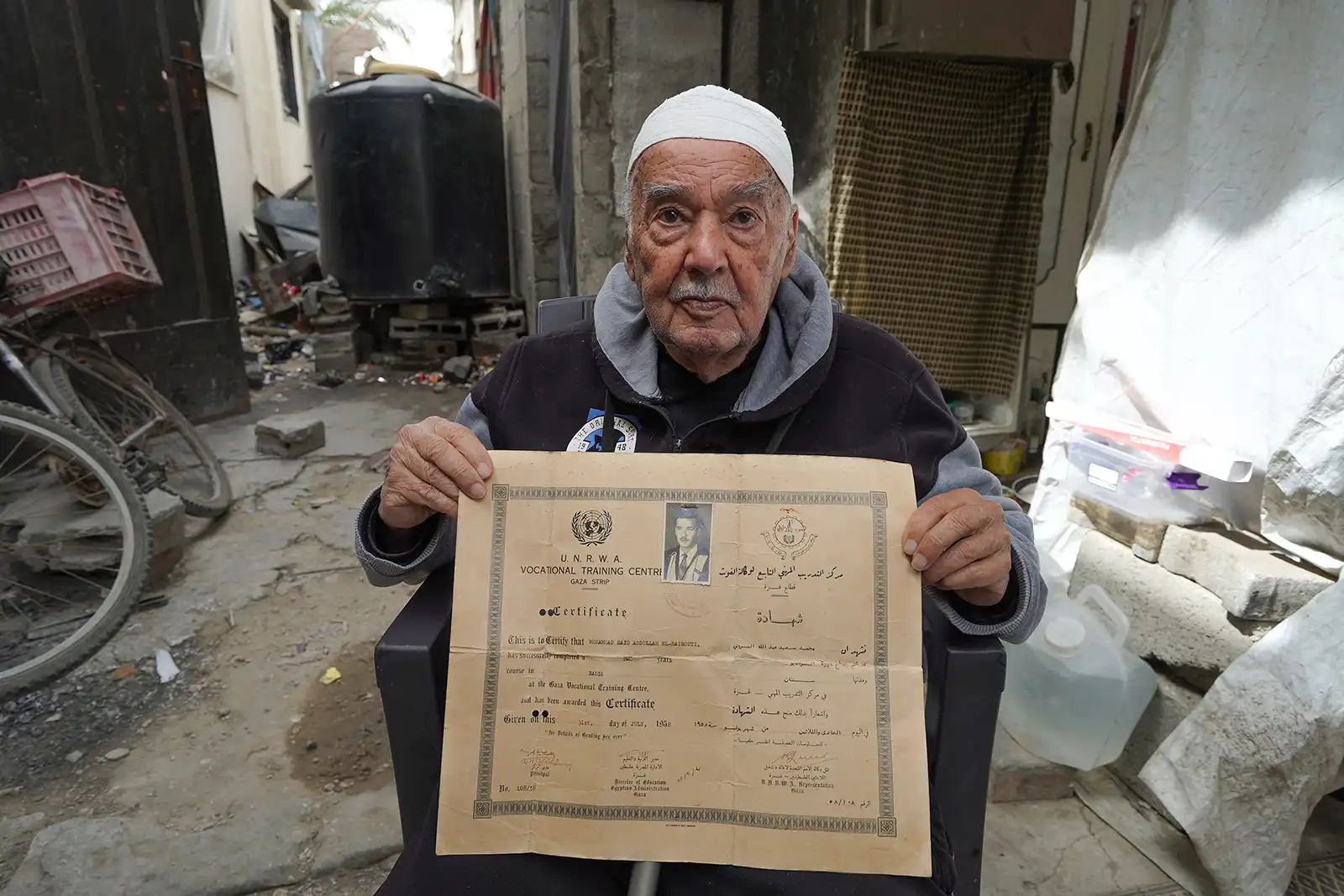
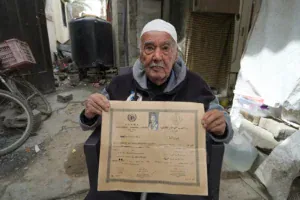
Lebanon never officially ratified the 1951 Refugee Convention and, as such, is not required to recognize the 200,000 or more Palestinians in the country as refugees, treating them instead as foreign nationals. Accordingly, they are entitled to neither citizenship nor refugee status. Lacking legal recognition, Palestinian refugees are denied access to public education and healthcare. Their ability to work in syndicated professions, including law, medicine and engineering, has also been historically forbidden and remains restricted today. The Lebanese Parliament's 2001 decision to deny Palestinians the right to purchase or inherit property only deepened this economic disadvantage.
Due to these restrictions, Palestinians remain excluded from the job market, with an estimated 94% relying on the informal economy to survive. Most are confined to low-pay, low-skill work, making them vulnerable to exploitation. Some Lebanese leaders, including parliamentarian Ghassan Mokhayber, have made clear how they understand the state's approach: It is "official policy … to maintain Palestinians in a vulnerable, precarious situation to diminish prospects for their naturalization or permanent settlement."
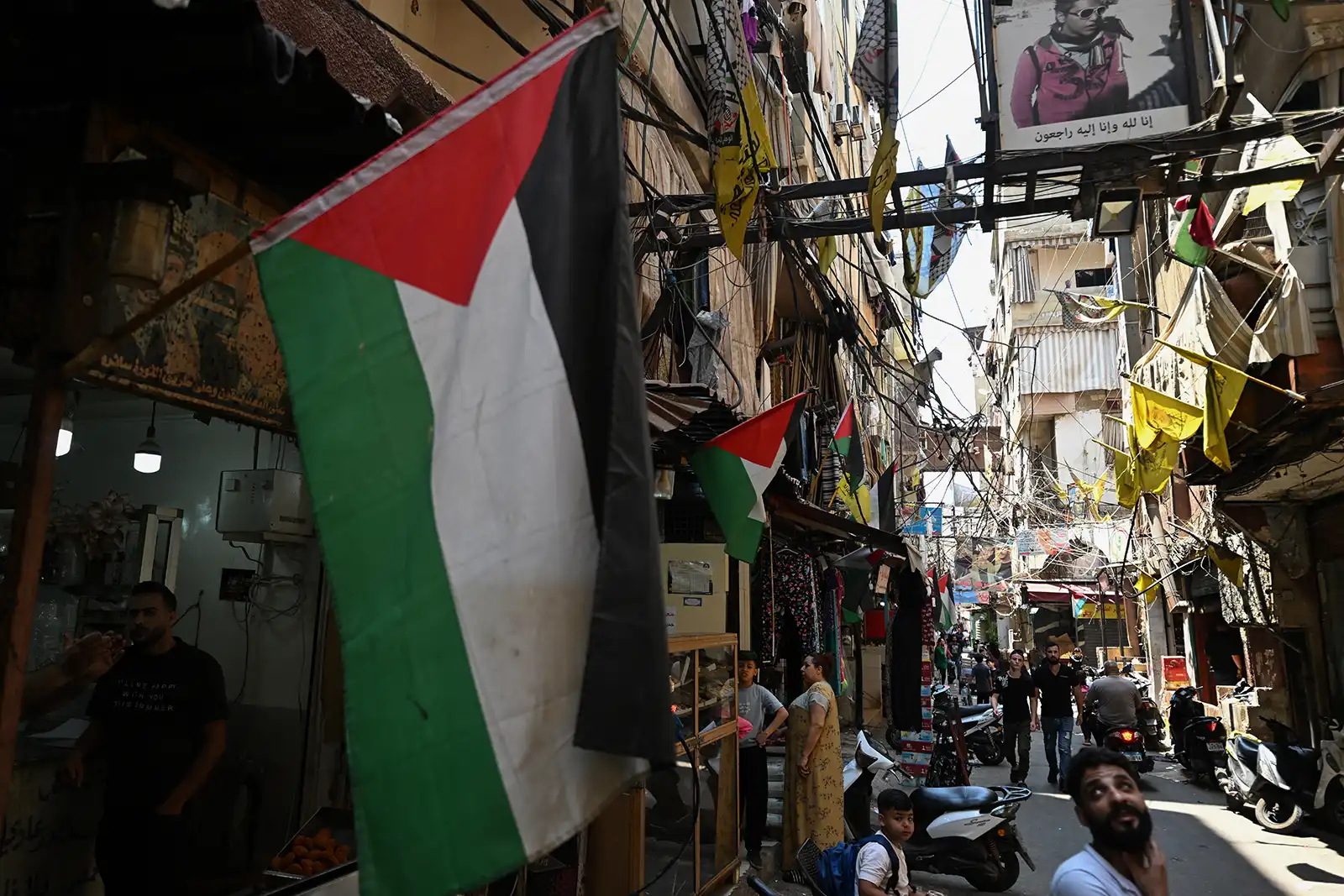
In this environment, 80% of Palestinian refugees live below the poverty line, infrastructure is near total collapse and government services are absent, resulting in parallel forms of governance. The Lebanese army generally does not enter Palestinian camps, limiting its presence to the boundaries while controlling access points. Within the camps, some of which have serious crime issues, camp factions manage governance and security.
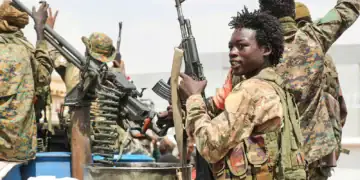
Palestinian weapons fill the vacuum of law and order left by the state. With an unemployment rate approximately three times the national average, the factions offer employment and financial assistance in the camps. Support for weapons amongst camp residents remains strong for this reason, alongside the historic legacy of violence committed against Palestinians in Lebanon.
Lebanon never officially ratified the 1951 Refugee Convention and, as such, is not required to recognize the 200,000 or more Palestinians in the country as refugees, treating them instead as foreign nationals.
- Ali El Zein
During the Lebanese Civil War, Palestinians suffered several massacres at the hands of Lebanese militias, most famously in Sabra and Shatila, in which 2,000-3,500 mainly Palestinian civilians were killed over three days by Lebanese Christian-Phalangist militias backed by Israel. It is worth noting that the Sabra and Shatila massacre was perpetrated two weeks after the PLO withdrew in August 1982, handing security to a multinational force consisting of American, Italian and French troops.
Camp residents have similarly suffered violence at the hands of the Lebanese Armed Forces (LAF). In 2007, following clashes between Islamists and the LAF in the Nahr-al Bared camp, reports emerged of looting and destruction by Lebanese security forces without consequence. This insecurity vis-à-vis the state is accentuated by the LAF's presence at camp access points, where residents suffer indignities.
The current reality is hardly sustainable, requiring real transformation. With naturalization off the table, legal reform to improve the lives of Palestinians remains a possibility. Initiatives in early 2026 to allow Palestinian nurses to fill the skills gap in the Lebanese market, although limited and far from constituting structural change, offer an example of how economic inclusion is viable and even preferable in a situation where Palestinians lack legal status.
Some institutional architecture exists, including the Palestinian Lebanese Dialogue Committee and governing committees in camps, which have at times fostered cooperation between traditionally unaligned factions. Yet these developments do not happen in a vacuum. Civil society organizations have long called for legal and policy reforms to the state's approach to Palestinians, most recently in the joint submission of 15 local and regional organizations to the 51st session of the United Nations' Universal Periodic Review of Lebanon in January 2026.
Paramount among the proposed legal reforms is the need to formally adopt a legal definition of Palestinian refugees and to codify their civil, political and economic rights. The submission also advocates for the LAF to reconfigure camp governance, centering civilian protection by prioritizing Palestinian security and guaranteeing dignity.
The Lebanese state was created with an unwritten compromise between the land's Christian and Sunni Muslim populations, with the former renouncing its claim to a Lebanon within the French imperial system and the latter forsaking desires to merge with Greater Syria. This compromise undergirds the rejection of Tawteen: maintaining the country's delicate confessional balance. As a result, Lebanese sovereignty and Palestinian civil rights have been presented as competing, zero-sum objectives. Such reductionist dichotomies are not only wrong but perpetuate severe humanitarian consequences that marginalize Palestinians.
Ultimately, governance and the centralization of decision-making power remain real issues for both Lebanon and Palestine at a national level, with Lebanon's camps tied to both contexts. Reform of camp governance likely cannot be fully resolved before these broader questions are answered. However, stability is only achievable by improving living conditions for camp residents and reaching legitimate security and governance arrangements between the state and camp authorities.
In doing so, the Lebanese government would reduce reliance on competing armed militias and restore trust in a state that Palestinians have historically understood as hostile to them. This approach serves to strengthen Lebanese sovereignty and Palestinian security through mutually beneficial cooperation. The goal should be to strengthen Palestinian security through the state, decreasing the reliance on arms to unilaterally defend their communities. Only through these processes would a modus vivendi be reached that benefits both Palestinian refugees and Lebanese sovereignty, without prejudicing solutions to the Israel-Palestine conflict's longer window for peace.
The views and positions expressed in this article are those of the author(s) and do not necessarily reflect the views of DAWN.