








Ahmed Ismat Ahmed is a Sudanese writer and researcher based in Cairo. He was an official spokesperson for Sudan's Resistance Committees from 2021 to 2023 and is a co-founder of the Sudan Labour Bulletin. He is on X and Instagram @A_socialist1.
Leading up to this year's annual United Nations General Assembly (UNGA) meetings in New York City in September, the United States withheld Sudanese army chief Abdel Fattah al-Burhan's visa. The United Arab Emirates' delegation, meanwhile, attended without issue, despite its leading role in fueling Sudan's civil war. The development represents a repeated failure of the global order: one willing to perform leverage over a dictator's travel plans while leaving untouched a wealthy state with influence that actively keeps the war profitable at the expense of Sudanese lives.
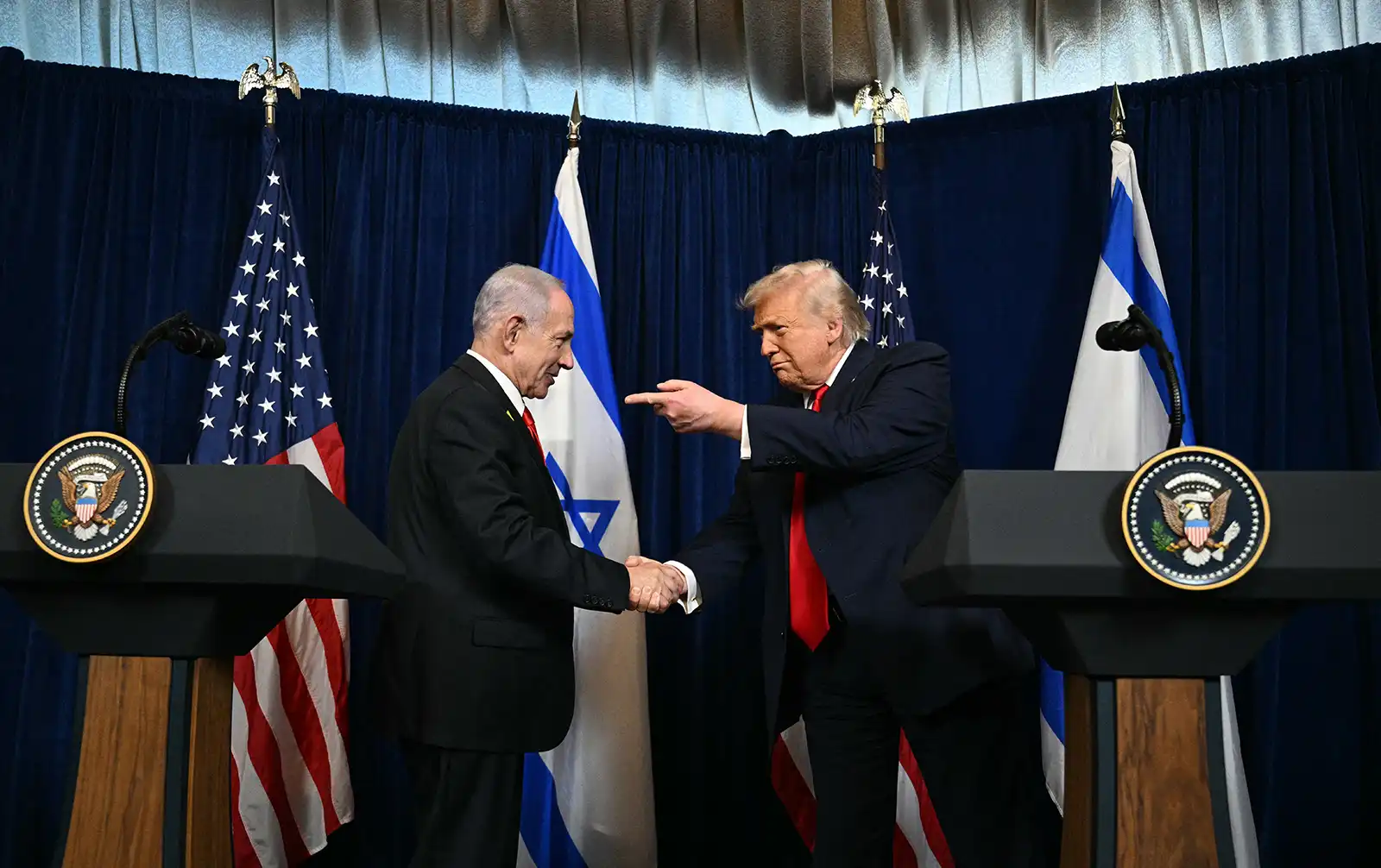
Burhan has been Sudan's de facto leader since 2019, and his Sudanese Armed Forces (SAF) has been in active conflict against General Mohamed Hamdan Dagalo's ("Hemedti") paramilitary Rapid Support Forces (RSF) since April 2023. His visa was held on the condition that he sign a 90-day ceasefire, drafted in July by U.S. President Donald Trump's Senior Advisor for Arab and African Affairs, Massad Boulos.
The general was due to speak during the UNGA's plenary sessions. Sudan's U.N. ambassador wrote to Secretary-General António Guterres demanding the U.N.'s "immediate intervention" to secure the visa. The response, as usual, was one of "deep concern."
Yet the UNGA focus misses the point.
I will not pretend Burhan is a victim. The army he leads has a history of coups, alliances with Islamist networks associated with former dictator Omar al-Bashir and brutal violence in Sudan's periphery regions, including with its RSF foes in the 2003-05 Darfur Genocide that the International Criminal Court is still trying to prosecute. Burhan's army is not the state, as merely performing the functions of government does not confer legitimacy.
Washington is not the only, or even the primary, power shaping Sudan's war. It operates inside a four-country format called "the Quad:" the United States, Egypt, Saudi Arabia and the UAE.
- Ahmed Ismat
The same can be said of the American diplomatic role. Washington is not the only, or even the primary, power shaping Sudan's war. It operates inside a four-country format called "the Quad:" the United States, Egypt, Saudi Arabia and the UAE. Each government directly or indirectly backs a side in the conflict, meaning each holds real leverage to end it. But merely performing the functions of diplomacy does not confer leverage or the willingness to use it.
The UAE has the most direct role in the war, bankrolling the RSF. It is the buyer of last resort for Sudan's gold and is a logistics hub for the weapons and fighters moving into Darfur in support of the RSF. Refineries in Dubai process the metal and funds, which subsequently funds and enables the war. At its peak, the Jebel Amer mines in North Darfur — seized by the RSF early in the war — produced close to 40 kilograms of gold a day, flown to Dubai without customs paperwork.
Investigators have traced RSF payments moving through Emirati front companies into accounts at the National Bank of Abu Dhabi. In one instance, those funds were used to purchase over 900 Toyota pickup trucks, the same models the militia converts into armed "technicals."
The distinction matters. An army, even a ruined one, still needs a country to run: ports, customs and institutions to claim authority over. A militia funded by gold needs none of that. It needs mines, routes and a buyer. State collapse is not a threat to the RSF; it is the condition under which it best operates. Leverage over Burhan's travel documents does nothing to address that structure.
The same man who wrote the ceasefire's conditions, Boulos, sits in Quad meetings alongside Emirati officials and those representing Egypt and Saudi Arabia, which back the SAF. Yet Washington treats a visa stamp as its main point of leverage, leaving the money moving through Abu Dhabi untouched.
Ultimately, a visa is cheap. Gold-sector sanctions are not. An arms embargo leaving Emirati refineries open is meant to keep the UAE in the Quad while projecting the appearance of action. It turns dead Sudanese into a file that can be resolved for 90 days without addressing the conflict's core drivers, in turn leaving young Sudanese to fight as a means of survival.
When I still lived in Sudan, I would walk past a biscuit factory in the Soba industrial zone, on Khartoum's southern edge. In 2021, its workers earned 1,500 Sudanese pounds for a 12-hour shift. Across town in Haj Yousif, rent for a single room was 30,000 pounds a month. The RSF, meanwhile, offered 15,000 pounds a day and a phone in exchange for a uniform and a rifle.
Those three numbers explain this war more than any map that I have seen.
The UAE has the most direct role in the war, bankrolling the RSF. It is the buyer of last resort for Sudan's gold and is a logistics hub for the weapons and fighters moving into Darfur in support of the RSF.
- Ahmed Ismat
Sudan's story is not primarily one of people choosing violence. Sudanese have been forced into the non-choice of a wage that affords them a chance at life. A 90-day ceasefire that refuses to address that arithmetic is merely a pause leaving this structure in place.
Yet officials and mediators repeat a version of the same line: Managing this war, not ending its causes, is the only realistic option. Abdalla Hamdok, the civilian prime minister during Sudan's now-failed transitional government of 2019–21 — the period following Sudan's democratic revolution that collapsed in the October 2021 joint-RSF-SAF military coup — was in New York for the UNGA. His approach to politics embodies that same logic.
Sudan's civilian political parties, organized under the Forces for Freedom and Change, sat in hotel rooms and dismissed as "unrealistic" our Resistance Committees' charter. That document was meant to put power directly in the hands of the people who made the 2018–19 revolution. I served as official spokesperson for the Committees from then until 2023.
When Burhan's coup came in October 2021, we refused to let the political elite speak on our behalf. Our fears were valid: Those same party leaders and Burhan struck their own power-sharing deal with Hemedti and the RSF, which eventually sparked the war.
American foreign policy reinforces that dynamic, representing Washington's role as Sudanese have lived it, not as it is projected. Sudan has been useful to outside powers in different ways and at different times: a Cold War client, a European migration buffer paid to stop African asylum seekers at its borders, a counterweight in regional rivalries or a line item in a diplomatic communiqué. This same logic, decades earlier, drowned Nubian villages to build the Aswan Dam, a project the world called progress and that the people it displaced called erasure.
What Sudanese received for the dam, and for decades of foreign loans after it, were conditions that gutted public universities and bread subsidies. The logic of austerity dressed up as necessary reform refused to consider Sudanese hopes and desires. That same logic now supposedly coerces leading figures in Sudan's civil war with a passport stamp.
When Washington needs the appearance of civilian representation, it flies an acceptable name to Manhattan and leaves ordinary Sudanese in the dark. In doing so, the United States is not standing against Burhan, or even against violence. It is standing against us, the people with the least power in this conflict and the most to lose.
The message to Sudanese is that peace is achieved by two generals and four capitals on their own schedule. The woman who lost her tea stall to the fighting or the boy who took the militia wage because rent would not wait are not the subject of negotiations. The only question on the table is who will stand on a stage and deliver a speech full of empty promises.
If Washington wants to stand with Sudan, it will pursue the problem at its root: the UAE's ability to profit from Sudanese gold. It would sanction the front companies that turn gold mined with child labor into armored pickup trucks. It would stop giving the buyer of that gold a seat at a table claiming to seek peace.
Ultimately, the United States should admit that weapons embargoes and visa bans mean little if they never address why those weapons can be bought or who is enabling the forces buying them. A lecture delivered to the wrong end of the rifle will not end this war.
The views and positions expressed in this article are those of the author(s) and do not necessarily reflect the views of DAWN.