
















Husam Mahjoub is a Sudanese writer, journalist, activist, and telecom professional. He co-founded Sudan Bukra TV, an independent Sudanese media platform, and writes on Sudan, Gulf politics, human rights and international affairs. He holds master's degrees from London Business School and Georgia Tech X: @husamom | Substack: https://husammahjoub.substack.com/
Sudan's brutal civil war continues with no end in sight in its fourth year, largely due to the negative role of outside actors. The United Arab Emirates' role is notable, enabled by U.S. complicity that has allowed Abu Dhabi to perpetuate the fighting. This dynamic is indicative of a sub-imperial relationship, in which a regressing global power delegates foreign policy interests to regional partners, often with disastrous results.
America's empire is in decline, displaying the classic structural symptoms of imperial decay: loss of relative economic dominance, administrative inefficiency, eroding soft power, unsustainable public debt and domestic political gridlock. The contributing factors are clear, including weakened American diplomatic and governing capacity and deepening domestic political polarization. Compounding these vulnerabilities is long-running military overextension abroad.
Lacking the capacity for direct administration, empires delegate, allowing regional partners to manage areas they can no longer directly control while continuing to extract stability and resource flows from the broader international system.
This delegation of power is most visible in Africa. American policy rhetoric has emphasized the continent's strategic importance for decades without translating that emphasis into substantial diplomatic or security investment. The 2025 U.S. National Security Strategy devotes mere paragraphs to Africa. Meanwhile, China has been the continent's largest trading partner since 2008. Russia continues to expand its military footprint across the Sahel. Ceding ground in Africa, as European empires did before it, Washington outsources its remaining influence to regional partners.
Lacking the capacity for direct administration, empires delegate, allowing regional partners to manage areas they can no longer directly control while continuing to extract stability and resource flows from the broader international system.
- Husam Mahjoub
This dynamic reflects the logic of sub-imperialism: A regional power projects imperial force within its immediate sphere of influence, extracting resources, controlling chokepoints and shaping political outcomes while remaining dependent on a dominant global power for security guarantees and financial integration. In Africa and the Middle East, the United Arab Emirates represents the clearest example of this sub-imperial strategy.
The UAE depends on American security backing and operates entirely within U.S.-designed financial networks. Yet across Africa, Abu Dhabi behaves like an imperial power. Between 2019-23, the Emirates pledged over $110 billion in investments across the continent, becoming its fourth-largest foreign investor. Emirati state-backed firms control strategic ports along African coastlines, securing leverage over vital maritime routes and critical mineral supply chains well beyond standard commercial interests. By 2024, military bases and installations, airstrips and staging posts followed in Eritrea, Somaliland, Libya and Chad.
This project has a political dimension as much as an economic one. When the 2011 Arab Spring uprisings threatened Abu Dhabi's authoritarian model, the UAE helped organize a regional counterrevolution, financing Abdel Fattah El-Sisi's coup in Egypt and funding Khalifa Haftar's offensive against Libya's internationally recognized government. That same counterrevolutionary logic drives Emirati policy across Africa, where Abu Dhabi treats democratic movements as threats to be neutralized rather than tolerated.
Emirati sub-imperial power reveals its most lethal clarity in Sudan. For decades, Sudan's wars have followed a consistent cycle: Conflict begins in peripheral regions suffering from systematic economic neglect and resource extraction. Armed elites politicize these grievances along ethnic lines. International actors eventually broker peace deals negotiated exclusively with warlords, distributing state privileges as spoils without addressing the root causes of marginalization and neglect, reinforcing a system of impunity that guarantees the next war.
In December 2018, the Sudanese people attempted to break this cycle. A nationwide popular revolution demanding freedom, peace, justice, civilian rule, accountability and material dignity overthrew longtime dictator Omar Al-Bashir in April 2019. This democratic uprising marked an extension of the Arab Spring, posing an existential threat to the regional authoritarian order that prompted Saudi Arabia and Egypt to coordinate counterrevolutionary efforts with the UAE during the revolution's early days and the transitional period that followed.
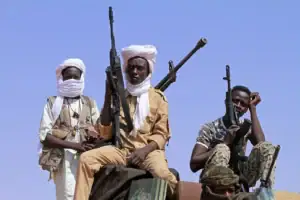
In doing so, they propped up the paramilitary Rapid Support Forces (RSF) and Sudanese Armed Forces (SAF) against the transitional civilian government, eventually facilitating a military coup in October 2021 that ended Sudan's democratic transition. The coup did not, however, resolve Sudan's underlying conflict drivers or the rivalries among the external actors enabling it. Once their common enemy was removed, the UAE's backing of the RSF and Egypt and Saudi Arabia's support for the SAF added a destructive regional dimension to an already complex domestic conflict. The factions turned on each other in April 2023.
Abu Dhabi's strategy has operated along three interconnected tracks: gold, political leverage and weapons transfers. These tracks helped it build and retain influence, supporting its malign efforts to dictate the conflict's direction.
- Husam Mahjoub
The UAE emerged as the war's principal actor. Abu Dhabi's strategy has operated along three interconnected tracks: gold, political leverage and weapons transfers. These tracks helped it build and retain influence, supporting its malign efforts to dictate the conflict's direction.
Between 2013-23, the RSF consolidated control over Darfur's gold mines, a staple of the Sudanese economy. That gold flows directly to Dubai, the primary hub for conflict-linked gold from Africa. The war has not interrupted this supply chain, and no Emirati official or entity has been sanctioned for laundering it. Gold constitutes the RSF's primary revenue source, giving the UAE leverage over its conduct while securing Abu Dhabi's position as Africa's leading gold destination against any rival.
The UAE maintained functional ties with both the SAF and the RSF before the war, hedging to ensure that neither civilian political forces nor the broader democratic movement could consolidate power. A clear tilt gradually formed: Abu Dhabi extended political backing, diplomatic cover and favorable media platforms to the RSF and its allies. It likely retains some sway over SAF leadership through economic and financial ties.
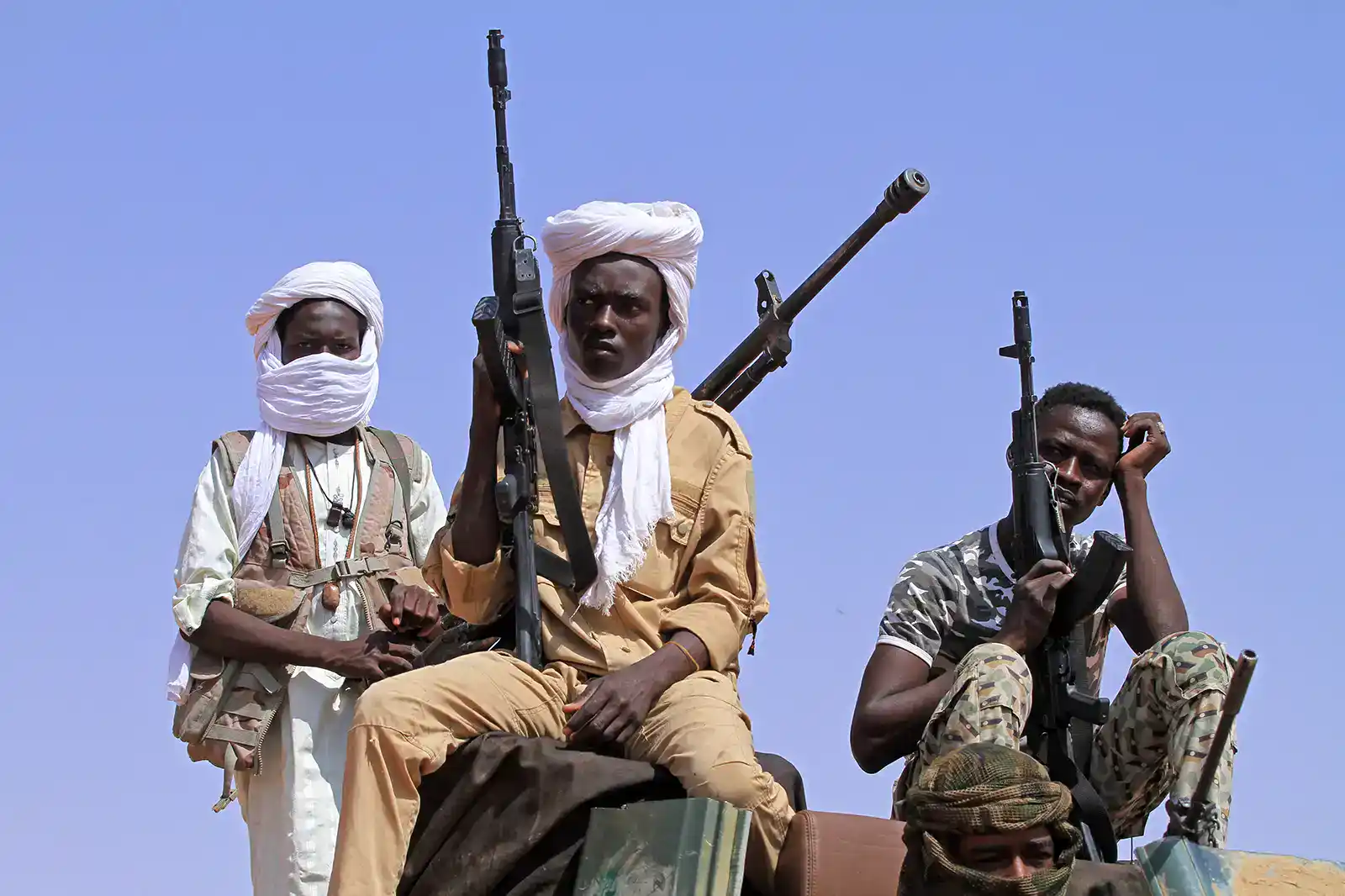
The UAE supplies arms and materiel to the RSF primarily through supply lines spanning Libya, Chad, Puntland and the Central African Republic, alongside an Emirati-funded training camp for RSF fighters inside Ethiopia. Abu Dhabi also recruited, trained and deployed Colombian mercenaries to reinforce RSF forces on the ground. While Western sanctions have targeted Colombian firms and individual recruiters, the Emirati officials and entities funding and directing these mercenary operations remain untouched.
It is through these material points of leverage that the UAE exercises massive influence in Sudan's civil war. Few external actors carry such leverage. Yet delegated power in a sub-imperial system relies on the dominant state enabling or ignoring the proxy's conduct, with catastrophic impacts across Sudan. El-Fasher represents its starkest illustration.
Beginning in mid-2024, researchers at Yale's Humanitarian Research Lab briefed officials from the United States, the United Kingdom and the United Nations Security Council over two dozen times, presenting satellite evidence that an RSF siege of El-Fasher would trap 1.5 million civilians. When the city fell in October 2025, the militia killed at least 6,000 civilians within the first three days. Previous warnings to Western governments produced inaction, reflecting, at minimum, a willingness to protect strategic relationships with the UAE, despite the consequences.
Sudan is not an isolated case. The ongoing devastation in Gaza previously exposed this broader dynamic. The same Western states that invoke international humanitarian law in select conflicts routinely supply weapons, capital and diplomatic protection for collective punishment elsewhere. Colonial and genocidal violence in Palestine, resource extraction in the Democratic Republic of Congo and the siege of El-Fasher are expressions of a singular logic of delegated power applied differently across populations.
No peace process in Sudan will succeed without trials for RSF and SAF leadership responsible for war crimes, accompanied by binding reparations in the peripheral communities whose historical dispossession lies among the structural causes of this war. Western governments possess the financial leverage to hold the UAE accountable. The capital sustaining the RSF is traceable, housed within the banking systems and real estate markets of capitals claiming to seek peace.
Justice requires the political will to treat a strategic partner and its silent enablers as subject to international law, rather than above it. Washington's failure to rein in Abu Dhabi is an active choice emblematic of a declining hegemonic power struggling to preserve influence by outsourcing the exercise of power to regional actors. Complicity in the violence that has followed is not surprising or excusable. It must be rejected.
The views and positions expressed in this article are those of the author(s) and do not necessarily reflect the views of DAWN.