


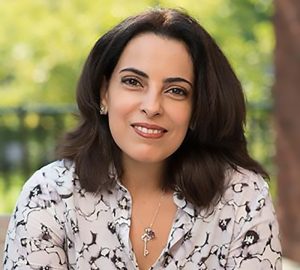

Tina Bexson is a British freelance researcher and news and features writer for national newspapers and magazines, including The Guardian, London's Evening Standard, The Times, Ars Notoria, Environmental Health Journal, Public Health News, Mental Health Today Magazine and Living Abroad Magazine. X | Instagram | Facebook
GENOCIDE:" Why don't we all use this word when we speak of Gaza? Why do we still use terms like conflict, self-defense or war instead? Why does language continue to be manipulated against Palestinians?
It is this manipulation of language by Western media and other institutions, alongside the consequences of its obfuscation and denial that enable and facilitate Israel's genocide in Gaza, that the Arab American poet, aphorist and writer, Yahia Lababidi, ambitiously depicts, explores and deplores in his new book: "If You Cannot Say GENOCIDE: Essays on Conscience and Witness."
Western media and political institutions, and sadly most of us, describe Israel's ongoing genocide in Gaza inadequately. The fallacy of the so-called ceasefire marks just one example amongst many. That problem, as Lababidi highlights throughout the 47 essays in the book, is critical to understanding how we internalize and think about the genocide itself.
For this, Lababidi has understandably turned purely to prose. Indeed, since publishing "Palestine Wail" (2024), his most recent and outstanding, yet haunting, collection of poetry, the poet has felt unable to compose anymore. Poetry is deficient and will destroy his spirit, he feels, echoing Theodor Adorno in post-Holocaust Europe in 1949: "To write poetry after Auschwitz is barbaric."
Prose, Lababidi says, is needed to expand poetry's cry into a "moral indictment." It is necessary to monitor and call to account the widespread complicity and damage, asking why that cry, that wail, goes unheard.
- Tina Bexson
Prose, Lababidi says, is needed to expand poetry's cry into a "moral indictment." It is necessary to monitor and call to account the widespread complicity and damage, asking why that cry, that wail, goes unheard. Reflecting on how these two books speak to each other, he says, "'Palestine Wail' keeps the memory of the dead; 'If You Cannot Say GENOCIDE' holds the living to account."
Passively witnessing trauma from afar creates an ethical wound, or as Lababidi writes, a "moral injury." Meanwhile, he simultaneously asks a simple yet powerful question: "How can we be loyal to the truth when our language is censored?" Lababidi's overall task is to wipe away this dangerous smokescreen and reclaim a truthful language.
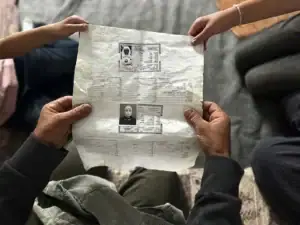
This is personal for him. Though born and raised in Cairo, he is of Palestinian descent. "My grandmother's key to the lost family home is in these pages," he writes. "Silence, at such an hour feels like betrayal. To bear witness, however brokenly, remains a form of prayer."
As such, "GENOCIDE" is necessarily dense. The book's 47 essays are divided into three sections: "Personal Witness," "Literary Witness" and "Political Witness." Each interweaves works created by a diverse group of living and dead artists, writers, poets, philosophers, psychologists and theologians. The point is to provide historical and present-day witnesses and references that directly and indirectly show how the use of language, in its phraseology and dire repercussions, creates a fake reality where the Gaza genocide remains unchallenged and unaccountable.
The work of prominent Palestinians, including Mahmoud Darwish, Sliman Mansour, Khalil Gibran, Ghassan Kanafani and Edward Said, is dissected alongside more recent works. Notable names include Mohammed El-Kurd's "Perfect Victims," which illustrates how Palestinian pain is only accepted for public discussion if drastically diluted.
Similarly, Omar El Akkad's "One Day Everyone Will Have Been Against This" outlines the West's hypocrisy over Gaza. For El Akkad, Gaza urges us to become involved, refusing "the anaesthetizing distance that makes other peoples' grief tolerable." In this conclusion, Lababidi shares a particularly powerful statement from El Akkad: "It may seem now like someone else's children, but there's no such thing as someone else's children."
Passively witnessing trauma from afar creates an ethical wound, or as Lababidi writes, a "moral injury." Meanwhile, he simultaneously asks a simple yet powerful question: "How can we be loyal to the truth when our language is censored?"
- Tina Bexson
The final section of "GENOCIDE" explores multiple dimensions of past and ongoing injuries inflicted upon Palestinians through Israel's ongoing attempts to eradicate them. Essays include the humiliation of both the powerless and powerful, moral degradation (including that of the oppressors) and American Imperialism. Other notable moments in the book feature essays on why forgiveness must be conditional and on how to ensure a deeper Muslim solidarity within the Islamophobic populations forever present in the United States.
Lababidi also includes a potent and thoughtful examination of forgiveness in the book. D.K. Renton's "Revolutionary Forgiveness" is contrasted with Derrida's unconditional forgiveness. Lababidi asks whether forgiveness without justice constitutes another form of erasure.
Both the failure of "liberal language" to accurately describe the reality in Gaza and the complicity of Western media in its obvious, deceitful coverage are awarded justifiably intense and grave consideration throughout the book. This media environment presents Israeli voices as fact, whereas Palestinian voices are either questioned or dismissed. Hospitals become "Hamas command centers," children become potential terrorists and Palestinians murdered in targeted assassinations simply "die."
Lababidi destroys the repetitive adage of "impartiality," instead emphasizing how language dictates morality and reinforces historical lies. By default, that dynamic makes everyone complicit in Israel's killings too. He requests that Western media "abandon the illusion of balance where facts are so starkly imbalanced, and to honor Palestinian lives as fully in coverage as in condolence."
"Language," Lababidi adds, "is never neutral; silence is an editorial choice."
Of course, he empathizes with Jewish pain and persecution. Of course, he applauds the role of Jewish tradition in disputing Jewish supremacy, turning to the insights of Peter Beinart, Hannah Arendt and Judith Butler, who reject the memory of Jewish suffering as a license for domination and moral immunity. "The world must stop using the Holocaust as a shield against legitimate criticism," he writes. "To do so desecrates the memory of the six million Jews who perished. Never again must not mean never again for some."
Although a vital piece of work, exceptionally rich and thought-provoking, "GENOCIDE" is not without flaws. Most could have been corrected before publication.
Some essays vary vastly in length for no clear reason. At times, themes are repetitive, making the book unnecessarily redundant and drawn out in certain sections. The writing can be somewhat verbose and overly wordy at times. Though this is not the work of a detached journalist or academic, it is written from the gut with intense feeling, even if it does not always punch the gut with a coherent focus.
Perhaps most importantly, the book could benefit from additional active Palestinian voices, including journalists on the ground in Gaza still struggling to survive. Although many of them are now dead by Israel's hand, I await the inclusion of those living in future work by Lababidi.
"GENOCIDE" is undoubtedly crucial reading for those hoping to better understand the power of language, especially in terms of Palestine. It is also a fascinating read. The reader will be illuminated on numerous levels, especially where the book provides insight to fully comprehend how far language dictates and shapes public discourse and debate on the decades-long annihilation of a population where no one has been held to account.
'GENOCIDE' demands our attention and, furthermore, it deserves our scrutiny.
The views and positions expressed in this article are those of the author(s) and do not necessarily reflect the views of DAWN.