























Dorgham Abusalim is a Washington, D.C.-based writer, analyst and communications consultant with a master's in international affairs from the Graduate Institute, Geneva. His work has appeared in Haaretz, Mondoweiss and The Washington Blade. He has been featured by Al Jazeera, The Guardian and The New Yorker, among others.
Palestinians learn early that violence committed against them by Israel and its allies comes in many forms. Much of it is deadly, as the past three years of ongoing genocide in Gaza have shown. Another type of violence is administrative, arriving quietly, as a designation or line in a ledger, while outlasting the bombs that make the headlines. For Palestinians in Gaza, administrative violence may prove to be the most catastrophic in the coming years: The Board of Peace (BoP) is threatening Gaza's land registry by perfecting the architecture the Coalition Provisional Authority (CPA) formerly implemented in Iraq.
Given my family's continuous ownership of land in Gaza and throughout Palestine long before the establishment of Israel, the BoP's reported plans and resolutions reflect an attitude that calls into question its integrity and commitment to its publicly stated goals in Gaza.
In December 2025, a contractor described the situation in Gaza to The Guardian in plain terms: "Everybody and their brother is trying to get a piece of [it]." His remark echoes the business attitude of companies like the private security contractor Blackwater, which the CPA utilized to provide security services in Iraq. In Gaza, the piece on offer includes Palestinian land as one of the BoP schemes consolidating Gaza's public land, and potentially private property, under a foreign-administered trust. But the comparison goes beyond business dealings and attitudes.
The remark reveals a structural issue.
The CPA was the U.S.-led governing body in Iraq following the 2003 U.S. invasion of the country and overthrow of Saddam Hussein. Led by former George W. Bush administration senior official Paul Bremer, the CPA came to embody America's failed interventionist and reconstruction efforts. At the heart of that failure was the CPA's architecture, anchored by three key instruments: immunity outside Iraqi courts, weak legislative oversight and sovereign functions transferred to private hands. This architecture is being rebuilt within and by the BoP in Gaza, and where land is concerned, the Board is going further.
The BoP's reported plans and resolutions reflect an attitude that calls into question its integrity and commitment to its publicly stated goals in Gaza.
- Dorgham Abusalim
In June 2004, on the eve of the CPA's dissolution, Bremer signed CPA Order 17, which put American contractors beyond the reach of Iraqi courts for actions committed under their contracts. The results speak for themselves. On Sept. 16, 2007, Blackwater guards escorting a State Department convoy opened fire in Baghdad's Nisoor Square, killing 17 civilians. The Iraqi government's investigation found the convoy had not been provoked. The attack was a clear war crime.
A little more than a month later, Iraq's cabinet voted to strip CPA Order 17 of its force. That decision took 16 months to have any meaningful impact, when a new Status of Forces Agreement between the United States and Iraq came into effect. Despite losing legal immunity, no Blackwater employees were ever tried in Iraqi courts. Convictions eventually came in an American court in 2014-15. Yet, 13 years after Nisour Square, Trump pardoned all four convicted men in December 2020, a move U.N. experts described as an affront to justice.
Recent Board of Peace Resolution No. 2026/3 echoes that history, a parallel that Mandy Turner, a senior researcher at Security in Context, warned about months before it leaked. It shields BoP members, its administrative arm, the Palestinian technocrats chosen to govern Gaza and non-resident contractors from arrest, detention or legal proceedings in Gaza. The resolution also grants Trump, as BoP chair, the power to waive that immunity with majority Board support, the same immunity-waving power Bremer's CPA Order 17 gave the United States over Blackwater. The U.S. never used that power.
Six lawyers specializing in international armed conflict and U.S. contracting law reviewed the resolution. One of the lawyers, Emily Schaeffer Omer-Man, who specializes in litigating international humanitarian law in Israeli, American and other foreign courts, told The Guardian that the resolution "looks like an attempt to exempt the Board, and all of its personnel, from accountability for potential legal violations."
Going further than CPA Order 17, Resolution No. 2026/3 also establishes an internal process wherein the BoP itself would oversee adjudicating claims of property loss and injury. Even the CPA did not replace Iraqi courts with its own claims process. With this decision, the BoP does so by removing Palestinian courts altogether, placing itself at the center of the legal process instead.
As such, the instruments that will ensure impunity for the Board come first. The conduct then follows, of which we have already seen a preview in the form of the Gaza Humanitarian Foundation (GHF) and the private security firms that guarded it.
Israel killed more than 2,000 Palestinians in and around GHF sites between May and October 2025. Two American private security firms guarded the GHF distribution sites. One is UG Solutions, led by former Green Beret Jameson Govoni. The other is Safe Reach Solutions, led by Philip Reilly, a former chief of the CIA's Special Activities Center, incorporated in Wyoming as a shell of the wealth-management firm Two Ocean Trust.
Neither firm left Gaza, even as the GHF claimed to end operations there. Instead, the GHF's functions were absorbed into the Civil-Military Coordination Center in Israel's Kiryat Gat, now rebranded as the International Gaza Support Center. The people carried over too: The GHF designers, venture capitalist Michael Eisenberg and Aryeh Lightstone, now sit inside the center, Eisenberg as Israel's representative and Lightstone as the White House's liaison. The center is meant to deconflict humanitarian assistance and aid flows into Gaza but has instead served to ease criticism of Israel's overt efforts to continue blocking that aid.
The money follows the same labyrinthine architecture. As Carnegie Endowment senior fellow Zaha Hassan documents, the World Bank account meant to hold the funds remains empty, while $23 million from Morocco and the UAE is to be held in a private account at J.P. Morgan Chase. Secretary of State Marco Rubio says Congress has no oversight of this account. The CPA in Iraq had an inspector general and still lost $9 billion; the Board of Peace has no independent entity monitoring the money funneled into its accounts.
Put together, the instruments, the architecture that houses them and the conduct exemplified by the GHF all point in the same direction: toward Gaza's land registry and what the BoP intends to do with it.
In Iraq, the CPA treated the national economy as if it were for sale but excluded private Iraqi land. CPA Order 39 of September 2003 allowed 100% foreign ownership of most Iraqi businesses, alongside the free transfer of profits abroad. The order held one line of particular significance: Foreigners could lease Iraqi property for up to 40 years, but they could not buy it.
In Gaza, the piece on offer includes Palestinian land as one of the BoP schemes consolidating Gaza's public land, and potentially private property, under a foreign-administered trust. But the comparison goes beyond business dealings and attitudes. The remark reveals a structural issue.
- Dorgham Abusalim
In Gaza, as the BoP's GREAT Trust plan reveals, the opposite is true. Designed by Boston Consulting Group executives, Tony Blair Institute staff and architects of the GHF, the plan recommends consolidating all of Gaza's public land, 35% of the area in total, and potentially all privately owned land under a foreign-administered trusteeship.
Land titles would be registered on a blockchain. In this digital ledger, entries can be made but not edited once added to the system. Private land deeds and records, alongside the land the BoP defines as "public," would go into a Land Trust, be registered into the digital ledger, get tokenized and be open for investment and trading on secondary digital markets. In effect, a family's deed would become a tradable share, like swapping a house for stock in a real estate fund that strangers can buy and sell.
Think of a forged document. In the United States, a court can void a forged deed and correct the record. On a blockchain registry, the forged entry stays on the ledger, and any fix constitutes another entry stacked on top of it. That is a virtue when the inputs are accurate and a catastrophe when they are not.
Land-tenure specialists have a blunt name for what happens next: "garbage in, garbage out," or the initial entry of poor data that results in equally poor outcomes. The term represents a common objection to using blockchain technology in handling property ownership wherever displacement is widespread and documentation is lacking, a precise description of Gaza today. What it ensures, as Hassan correctly notes, is that any inaccurate or fraudulent recording of land rights will be irreversible.
A planning document shows that Eisenberg, replying to a colleague's note that no one would need to be asked, thought this approach "could look like appropriation of land." To avoid the issue, the planners presume Palestinians in Gaza will exchange their property rights for either alternative housing or a resettlement package: $5,000 cash, four years of rent and one year of food.
Whether this proposed consolidation is a matter of administration or confiscation, theft by another name or a mechanism abetting ethnic cleansing depends on what happens once the tokens exist and Palestinian deeds and other documents lose their legal function. However, one of the planners' cost models is indicative of the likely outcome: displacement of Gazans from their land.
Aurora, a BCG cost model developed during its work at the GHF, calculated that removing a Palestinian from Gaza would save roughly $23,000 per person compared to rebuilding their home. That number is a line in a digital spreadsheet, another instrument within the BoP's architecture, that prices the permanent removal of Palestinians from their land.
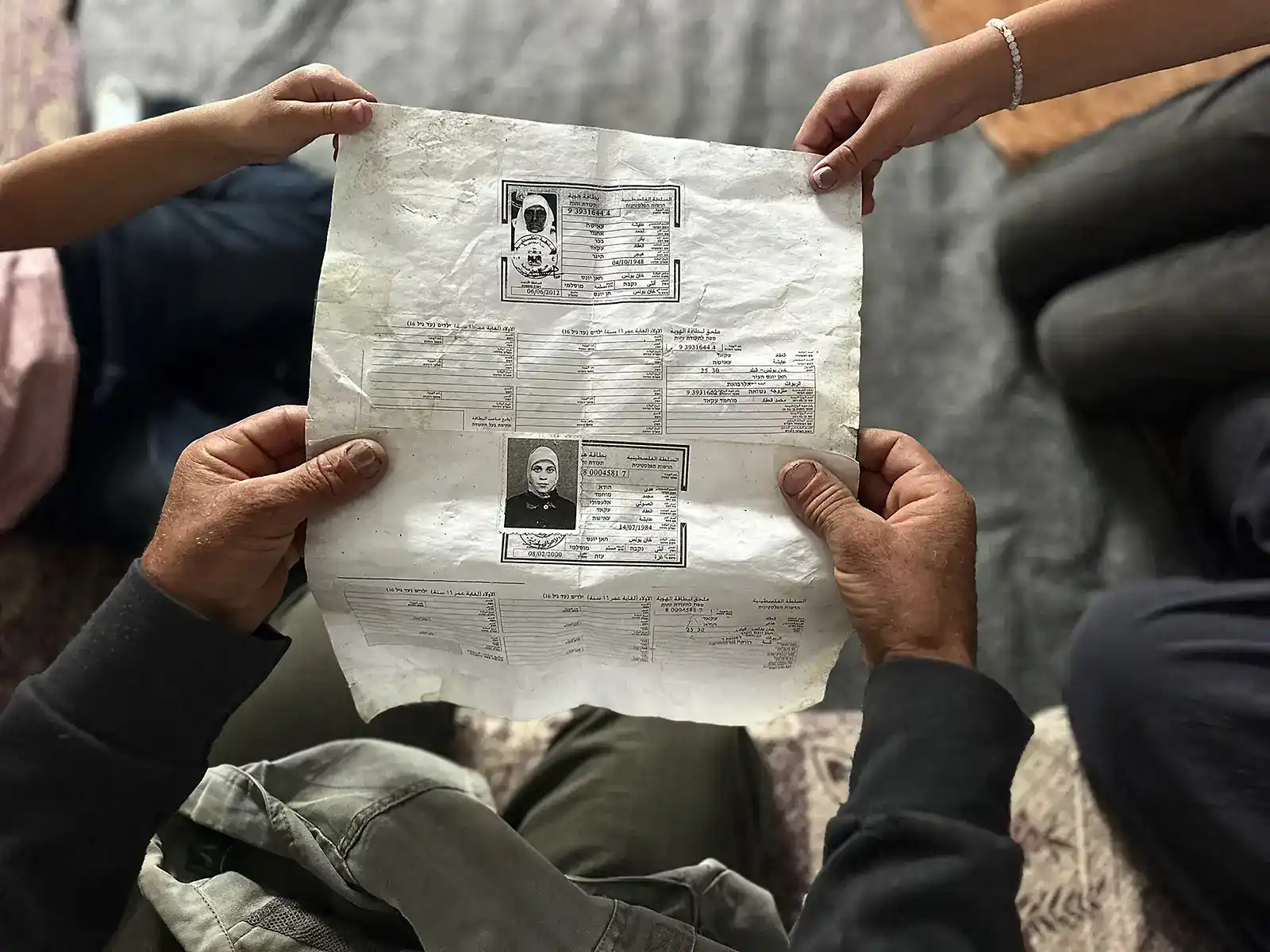
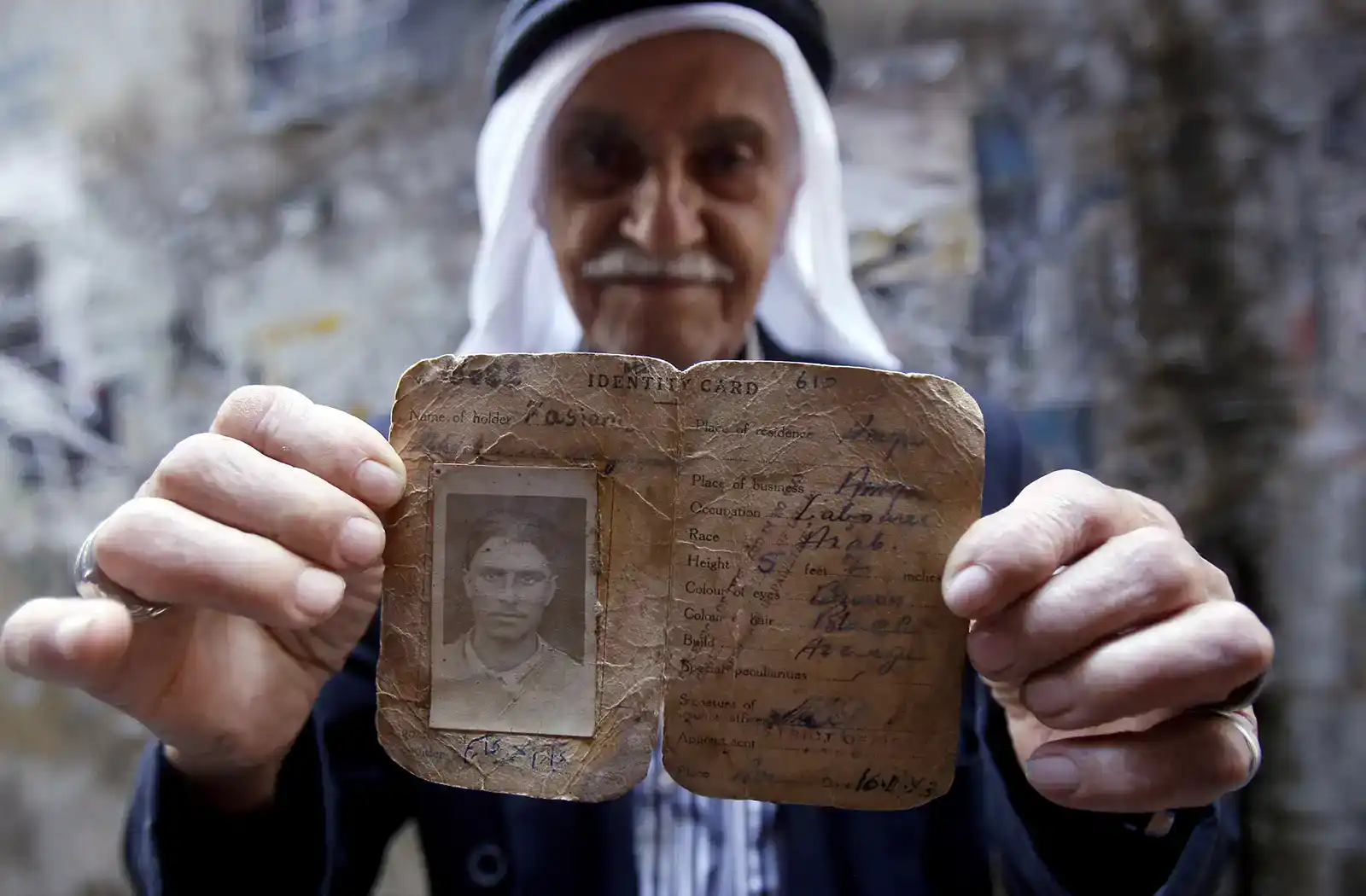
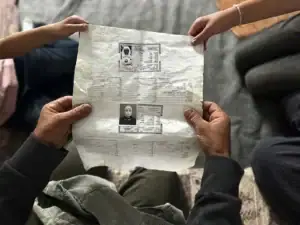
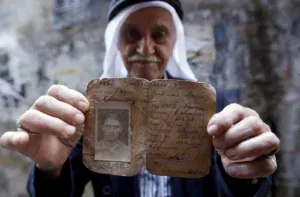
Coming from Gaza, I know what a deed means to a Palestinian household. My family, like many others, still holds deeds issued in the early decades of the 1900s, and I grew up knowing that each of them marks land we own and are determined to reclaim.
These deeds are not investment instruments. They are the proof that a family was in Palestine before "the catastrophe," known as the Nakba, when 750,000 Palestinians were forcibly displaced and ethnically cleansed from their homes between 1947-48 to establish the modern Israeli state. For a Palestinian family, these deeds represent the evidence and claims to the land that they intend to show after the next catastrophe, seemingly already underway.
Israel has already destroyed the land administration offices and the boundary beacons that mark plots in Gaza. Nearly 68 million metric tons of rubble sit across the Gaza Strip. Roughly 90% of Palestinians in Gaza are displaced, most without a deed in hand. In this context, having the records needed to rebuild is not enough. The essential question rests upon who rebuilds the records, under what authority and whether a false record can be challenged.
On July 1, 2026, the Palestinian Land Authority (PLA) issued a statement warning against tampering with Gaza's land records, declaring any alteration null and void. While legally correct, the PLA has no enforcement mechanism, no operational presence in Gaza and no way to compel disclosure from a body whose personnel would be immune from its courts. Nonetheless, the Palestinian Foreign Ministry called Israeli efforts to incorporate Area C land registration null and void in February 2026.
Three months later, Israel launched the online registration system. Israel's precedent in the occupied West Bank, including East Jerusalem, highlights what a Palestinian declaration of nullity is worth: virtually nothing.
The PLA's declaration of nullity is the only challenge on record. Other factors that may be more consequential are missing: a law, a court and a remedy.
Six documents explain why.
Two are Bremer's historical precedent: CPA Orders 39 and 17. Two are the BoP founding papers: U.N. Security Council Resolution 2803, which endorsed the Board; and Executive Order 14375, which designated it a public international organization in January 2026, a designation Rubio reclassified five months later, designating the BoP as a public non-governmental organization. The last two are Board documents: Resolution No. 2026/1, which vests the BoP with all transitional and executive authority; and Resolution No. 2026/3, which shields its personnel from Gaza's courts and routes claims against it through its own processes.
Together, these documents leave no obvious venue for a Palestinian landowner in Gaza to challenge the BoP or to seek remedy for any loss or injury caused by its plans and operations. More importantly, they do not consider the possibility that a Gazan owner might simply say "no" to the BoP's GREAT Trust plan.
Not "compensate me better" or "give me a bigger token." Simply, "no."
No, I do not want my family's land to be surveyed. No, I do not want it to be digitized. No, I do not want a blockchain entry standing in for the deed my father and grandfather held before him and, no, I do not want the BoP anywhere near my title, land or property.
It is worth asking whether the stakes would differ if the owners concerned were U.S. citizens and not Palestinians in Gaza living through Israel's genocide while under blockade and occupation. Could they turn to a U.S. court and ask for an injunction, not damages after the fact, but an order stopping the BoP and its contractors?
I do not know for certain. But I do know the answer would provide a way to challenge the Board of Peace before it acts, not after.
The views and positions expressed in this article are those of the author(s) and do not necessarily reflect the views of DAWN.