
















Yara Bataineh is an editorial associate at DAWN’s Democracy in Exile. She holds a bachelor’s degree in political science from the University of Jordan and a master’s degree in international relations from the University of San Diego. Her work has included refugee-focused initiatives and civic education programs in Jordan.
For decades, Gulf monarchies accepted a simple bargain with Washington: Host American forces in exchange for U.S. security guarantees. However, as the confrontation between the United States, Israel and Iran escalates, that arrangement is beginning to look less like protection and more like exposure. Instead of shielding Gulf states from conflict, America's vast military footprint has transformed them into a frontline in a war they neither started nor wanted.
The United States has long maintained a formidable military presence across the Gulf. Bases, fleets and airfields stretch from Bahrain to Qatar and the United Arab Emirates. The arrangement rests on a straightforward promise: American power deters regional threats and safeguards the monarchies that anchor Washington's regional order.
That promise now appears increasingly fragile, if not broken. As the United States and Israel launched attacks on Iran, Tehran retaliated by striking American military bases and energy infrastructure in the Gulf. As a result of this move, several Gulf governments now find themselves drawn into an escalating confrontation they cannot control. Officials in Riyadh, Doha and Abu Dhabi repeatedly warned Washington that a direct attack on Iran could destabilize the region.
Yet several Gulf capitals were reportedly not given advance notice of the Feb. 28 U.S.-Israel strikes, fueling deep resentment among Gulf officials who feel their security concerns have been ignored while their states have absorbed the immediate fallout. Many have also criticized Washington's apparent prioritization of defending Israel and protecting U.S. forces over safeguarding Gulf interests.
Rather than doubling down on dependence, Gulf states may conclude that reducing their exposure to U.S. military operations is the only way to protect their stability.
- Yara Bataineh
The escalation is especially frustrating for the Gulf because diplomacy may have been within reach. Just before the strikes, Omani Foreign Minister Badr Albusaidi, who had been mediating talks between Washington and Tehran, said negotiations were close to a breakthrough. Iran had accepted key U.S. conditions, including commitments not to accumulate nuclear material capable of producing a weapon and to stop stockpiling enriched uranium. That agreement would have surpassed former U.S. President Barack Obama's nuclear deal with the Islamic Republic, long a goal of current U.S. President Donald Trump.
What appeared to be a diplomatic breakthrough was abruptly sidelined. Instead, the Gulf was confronted with public criticism from U.S. politicians, including Sen. Lindsey Graham, who openly scolded Saudi Arabia for not participating in a war it had sought to avoid. Graham's statements were widely rejected across the region, drawing criticism from commentators and influential voices who viewed his threats as an affront to Gulf state sovereignty.
Discontent within the Gulf is no longer confined to private conversations. Turki al-Faisal, a former Saudi intelligence chief with deep ties to the West, publicly blamed Israeli Prime Minister Benjamin Netanyahu for the confrontation. "This is Netanyahu's war," he said in one recent interview, highlighting the frustration amid Saudi political elites. Emirati officials have likewise stressed that their territory should not be used to launch attacks on Iran and have called for urgent de-escalation, alongside the broader Gulf.
Such statements reflect a deeper concern across the region. The American military architecture that dominates the region increasingly appears to constitute less of a shield than a magnet for conflict, leaving Gulf officials to question both the durability and relevance of such partnerships.
For decades, Gulf rulers justified hosting foreign bases as the price of security. But as the region absorbs the fallout of a war that it did not start and actively lobbied against, that bargain increasingly looks like entanglement rather than protection.
The consequences are already visible on the ground. In Bahrain, the U.S.-Israel war with Iran has sparked rare civil unrest in a country where protests are usually tightly restricted. The situation is reminiscent of the Arab Spring period and the Bahraini government's repressive response at the time. Demonstrations erupted in several towns, with crowds condemning the broader conflict and the killing of Iran's supreme leader, Ali Khamenei. Notably, a majority of Bahraini citizens practice Shia Islam, with long-running fears of close ties to the Islamic Republic driving Manama to marginalize the group. Many protesters link their anger to the U.S. military presence, including the 5th Fleet headquarters in Bahrain, which they argue makes the country a target.
Instead of shielding Gulf states from conflict, America's vast military footprint has transformed them into a frontline in a war they neither started nor wanted.
- Yara Bataineh
Authorities responded with force, using tear gas and detaining protesters. Similarly, two young men were reportedly charged with "inciting hatred" and "undermining public security" after posting videos online. Prosecutors have also sought the death penalty for two others accused of espionage, reportedly for photographing sensitive sites.
In Kuwait, authorities arrested individuals over social media videos mocking the country's air-defense response during the conflict, reflecting heightened sensitivity regarding public criticism during the crisis. Similarly, Qatar detained 313 people for sharing footage or "misleading information" about the Iranian strikes. It also arrested an individual for social media posts criticizing the government and armed forces.
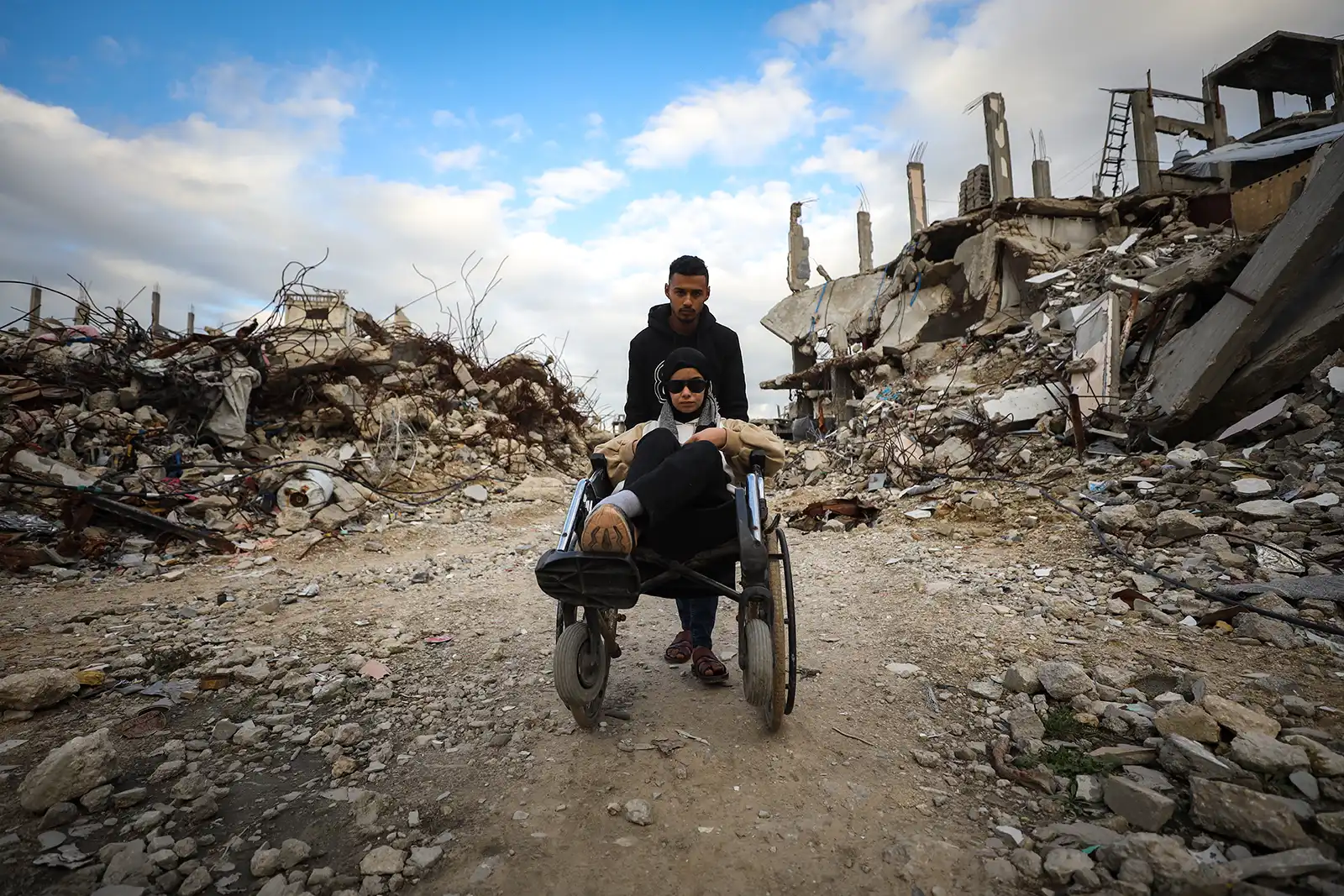
Together, these incidents illustrate how the regional conflict is already reverberating inside Gulf states, fueling unrest while prompting governments to tighten repressive control at home. Yet domestic tensions represent only one layer of risk. The Gulf's deeper structural vulnerabilities could worsen the consequences of prolonged conflict.
Despite their immense oil wealth, the monarchies of Saudi Arabia, Oman, Qatar, the UAE, Kuwait and Bahrain depend heavily on the outside world. Harsh climates, limited arable land and severe water scarcity force them to import most of their food, with as much as 85% sourced from abroad. Their economies also rely on imported labor, foreign technology and global supply chains. Construction materials, pharmaceuticals and industrial equipment are largely sourced from abroad. During periods of regional conflict, these dependencies can quickly become liabilities.
Shipping lanes like the Strait of Hormuz and energy infrastructure are clear examples of this dynamic, as both have become vulnerable to disruption and increased targeting. Iranian officials have already sought to leverage the strait politically, suggesting that countries expel U.S. and Israeli diplomats for safe passage through the strait. Tehran has also struck multiple ships in the strait. Faced with the prospect of Iran controlling access to a vital shipping route while striking energy production, Gulf states may feel compelled to reduce dependence on the U.S. to ensure their own economic survival.
What was once presented as a security guarantee is beginning to resemble a strategic liability. The American military infrastructure spread across the Gulf has transformed these states into forward operating platforms in a conflict that they cannot control. If Washington continues to escalate with Iran, Gulf governments will be forced to confront a reality long obscured by the rhetoric of partnership: that their territory can be used to project American power at the expense of their societies and economies.
This realization could fundamentally alter the region's political calculus. Rather than doubling down on dependence, Gulf states may conclude that reducing their exposure to U.S. military operations is the only way to protect their stability. Such a shift will not occur overnight, but even incremental distancing could signal the beginnings of a profound erosion of American influence.
In the end, the contradiction is difficult to ignore. A superpower that claims regional dominance may instead be accelerating a post-American order in the Gulf. By pursuing war with Iran, Washington risks weakening the very alliances that have sustained its hegemony.
The views and positions expressed in this article are those of the author(s) and do not necessarily reflect the views of DAWN.