





















Ali Harb is an independent journalist based in Washington, DC. His work focuses on U.S. elections, politics and foreign policy, as well as geopolitics in the Middle East.
Samir Al-Sabri, the deputy defense minister in Yemen's Internationally Recognized Government (IRG), declared on Sept. 7 that "the decision has been taken" to capture the capital, Sana'a, from the Houthis. Just days later, pro-government forces largely lost all territory along Yemen's western Red Sea coast in a massive setback for the pro-government camp. As a result, the Houthis and their Iranian allies have tilted the regional balance of power in their favor amid the broader U.S.-Israel war on Iran.
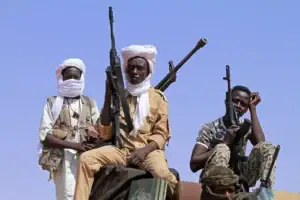
In just four days, the Houthis, formally known as Ansar Allah, rapidly advanced across the coast, marking the largest territorial exchange in Yemen's civil war since the 2022 truce. The group captured the port towns of al-Mokha and Dhubab, alongside the strategic Mayun (Perim) Island centered in the Bab el-Mandeb Strait. The militia has once again demonstrated its resilience after more than a decade of war.
While international media outlets often describe the Houthis as Iran's "proxy," their relationship with Tehran is more nuanced. The Ansar Allah movement receives military and technological support from Tehran, but it also retains significant decision-making capacity, evidenced by its position to avoid the U.S.-Israel war on Iran until now.
In just four days, the Houthis, formally known as Ansar Allah, rapidly advanced across the coast, marking the largest territorial exchange in Yemen's civil war since the 2022 truce.
- Ali Harb
Still, Iran gains immense strategic leverage when its allies control the coastal areas around the Bab el-Mandeb, which links the Red Sea to the Gulf of Aden, Arabian Sea and Indian Ocean. With Tehran at least partially blockading the Strait of Hormuz in parallel, its Axis of Resistance militia network can now push to choke the flow of energy products out of the Arabian Peninsula. Saudi exports are particularly at risk, as Riyadh had shifted these exports to the Red Sea after Tehran began blocking shipping through the Hormuz.
Moreover, the recent fighting saw the Houthis target Saudi Arabia's oil infrastructure, driving up oil prices globally, including in the United States. The result speaks for itself: As of Sept. 12, the price of a barrel of oil surged over $100, with the average cost of one gallon of gasoline in the United States at $4.31 and diesel at an all-time high of $6.16 as of this writing. These figures will hurt U.S. President Donald Trump ahead of midterm elections and strengthen Tehran's hand in its conflict with Washington.
For now, the Houthis have emphasized that the Bab el-Mandeb remains open for all ships except Saudi vessels. Nonetheless, such reassurances do not exclude using the strait for future strategic leverage.
Aside from the economic impact, recent Houthi victories gave a much-needed psychological boost to the Axis of Resistance, which has suffered major setbacks in recent years, including the withering blows that Israel dealt to Lebanese Hezbollah.
At the same time, the Houthi onslaught is a setback for Saudi Arabia that widens cracks in the long-running U.S. security architecture in the Gulf. Riyadh learned this lesson previously, when in 2019 drone strikes seriously damaged Aramco oil facilities in Abqaiq and Khurais. The United States refused to respond to the claimed Houthi attack, with Washington and Riyadh blaming Iran directly.
The Aramco incident demonstrated the vulnerability of Saudi infrastructure to asymmetric warfare. It further highlighted that Crown Prince Mohammed bin Salman (MBS) and the Kingdom are largely alone in facing threats from the Houthis and Iran.
Riyadh's tone changed after that realization. MBS, who once spoke of confronting Iranian forces in Iran, said in 2021 that he was seeking "special relations" with the Islamic Republic as he shifted Saudi foreign policy from confrontation to pragmatism. The crown prince also acknowledged the Houthis as a Yemeni and Arab group, not just Iranian agents.
Saudi Arabia generally blunted its confrontational rhetoric, shifting focus to domestic priorities, including diversifying its economy through Project 2030. That recalibration culminated in the 2022 truce in Yemen and restored diplomatic ties with Iran under Chinese auspices one year later.
That calm did not last. With the U.S.-Israel war on Iran, Tehran began targeting American bases throughout the Middle East, including in Saudi Arabia. Hostilities with Ansar Allah renewed after the IRG attacked Sana'a International Airport in August to prevent an Iranian plane carrying a Houthi delegation that participated in the funeral of Supreme Leader Ali Khamenei from landing.
Iran gains immense strategic leverage when its allies control the coastal areas around the Bab el-Mandeb, which links the Red Sea to the Gulf of Aden, Arabian Sea and Indian Ocean.
- Ali Harb
The Houthis did not tolerate what they viewed as a breach of the truce and the subsequent diplomatic engagements that have occurred since. The incident re-highlighted Saudi Arabia's ongoing enforcement of a siege on the country, despite the truce. The Houthis subsequently announced their blockade and launched missile attacks at Saudi military sites and energy infrastructure.
Following Houthi strikes on Israeli and Red Sea shipping in response to Israel's genocide in Gaza, Washington attempted to degrade the group. Instead, both parties quickly reached a ceasefire in 2025, with U.S. military operations largely failing to seriously deteriorate Houthi military capabilities. The Trump administration has since opted to avoid significant engagement in the Houthi-Saudi conflict, ignoring Riyadh's apparent pleas for an American intervention in recent days while offering some intelligence support.
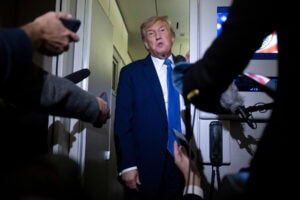
Trump claimed on Sept. 12 that the Houthis "called" to convey that they do not want Washington to get involved. "They're letting most ships go through," he said, adding, "There's just one country that they're not too happy with, and we'll get that straightened out."
That one country is Saudi Arabia. Once again, Washington is telling Riyadh, "You're on your own."
This saga again makes it blatantly obvious that the United States is not a reliable security partner to Gulf countries, pushing Riyadh, despite recent hostilities, to consider diplomacy with the Houthis. That signal is crucial because it presents a path to containing the crisis.
Still, any end to the fighting depends on both the Houthis and Saudi Arabia. It is unclear how far the Ansar Allah movement will take this campaign. They are unlikely to push into Aden, the IRG's de facto seat. Such an offensive would galvanize southern forces allied with the United Arab Emirates, who have long viewed the Houthis and the north in general as aggressors.
Instead, the Houthis appear to be focused on two fronts: the city of Taiz in the west and Marib, east of Sana'a.
Taking Taiz would help protect the newly captured areas on the Red Sea coast. Seizing Marib would reinforce the Houthis' grip on the north. Both are crucial to the Yemeni economy, even after years of destruction, with the former constituting the country's key oil and gas hub and the latter one of Yemen's largest industrial cities.
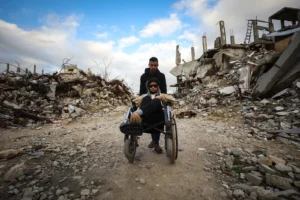
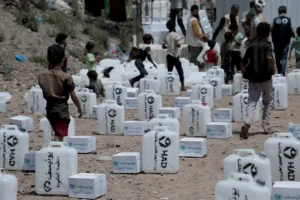
Houthi and pro-government fighting in either city would be eerily similar to the pre-truce period that directly produced nearly 150,000 deaths and near-famine conditions, part of the broader 377,000 estimated to have died directly and indirectly during the war. Major aid groups and the United Nations warn that Yemen faces many of the same humanitarian issues that precipitated the crisis at the height of the war. Both the Saudi blockade, alongside aid disruption by both the Houthis and pro-government factions, poor governance and U.S. aid cuts, have heavily contributed to Yemeni suffering across the country.
Conversely, Saudi-backed forces may launch a counteroffensive to retake Mokha and other coastal towns. The same humanitarian concerns would apply. The Houthis could agree to freeze frontlines but would likely demand major concessions from Saudi Arabia in return, including lifting restrictions on Yemen's ports and the airport in Sana'a.
Over 11 years into this war, Saudi Arabia still has a Houthi problem. Once dubbed by the United Nations as the world's worst humanitarian crisis, many of the same warning signs are blinking red as the fighting fully reignites in Yemen. This time, however, the conflict has more direct and enormous consequences for the global economy and the region's balance of power, making it difficult for the world to ignore.
The views and positions expressed in this article are those of the author(s) and do not necessarily reflect the views of DAWN.